
HoneyBook vs Paperbell: Which Is Better for Coaches? (2026)
HoneyBook is the better choice for photographers, wedding and event vendors, and project-based freelancers who want a proposal-contract-invoice pipeline built for custom-quoting each project. Paperbell is the better choice for coaches selling sessions, packages, and group programs.
- HoneyBook costs $36 to $129 per month depending on tier, and every payment must run through HoneyBook's own processor at rates starting at 2.7% plus 10 cents per card transaction.
- HoneyBook has no website builder, no session tracking, and no group coaching.
- Paperbell is $97/month, or $970/year, everything included: full coaching website, packages with session tracking, group coaching, payment plans and subscriptions, contract signing, and a client portal, with no payment processing markup.
HoneyBook vs Paperbell at a glance
| Feature | HoneyBook | Paperbell |
|---|---|---|
| Price | $36 to $129/month across three tiers, plus required payment processing through HoneyBook's own processor from 2.7% plus 10 cents per card transaction | $97/month, or $970/year. One plan, everything included |
| Website included | ✗ No website builder | ✓ Full coaching website included |
| Scheduling | Essentials plan ($59/month) and up | ✓ Every account, with two-way calendar sync and time zone detection |
| Coaching packages with session tracking | ✗ Packages are generic projects, no session counts | ✓ Session counts tracked for coach and client |
| Payment plans and subscriptions | Invoices with payment reminders; every payment runs through HoneyBook's own processor | ✓ Payment plans, subscriptions, pay-in-full discounts |
| Contracts and e-signature | ✓ Proposal and contract flow with e-signature | ✓ Unlimited contracts, signed during checkout |
| Client portal | Basic: contracts, invoices, session info | ✓ Booking, purchases, content, no password required |
| Intake forms | Lead forms, limited by tier (2 on Starter, 10 on Essentials) | ✓ Customizable intake forms built into client onboarding |
| Courses and content | ✗ No course or digital product delivery | ✓ Digital downloads and drip content (not a full course platform) |
| Group coaching | ✗ Not offered | ✓ Group programs, workshops, mixed group and 1:1 packages |
| Mobile app | ✓ Dedicated app, with gaps vs desktop | ✗ Browser-based, works on mobile |
| Best for | Photographers, event vendors, and freelancers custom-quoting each project through proposals and invoices | Coaches selling sessions, packages, and group programs |
HoneyBook vs Paperbell pricing
HoneyBook costs $36 to $129 per month across three tiers, or $29 to $109 per month billed annually. Most coaches need the $59/month Essentials tier, because the scheduler and automations are locked behind it. Every payment also runs through HoneyBook's own processor, starting at 2.7% plus 10 cents per card transaction, with no option to use Stripe or PayPal instead.
Those prices are recent: HoneyBook raised every tier sharply in February 2025, with Starter going from $19 to $36 per month. The increase is the most cited complaint in recent HoneyBook reviews.
Paperbell costs $97/month, or $970/year. One plan, everything included, no per-client fees, no payment processing markup.
Every account gets unlimited clients, unlimited packages, and unlimited contracts, with no features held back for a higher tier. Coaches connect their own Stripe or PayPal, pay only that processor's standard rates, and the money goes directly to their own account. There is a free account, no credit card required, and a 30-day refund policy on paid plans.
What Paperbell does better
Paperbell was built specifically for coaches, and every advantage below is a direct answer to a gap third-party reviewers flag in HoneyBook for coaching businesses.
- A real coaching website, included. HoneyBook is a back-office tool with no website builder. Paperbell gives every coach a full, custom-branded website with package pages, booking, and checkout built in. No hosting, no plugins, no separate site builder.
- Coaching packages with session tracking. HoneyBook treats a package as a generic project, so nobody knows how many sessions are left. Paperbell tracks remaining sessions automatically, visible to both coach and client.
- Group coaching. HoneyBook has no group or cohort functionality. Paperbell supports group programs, live workshops, participant limits, and packages that mix group with 1:1 sessions.
- Your own payment processor, no markup. Paperbell adds no transaction fees. Coaches connect their own Stripe or PayPal and payments land directly in their account, in any of more than 20 supported currencies.
- One flat price with nothing gated. HoneyBook holds its scheduler, automations, and branding removal behind the $59/month Essentials tier. Paperbell includes everything on its single plan: scheduling with two-way calendar sync, unlimited contracts, intake forms, a passwordless client portal, and content delivery.
- Works internationally. HoneyBook only serves businesses in the US and Canada. Paperbell is built by a UK-based company and works for coaches worldwide.
Where Paperbell falls short
Paperbell has no dedicated mobile app, no proposal builder, and no traditional invoicing; clients pay through checkout links with set prices, so a coach who quotes bespoke corporate engagements and needs formal proposals and invoices will find HoneyBook's flow better. Paperbell also supports one coach per account, so multi-coach practices need separate accounts, and its content delivery covers digital downloads and drip content rather than a full course platform.
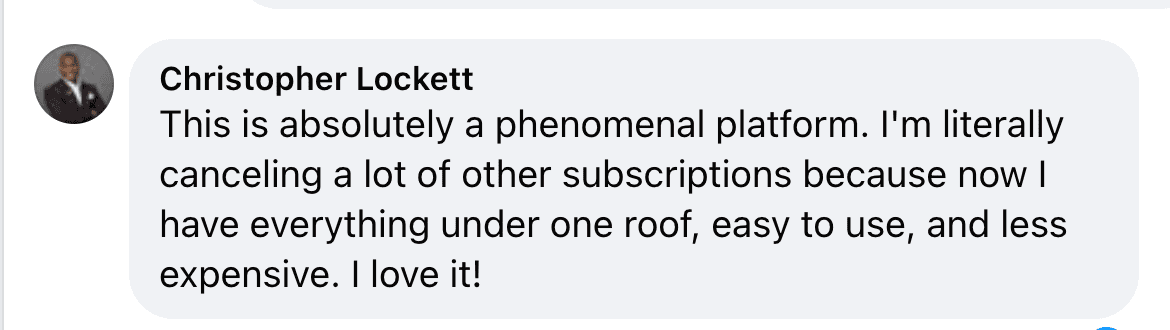
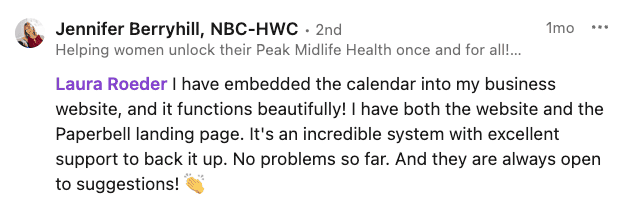
What coaches say after switching

Which is better for coaches: HoneyBook or Paperbell?
HoneyBook for custom projects, Paperbell for coaching
HoneyBook is the better tool for photographers, event vendors, and freelancers who custom-quote one-off projects and run each client through its proposal-contract-invoice pipeline, and for coaches whose business is really a broader creative services operation running on proposals and invoices. Paperbell is the better tool for coaches, because it covers the exact things HoneyBook lacks: a website, packages with session tracking, group coaching, and payments through the coach's own Stripe or PayPal with no processing markup. For a coaching business selling sessions, packages, and programs, Paperbell at $97/month, or $970/year, covers far more of the coaching job than HoneyBook's $59/month Essentials tier, with no payment processing markup on top.
HoneyBook vs Paperbell: your questions, answered
Is HoneyBook good for coaches?
HoneyBook works for coaches as a general client management tool, but it has no coaching-specific features. There are no coaching packages with session tracking, no group coaching, no goal or progress tracking, and no website builder. Even HoneyBook's own page for coaches lists only generic CRM functions like pipelines, invoices, and contracts. Coaches whose work looks like custom-quoted projects may still find it a reasonable fit.
What does HoneyBook do better than Paperbell?
HoneyBook's proposal, contract, and invoice pipeline is built for custom-quoting each project: one client link moves through inquiry, proposal, contract, and payment in order, where Paperbell's checkout assumes fixed-price packages. HoneyBook AI ships on every plan, including the cheapest, with AI chat, an automations builder to configure, email drafts, a meeting notetaker, lead enrichment, and follow-up suggestions, all oriented around that custom-quote pipeline. HoneyBook also has a dedicated mobile app, though reviewers note it lacks full desktop functionality; Paperbell runs in the browser only.
What is HoneyBook used for?
HoneyBook is a client management platform for independent service businesses. It handles proposals, contracts, invoices, payments, basic scheduling, and workflow automations. It is most widely used by photographers, wedding and event vendors, and designers.
How does HoneyBook work?
HoneyBook runs clients through a linear flow: inquiry, proposal, contract, invoice, payment. One client link moves through the whole sequence in order. Payments are processed by HoneyBook itself rather than an outside processor.
Why did HoneyBook's price go up so much?
In February 2025, HoneyBook raised Starter from $19 to $36 per month (up 89 percent), Essentials from $39 to $59 (up 51 percent), and Premium from $79 to $129 (up 63 percent). Multiple reviewers describe the increase as the point where the price stopped feeling worth it, and it remains the most cited complaint in recent reviews.
Is HoneyBook worth it after the 2025 price increase?
That depends on how much of the proposal, contract, and invoice flow a business actually uses. Reviewers who quote custom projects still rate the platform highly, while others say it is no longer worth the money at $36 to $129 per month. Coaches also pay HoneyBook's payment processing fees on top of the subscription. Paperbell costs $97/month, or $970/year, and adds no payment processing markup.
What are HoneyBook's payment processing costs?
HoneyBook's card processing starts at 2.7 percent plus 10 cents per transaction, with higher rates for some card types, and ACH bank transfers cost a flat 1.5 percent. Instant deposits cost an additional 1 percent. These fees apply on top of the monthly subscription, and every payment must run through HoneyBook's own processor.
Can I use my own payment processor like Stripe or Square with HoneyBook?
No. HoneyBook is its own payment processor, and payments cannot be routed through Stripe, Square, or PayPal the way tools like Dubsado and 17hats allow. Paperbell takes the opposite approach: coaches connect their own Stripe or PayPal account and payments go directly to them, with no markup added.
Does HoneyBook have a website builder?
No. HoneyBook is a back-office tool with lead forms and a client portal, but it does not build a public-facing website. Paperbell includes a full coaching website with package pages, booking, and checkout built in.
Does HoneyBook have coaching-specific features like packages, sessions, and goals?
No. HoneyBook treats a coaching package as a generic project with a proposal and an invoice, so there is no session-count tracking, no goal or progress tracking, and no structured coaching journey. Client records capture basic contact details like name, email, and address rather than coaching history.
Does HoneyBook offer group coaching support?
No. HoneyBook supports individual project collaborators but has no group or cohort coaching functionality. Paperbell has dedicated group coaching features, including group programs, live workshops, and packages that mix group and one-on-one sessions.
Does HoneyBook work outside the US and Canada?
No. HoneyBook is only available to businesses in the United States and Canada. Paperbell is built by a UK-based company and serves coaches internationally, with checkout support for USD, AUD, CAD, EUR, GBP, JPY, NZD, SEK, and SGD.
Is HoneyBook legitimate?
Yes. HoneyBook is an established company with broad adoption across creative and service industries. Complaints in reviews focus on pricing, processing-fee lock-in, and support response times, not on legitimacy.
Can HoneyBook replace accounting software?
No. HoneyBook lacks expense tracking, payroll, and tax tools, so it cannot replace dedicated accounting software. It does integrate with QuickBooks Online on the Essentials plan and above.
What does HoneyBook integrate with?
HoneyBook's notable integrations include QuickBooks Online, Zapier, Calendly, and Gmail. The QuickBooks integration requires the Essentials plan or higher.
Is HoneyBook best for small businesses?
It is built for small project-based service businesses such as photographers, event planners, and designers. Small businesses built on recurring sessions, like coaching practices, run into its missing package, session, and group features.
Is HoneyBook better for wedding and event photographers than for coaches?
Yes. Photography and events are HoneyBook's core use case, and its inquiry-to-invoice flow matches how those businesses quote custom jobs. Coaching relationships are recurring and session-based, which is the workflow HoneyBook does not model.
HoneyBook vs Dubsado vs 17hats: which should I choose?
All three are generic client management tools for service businesses rather than coaching platforms. The biggest practical difference is payments: Dubsado and 17hats let businesses connect their own payment processor, while HoneyBook requires payments to run through its own processing at its own rates. None of the three includes coaching packages with session tracking, group coaching, or a website builder.
What is the best HoneyBook alternative for coaches?
Paperbell is the strongest alternative for coaches specifically, because it covers the coaching workflow HoneyBook lacks: packages with session tracking, group coaching, payment plans and subscriptions, contracts, intake forms, a client portal, and a full website, on one plan at $97/month, or $970/year. Coaches who want a generic CRM instead can consider Dubsado or 17hats, which at least allow an outside payment processor.
HoneyBook vs Paperbell: which is better for coaches?
Paperbell is better for coaches. It is built around coaching packages, sessions, groups, and a client-facing website, while HoneyBook is built around custom-quoted projects and has no session tracking, group coaching, or website builder. On Software Advice, 79 percent of Paperbell's reviewers use it for coaching, while HoneyBook's reviewer base skews toward arts and entertainment businesses. HoneyBook is the better pick for a coach who also runs a broader creative services business and mostly sends custom proposals and invoices.
Built for coaching, not custom quotes
Paperbell gives every coach a website, packages, scheduling, contracts, and payments in one place, on one flat price. Set it up in an afternoon and send one link that does the rest.
Try Paperbell Free