

There’s no single right way to run a coaching business. What matters is building one that works for your life and your clients.
Below are real examples of coaches using Paperbell to create websites and systems that support the unique ways they coach.
Read on to learn:
- How different coaches structure their websites and offers
- Ways to design a coaching business around your real schedule
- How Paperbell supports different coaching styles and rhythms
Why the Best Coaching Businesses Are Built Around Real Life
There are plenty of best practices for building a coaching business. We often cover certifications, models, blog funnels, or scaling with courses on this blog, just to name a few.
Those strategies can help. However, they’re not the most important decision you’ll make. The real work is designing a business that supports your life, energy, and clients at the same time.
Some coaches work globally while traveling. Others coach in the evenings alongside another career or raising kids. Some need quiet, spacious schedules. Others thrive with a full schedule of live sessions.
There isn’t one right setup. What matters is that your systems run smoothly in the background so you can show up fully for your clients.
Below are real examples of coaches who’ve built their websites and practices around their own rhythms. Each one uses Paperbell differently, based on how they coach and how they want to live.
5 Paperbell Website Examples That Attract Clients
Here’s how five coaches with completely different practices use Paperbell, tailoring it to what they need.
Barbara Bates
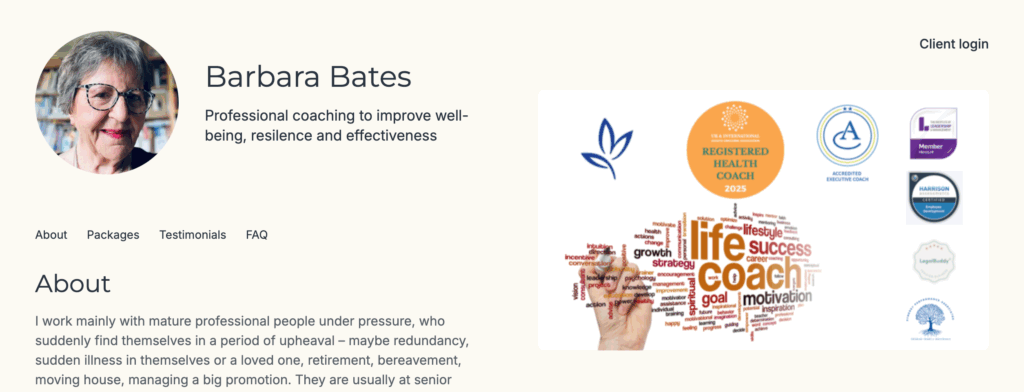
Barbara Bates is a UK-based coach with over 15 years of experience supporting senior professionals through major life transitions. She works with thoughtful clients under pressure, helping them slow down, gain clarity, and decide what truly matters next.
Barbara chose Paperbell to replace manual scheduling and uncomfortable payment conversations with a clean, professional system. She collects payments upfront, automates scheduling across time zones, and avoids chasing clients after sessions.
On her Paperbell site, she clearly presents a wide range of packages, assessments, and digital resources, supported by detailed testimonials and FAQs. This setup lets clients self-select the right support while Barbara stays fully present, even while working internationally.
Chinonyelum Udoye

Chinonyelum Udoye is a life coach helping working moms and professional women find balance without burning out.
While juggling a full-time job and raising two teenagers, she needed a business that worked around real life. So, she chose Paperbell after struggling with tools that felt overly expensive, complicated, and restrictive.
Chinonyelum uses Paperbell to run group programs and private coaching with clear start dates and timelines. She schedules sessions at 9 PM, a time that works for both her and her clients. This setup lets her serve working moms when they finally have space to focus on themselves.
Sorrel Pindar
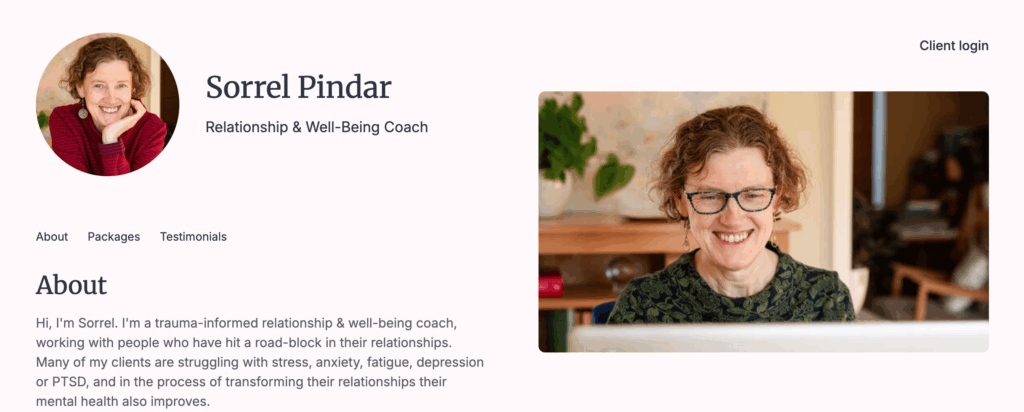
Sorrel Pindar is a UK-based relationship and well-being coach with decades of experience supporting clients through emotional challenges. When she transitioned from osteopathy to coaching, she wanted to avoid losing depth in her work and getting buried in admin.
She chose Paperbell after managing everything in notebooks led to double bookings and constant overwhelm. She loved how Paperbell’s self-booking system, calendar sync, and upfront payments eliminated the chaos entirely.
One strategy Sorrel uses is keeping her paid coaching packages private, sharing them only after clarity calls. This lets her validate clients first and then focus on coaching while Paperbell quietly handles everything else.
Sarah Novaro

Sarah Novaro is a relationship and well-being coach who blends self-love, creativity, and embodied healing into her work. As a neurodivergent coach and singer, she needed systems that supported her energy, not drained it.
She chose Paperbell to avoid tech overwhelm and build a calm, aligned foundation. Sarah uses Paperbell as her main hub, linking it to Substack and Instagram instead of building a full website.
She also organizes both coaching and singing offers in one place. Features like buffer time between sessions help her protect energy for deeply intimate client work.
Kate Rosser
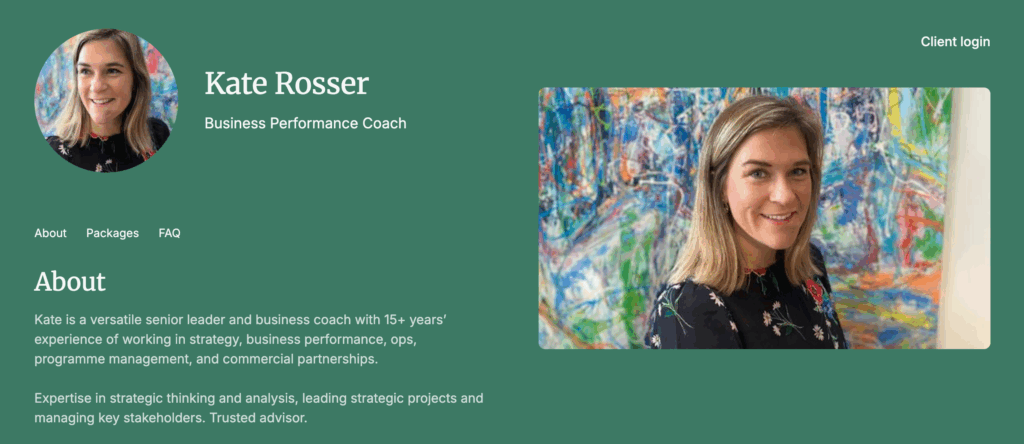
Kate Rosser is a business performance coach with a senior leadership background across strategy, consulting, and executive roles.
When launching her coaching practice, she focused on getting systems right before taking on clients. She chose Paperbell to avoid admin creep and keep everything in one place from day one.
Kate uses Paperbell to automate onboarding, contracts, and billing, saving around 30 minutes per client. This lets her move clients quickly from agreement to their first session. The result is a polished experience that supports her while she refines her niche and grows confidently.
How Coaches Use Paperbell to Run Their Coaching Websites
A coaching website only works if it supports how you coach, sell, and show up for clients. For many coaches, that means flexibility, simplicity, and fewer tools to manage.
Paperbell gives you a client-ready coaching website that adapts to your business, not the other way around. Instead of complex design decisions or tech setup, you start by defining your unique offers to build your site around.
Coaches use Paperbell to:
- Present clear coaching packages with context, timelines, and pricing.
- Let clients book, pay, and sign contracts in one smooth flow.
- Design a customer journey with private and public packages.
- Run group programs, memberships, courses, and one-on-one work on the same platform.
- Answer questions upfront with testimonials and FAQs.
- Grow their email lists with an opt-in form.
- Manage time zones, buffers between sessions, and availability automatically.
Some coaches use Paperbell as their entire website. Others link it from Instagram, Substack, or a simple homepage. Either way, it makes signing and managing clients simple.
Instead of sending them across multiple links and tools, everything happens in one place. That means fewer emails, fewer follow-ups, and fewer decisions for both you and your clients.
The result is a website that quietly does its job, so you can stay focused on coaching.