

You’ve done the work to get your International Coaching Federation (ICF) credential. You’ve logged the hours, passed the assessments, and now you’re wondering: what’s next?
If you’ve been searching for coaching platforms to work with, Ezra Coaching probably showed up. It promises a tech-forward approach, enterprise clients, and a global community of coaches. Sounds good, right?
Here’s the thing. Ezra is a legitimate platform with real benefits, but it’s built for a specific kind of coach. Understanding exactly how it works will save you a lot of second-guessing. In this review, we’ll cover what Ezra actually offers, how much you can expect to earn, what the application process looks like, and whether building your own independent practice might be a better fit.
Already running your own coaching practice? Try Paperbell for free. It handles your scheduling, payments, and client portal in one place so you can focus on coaching.
What Is Ezra Coaching?
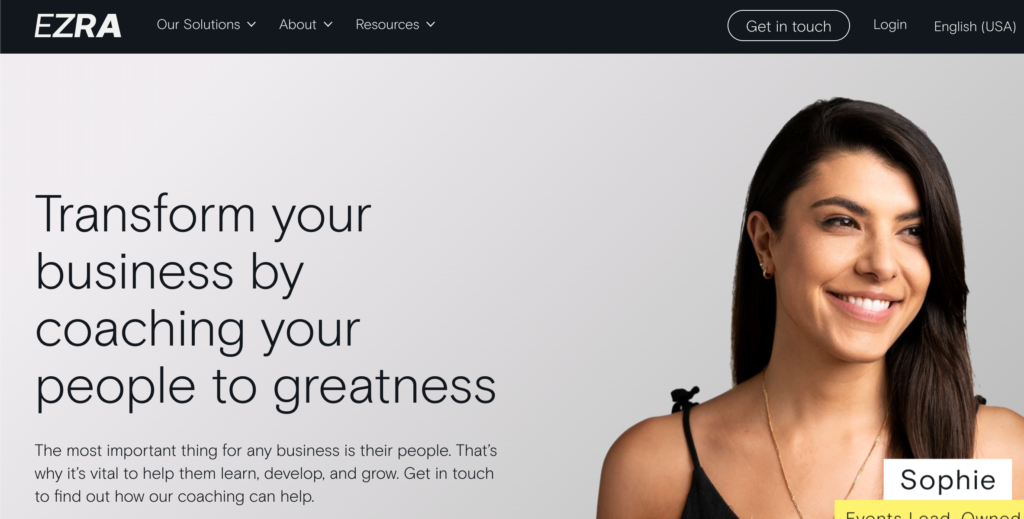
Ezra is a digital coaching platform that connects ICF-certified coaches with large organizations. Think Fortune 500 companies, global enterprises, and corporate learning and development (L&D) teams that want to provide professional coaching to their employees at scale.
It was founded by Nick Goldberg, who is still CEO. Ezra is now part of LHH (Lee Hecht Harrison) and the broader Adecco Group, which is one of the world’s largest staffing and workforce solutions companies. That corporate backing gives Ezra serious reach into enterprise accounts.
The platform claims a coach quality score of 8.6 out of 10 on average, a network of 2,000+ accredited ICF coaches, and 99% of participants reporting improvement after coaching. According to their site, 95% of coaches are on an active assignment at any given time.
Key Features
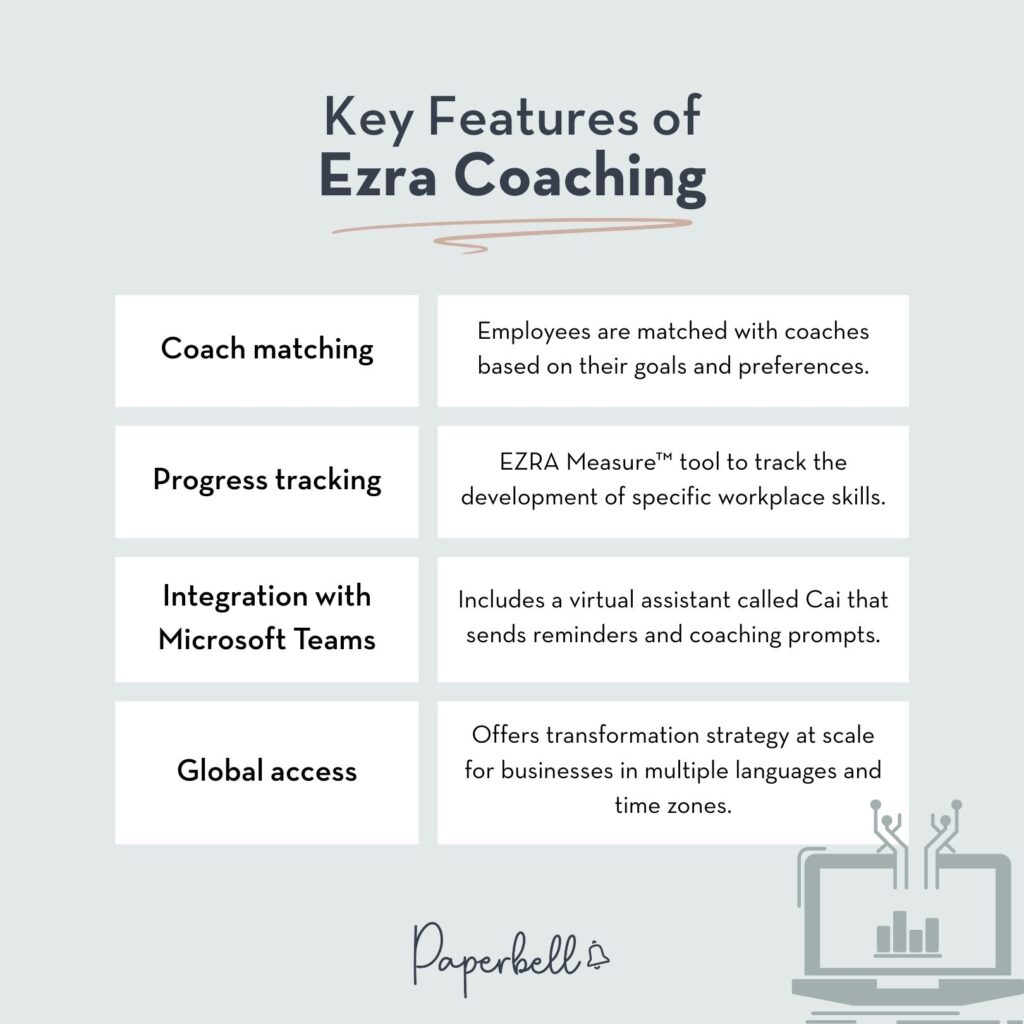
- ICF-accredited coach network with vetting and matching
- App-based coaching sessions (video, messaging, and async)
- AI coaching assistant called Cai (more on that below)
- EZRA Measure — a proprietary progress-tracking tool
- Integrations with Microsoft Teams, Workday, Degreed, and SuccessFactors
- Behavioral nudges and progress check-ins between sessions
Who Is Behind Ezra Coaching?
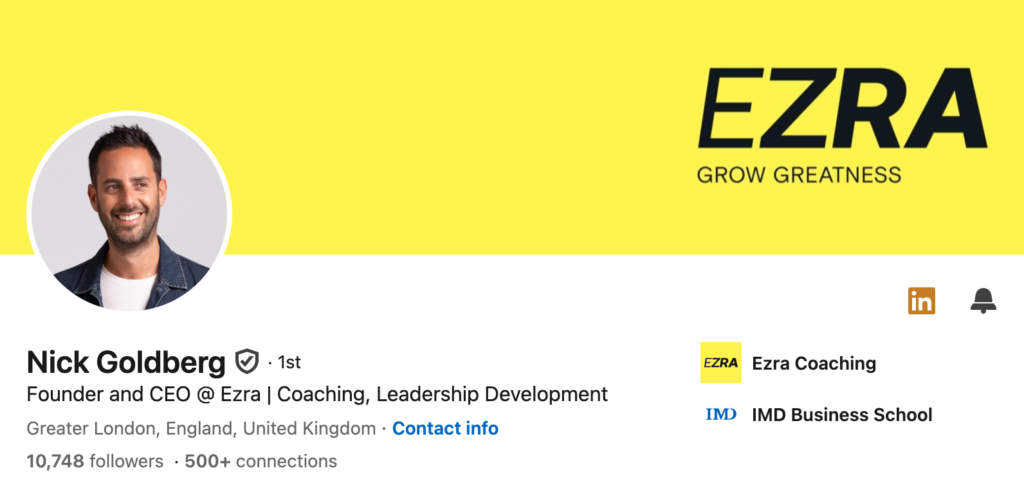
Nick Goldberg founded Ezra with the goal of making professional coaching accessible to employees at all levels, not just the C-suite. The platform officially joined LHH (part of the Adecco Group) as part of their leadership development and coaching practice. That means the corporate sales motion behind Ezra is well-resourced and connected to a global HR services network.
Ezra’s Three Product Tiers
This is something the earlier version of this post didn’t cover, and it matters. Ezra isn’t just one product. They have three distinct offerings, each built for a different organizational need and coaching level.
EZRA Edge: Unlimited Coaching at Scale
EZRA Edge is the flagship enterprise product. It’s designed for large organizations that want to give unlimited access to 1:1 coaching across their workforce. Edge includes Cai, Ezra’s generative AI coaching assistant, which provides always-on support between human coaching sessions. The platform claims EZRA Edge delivers a proven 20% performance increase for participants.
This is the tier most working Ezra coaches are deployed through.
EZRA Focus: Structured Sprint Programs
EZRA Focus is built around 8-to-10-week structured coaching sprints. Organizations choose from 15 topic programs including “Powerful Conversations,” “Manager Mindset,” and “Supercharged You.” Each sprint combines coaching sessions with behavioral nudges between sessions.
Focus is aimed at mid-level managers and high-potential employees who need targeted development in a specific area rather than open-ended coaching.
EZRAx: Executive-Level Coaching
EZRAx is the premium tier for senior leaders and executives. Coaches on EZRAx must hold a Professional Certified Coach (PCC) or Master Certified Coach (MCC) credential and have 20+ years of corporate experience. Sessions come in 30, 60, and 90-minute formats with no cap on the number of sessions.
EZRAx also uses something called the “EZRA Portrait”, a psychometric assessment across nine leadership attributes that shapes the coaching engagement from the start.
How Ezra’s Model Works
Ezra operates on a business-to-business model. Companies buy coaching access for their employees. The employees get matched with an ICF-certified Ezra coach through the app. The coach delivers sessions, tracks progress using Ezra’s proprietary tools, and works within the company’s defined program parameters.
Pricing isn’t public. There’s no pricing page on helloezra.com. Organizations book a consultation to get a custom quote based on team size, program type (Edge, Focus, or EZRAx), and the scope they need.
As a coach, this means your rates and session volume are set by Ezra and the organizational contract, not by you.
What Is Cai?
Cai is Ezra’s generative AI coaching assistant. It goes well beyond scheduling or reminders. Cai provides AI-driven coaching conversations and simulations between live sessions with a human coach, giving employees an “always-on” support layer.
As AI coaching tools have matured, Cai has become a central part of the EZRA Edge value proposition. Coaches working in that tier should expect their human sessions to exist alongside (not instead of) Cai interactions with their clients.
How Much Do Ezra Coaches Earn?
This is one of the most common questions coaches have about Ezra, and the answer is less straightforward than you’d expect.
Glassdoor data (as of May 2026) shows base pay for Ezra coaches ranging from $46,000 to $68,000 per year, with a median total pay of $56,000. For coaches with zero to one year of experience, the range is $39,000 to $61,000 per year.
Earlier versions of this post cited “around $68,000 a year” as the Ezra coach salary. That number was the top of the base pay range, not the average. The actual median is $56,000. The realistic middle of the range matters more than the ceiling.
That said, Glassdoor figures are self-reported and don’t always reflect the full picture. Your actual earnings will depend on assignment availability, your credential level (ACC vs. PCC vs. MCC), and how many active client slots Ezra assigns you. Their site does state that 95% of coaches are on an active assignment at any given time, which suggests reasonably consistent utilization once you’re in the network.
How to Apply as an Ezra Coach
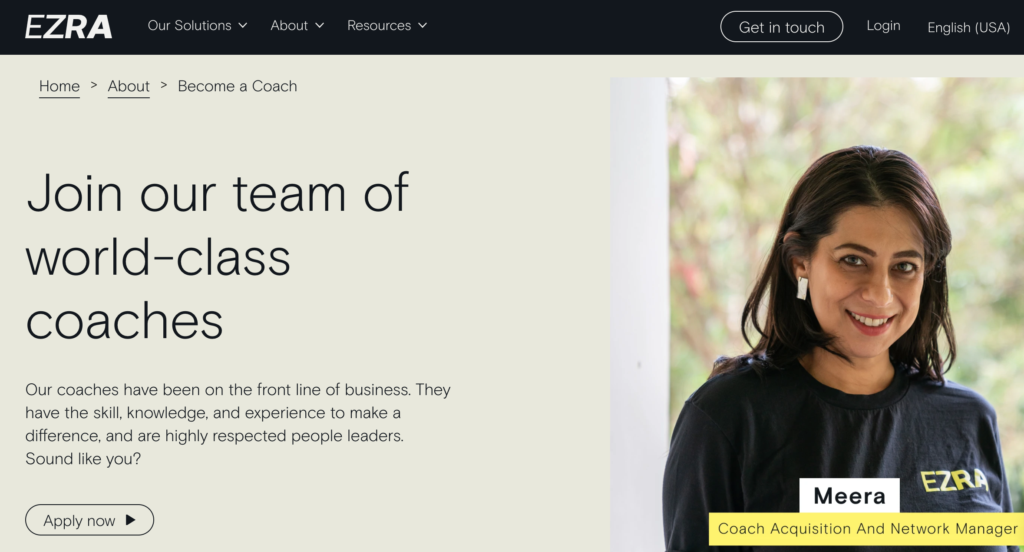
To work as a coach on the Ezra platform, you need to meet their minimum requirements and go through their vetting process.
Requirements
- ICF credential required: Associate Certified Coach (ACC), PCC, or MCC
- Focus area: corporate leadership and professional performance coaching. Ezra does not place life coaches, wellness coaches, or generalist coaches
- EZRAx specifically requires PCC or MCC plus 20+ years of corporate experience
Application Process
You apply via the Ezra become-a-coach page. The vetting process isn’t described publicly beyond submitting an application. Ezra doesn’t publish acceptance rates or timelines.
Once accepted, Ezra offers coaches access to a global community, discounts on training, coaching support, and a dedicated tech support team for the platform. You also benefit from Ezra’s marketing and enterprise sales motion: no hunting for your own corporate clients.
The Advantages of Coaching Through Ezra
For the right coach, Ezra offers some genuine benefits that are worth taking seriously.
- Consistent client flow: With 95% of coaches on an active assignment, you don’t spend time on business development. Ezra does the selling for you.
- Enterprise access: You’d be coaching employees at large organizations, the kind of accounts most independent coaches can’t get in front of on their own.
- Tech handled for you: The platform, the app, the scheduling, the measurement tools are all built and maintained by Ezra.
- Global community: 2,000+ coaches in the network means access to peer learning and community that solo practitioners don’t always have.
- Credibility signal: Coaching through a vetted platform like Ezra can strengthen your professional profile, especially if you’re building toward PCC or MCC hours.
The Trade-Offs to Know Before You Apply
Ezra works well for some coaches. For others, the structure is a dealbreaker. Here’s what to consider honestly.
- You don’t set your rates: Ezra determines what coaches earn based on the corporate contract. You can’t negotiate per-client or raise your rates based on demand.
- No personal brand: You’re coaching as an Ezra coach, not as yourself. The relationship your clients have is with the Ezra platform, not with you personally.
- Leadership and corporate only: If your passion is life coaching, health coaching, career transitions (non-corporate), or any specialty outside leadership development, Ezra isn’t the right fit. They serve enterprise L&D buyers specifically.
- ICF credential is non-negotiable: If you don’t yet hold ACC, PCC, or MCC, you can’t apply. There’s no path to join without the credential.
- You work on their platform: Sessions happen inside Ezra’s app. You’re not building a client base you can take with you.
Is Ezra Coaching Right for You?
If you’re an ICF-credentialed coach focused on leadership, management, and professional performance, and you’d rather have consistent corporate client flow than spend time on business development, Ezra is worth applying to.
The trade-off is autonomy. You’re working within their system, for rates they determine, on a platform they control. That can be a great deal if steady income and reduced marketing overhead matter more to you than building your own brand.
If what you actually want is to run a coaching practice on your own terms (your own clients, your own rates, your own niche), then a platform like Ezra isn’t really built for that. That’s not a knock on Ezra. They serve a different market.
Ezra vs. Running Your Own Independent Practice
A lot of coaches end up evaluating both paths at once. Here’s a direct comparison so you can see the key differences clearly.
| Ezra Coaching | Your Own Practice | |
|---|---|---|
| Who it’s for | ICF-credentialed coaches focused on leadership/corporate | Any coach in any niche |
| Business model | You work for Ezra; Ezra sells to companies | You sell directly to your own clients |
| Who pays you | Ezra (rate set by the platform) | Your clients (rate set by you) |
| Client relationships | Clients belong to the Ezra platform | You own the client relationship |
| Coach autonomy | Low — sessions within Ezra’s tools and program structure | High — your packages, your process, your brand |
| Business development | Ezra handles it | You handle it (or outsource it) |
| ICF credential required | Yes (ACC, PCC, or MCC minimum) | No — though it helps |
| Software for running your practice | Ezra’s app (you don’t own it) | Tools like Paperbell — scheduling, payments, client portal in one place |
Want to Run Your Own Practice Instead?

If reading that table made the independent path sound more appealing, you don’t need a complicated tech stack to get started. The main things you need are: a way to take bookings, a way to get paid, and a place to manage your clients.
That’s exactly what Paperbell does. It’s built specifically for independent coaches, not enterprise platforms or general freelance tools. You get a booking page, automated payments, contracts, session notes, a client portal, and intake forms all in one place.
It’s not a replacement for Ezra. It’s for a completely different path: the one where you build your own practice, set your own rates, and keep 100% of what you earn.
Try Paperbell for free and see how it works.
Ezra vs. Other Enterprise Coaching Platforms
Ezra isn’t the only platform in the enterprise coaching space. If you’re exploring your options, a few other names come up regularly.
- BetterUp — similar model to Ezra: ICF-certified coaches, app-based delivery, B2B sales to companies. BetterUp tends to market more heavily around mental health and resilience alongside professional development.
- CoachHub — European-founded, strong presence in the DACH market, similar enterprise platform model.
- Torch — combines coaching and mentorship for mid-market companies, slightly smaller scale than BetterUp or Ezra.
For a broader look at coaching marketplaces and what each one involves for coaches, see our guide to coaching marketplace platforms.

Frequently Asked Questions
Is Ezra Coaching legit?
Yes. Ezra Coaching (helloezra.com) is a legitimate enterprise coaching platform. It’s part of LHH and the Adecco Group, one of the world’s largest workforce solutions companies. The platform operates in dozens of countries with a network of 2,000+ ICF-accredited coaches. It’s not a scam. It’s a real platform with a real B2B business model.
How does Ezra pay coaches?
Glassdoor data (as of May 2026) shows base pay for Ezra coaches ranging from $46,000 to $68,000 per year, with a median total pay of $56,000. Ezra does not publish per-session rates publicly. Your earnings depend on assignment availability, your credential level, and how many active clients you have through the platform.
Can I work for Ezra without an ICF certification?
No. Ezra requires an active ICF credential (Associate Certified Coach (ACC), PCC, or MCC) to apply. Their highest tier, EZRAx, requires PCC or MCC plus 20+ years of corporate experience. There is no pathway into the Ezra network without an ICF credential.
Is Ezra only for corporate coaching?
Yes. Ezra serves enterprise and corporate organizations. Their three product tiers (EZRA Edge, EZRA Focus, and EZRAx) are all built for organizational L&D buyers. If you specialize in life coaching, wellness coaching, or a niche outside of leadership and professional performance, Ezra isn’t designed for your work.
Is Ezra part of LHH?
Yes. Ezra Coaching is part of LHH (Lee Hecht Harrison), which is itself part of the Adecco Group. You’ll see this mentioned on their become-a-coach page. LHH is one of the largest HR and talent development firms globally, which gives Ezra direct access to large enterprise accounts.
What is Cai by Ezra?
Cai is Ezra’s generative AI coaching assistant. It’s built into the EZRA Edge product and provides AI-driven coaching conversations and simulations for employees between their sessions with a human coach. Cai is designed to be “always on,” available when the human coach isn’t scheduled.
What is the EZRA coaching app?
The Ezra coaching app is the platform that employees and coaches use to schedule sessions, communicate, and track progress. It’s available on mobile and desktop, and integrates with tools like Microsoft Teams, Workday, and Degreed. Note: there is a separate, unrelated app called EZRA at ezracoach.app. That’s an entirely different product (an AI life coaching app) with no connection to helloezra.com.
Can I coach for Ezra while maintaining my own practice?
Technically yes — Ezra doesn’t appear to require exclusivity. But practically, your Ezra coaching happens inside their platform, on their schedule, within their structure. Many coaches who want to build their own independent brand find that the two paths pull in different directions. If running your own practice is the goal, see how coaches typically start their own business.
Want to build your own coaching practice instead of working inside someone else’s platform? Try Paperbell for free. It’s built for independent coaches who want their own site, their own rates, and their own clients.