
If you’ve spent any time on business podcasts lately, you’ve probably heard people raving about Substack.
“It’s the future of email!” “Everyone’s moving their newsletter to Substack!” “You need to be on Substack!”
Sound familiar? Maybe you’re already nodding, or maybe you’ve been quietly wondering what all the fuss is about and whether it actually matters for your coaching business.
Here’s the thing: just because everyone’s talking about Substack doesn’t mean it’s the right email tool for you. It has real strengths. It also has real limitations. And for coaches specifically, the answer to “should I use Substack?” depends a lot on how you’ve set up your business.
I’m not here to tell you Substack is perfect or terrible. I want to give you an honest look at what it actually does, when it makes sense for a coaching business, and what you’ll be missing if you go all-in on it too soon.
Quick answer: can you use Substack for email marketing? Yes, with one important condition. Substack handles regular newsletter publishing really well. What it doesn’t do is automation, segmentation, or drip sequences. If you need those, you’ll want a traditional email platform alongside it. More on that below.
What is Substack?
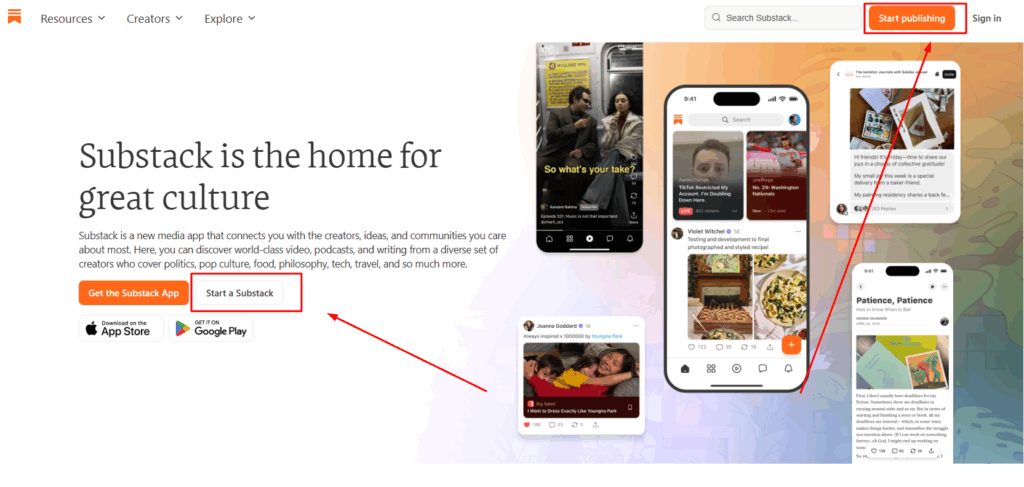
Substack is a newsletter platform that lets writers and creators publish content directly to their subscribers’ inboxes. The easiest way to describe it: blogging and email marketing combined, but simpler than either.
Substack has grown into one of the most active newsletter networks around, with tens of millions of active readers spending time on the platform every month. For coaches, that built-in audience is a meaningful advantage you won’t find on traditional email tools like Mailchimp or Kit.
Here’s what makes it different from traditional email tools:
- The focus is on long-form content and community, not automation and sales funnels
- It’s built around the rhythm of regular publishing, not drip sequences or behavioral triggers
- It’s free to use, no matter how many subscribers you have
Features coaches actually care about
Why are so many coaches and creators moving to Substack? Here are the main draws:
- It’s free: No subscriber fees. Substack only takes a 10% cut if you charge for paid subscriptions, otherwise it costs nothing.
- Built-in discovery: Substack has a recommendation system that helps new readers find your newsletter. This is a major advantage over traditional email tools, where growth depends entirely on your own marketing efforts.
- Simple to use: If you’ve ever felt overwhelmed by ActiveCampaign or Kit, Substack will feel like a relief. No automation workflows. No tagging logic. Just write and send.
- Built-in monetization: You can offer free and paid subscription tiers, founding member pricing, and manage everything from one dashboard.
- Community through Substack Notes: Think of Notes as a social feed, similar to Twitter/X but for Substack writers and readers. It’s a low-friction way to connect with other creators and attract new subscribers outside of your newsletter.
Because it’s free to start, the only thing you lose by trying it is your time.
How to Use Substack for Email Marketing: Step by Step
Ready to give it a try? Here’s your step-by-step guide to setting up and using Substack for your coaching newsletter.
1. Create your Substack account
Head to substack.com and click “Start your Substack.”
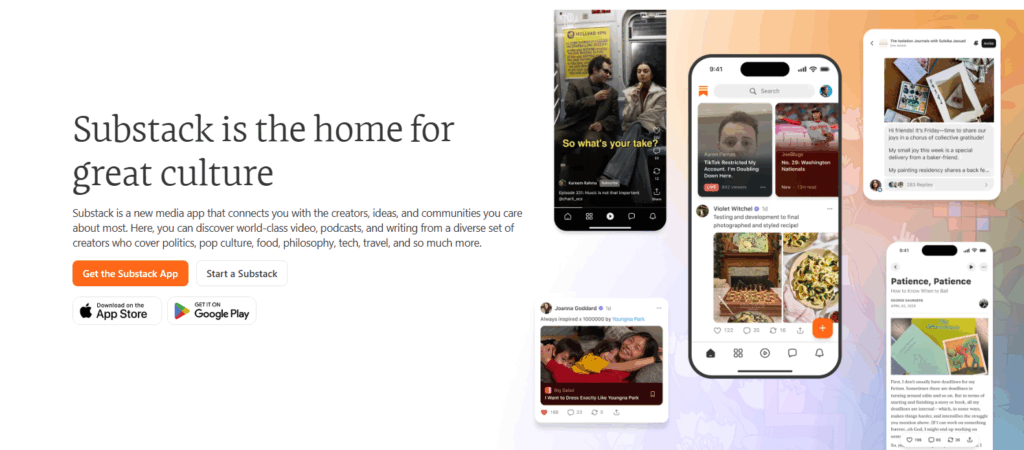
You’ll need your name, email address, and a publication name. Choose that last one carefully, since it becomes part of your Substack URL (yourname.substack.com). You can change it later, but it’s easier to get it right from the start.
2. Set up your publication
Once your account is live, customize your publication to reflect your coaching brand:
- Upload a profile photo and header image that represent your coaching style
- Write a compelling “About” page that explains who you serve and why someone should subscribe
- Add a tab linking to your coaching services
Then decide on your subscription model: free only, or paid tiers? If you’re just starting out, I’d recommend keeping everything free at first while you find your voice and build your audience.
3. Write and send your first newsletter
Click “Create New” → “Post.” Substack’s editor is deliberately simple. You can add headings, images, videos, and links, and none of it requires coding or formatting knowledge.
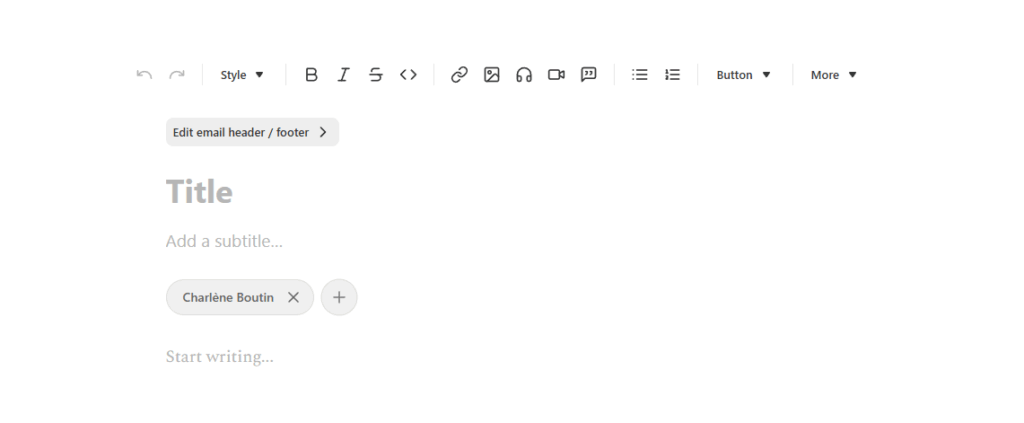
Your subject line is what appears in subscribers’ inboxes, so spend a few minutes on it. Curiosity, specificity, and emotional relevance all work. “This week’s newsletter” does not.
When you’re ready to publish, choose who receives it: all subscribers, free subscribers only, or paid subscribers only. You can also schedule posts ahead of time.
Don’t overthink your first one. Your subscribers signed up because they want to hear from you, not because they expect a polished magazine piece every time.
4. Build your subscriber list
Growing on Substack works differently than traditional email list building. Since you can’t build landing pages with lead magnets inside Substack, you’ll need to drive traffic from elsewhere:
- Share your Substack link on social media regularly, not just once
- Add it to your Instagram bio, LinkedIn profile, and Twitter/X header
- Mention it in podcast appearances or YouTube videos
- Embed a subscribe form on your existing website
- Import existing email subscribers from your current platform
The difference: people are subscribing to your newsletter specifically, because they want more of what you’re sharing, not because they’re getting a free resource in exchange.
Pro tip: You can link your Substack directly from your Paperbell coaching site, so anyone who visits can find your newsletter in one click. Try Paperbell for free to set it up.
5. Use Substack’s discovery features
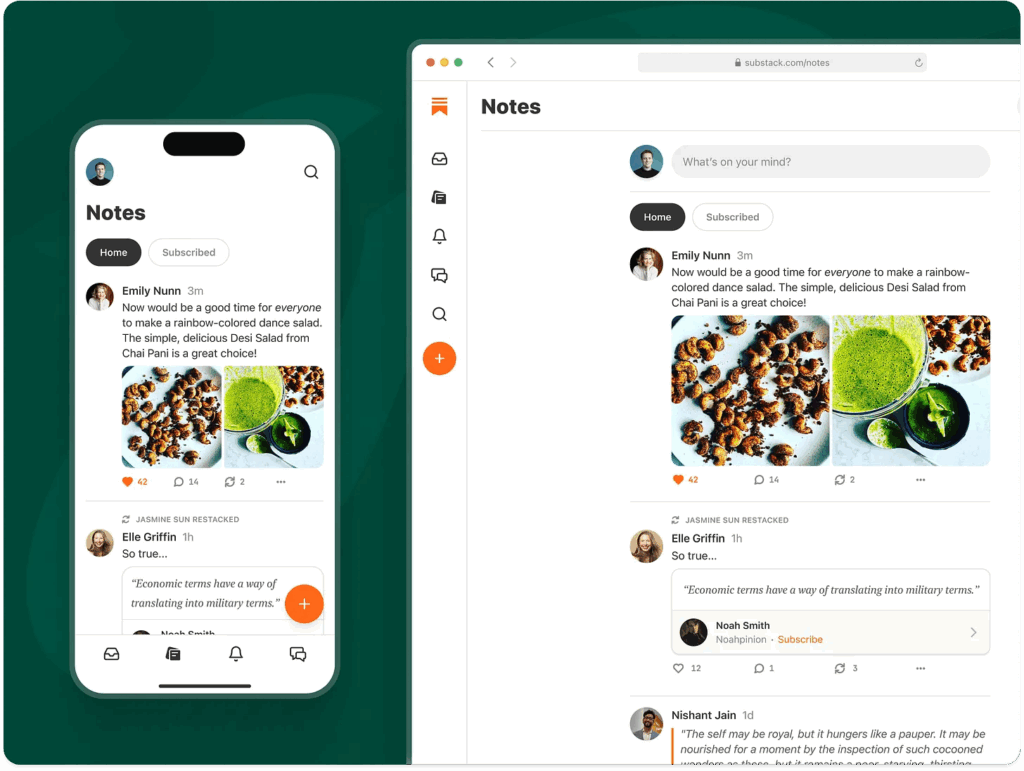
Two features set Substack apart from every traditional email tool:
Recommendations let you suggest other newsletters to your subscribers, and those writers can recommend you back. This creates a network effect where engaged readers find new publications they might love. It’s one of the most organic growth mechanisms available on any email platform today.
Substack Notes is a short-form social feed where you can share snippets, reactions, and updates. Think of it as a low-friction way to stay visible between newsletters and attract readers who aren’t yet subscribers.
Use both consistently. Engage with other writers’ Notes. Recommend publications that match your values. The Substack ecosystem rewards participation.
How to Grow Your Substack in 2026
Having a Substack is different from growing one. Here’s what’s actually working in 2026 for coaches:
Start with one strong weekly post
Consistency beats volume on Substack. One well-written post per week that your readers genuinely look forward to is worth more than daily mediocre updates. Find your cadence and stick to it, since readers subscribe because they like your voice, and that trust builds over time.
Use Notes as your discovery engine
Notes have become one of the most effective ways to reach readers who haven’t found you yet. A short observation, a question for your audience, or a snippet from your latest post can surface you to new readers without requiring you to write a full newsletter. Post 3-5 Notes per week. Think of it as your ongoing conversation between long-form editions.
The Notes algorithm rewards writers who engage with others, not just broadcast. Reply to comments. Reshare Notes you find genuinely interesting. The more active you are, the more visible you become.
Get the most out of Recommendations
The Recommendations feature allows you to suggest other Substack newsletters to your subscribers, and writers you recommend can recommend you back. This cross-pollination is one of the fastest ways to grow your list without spending on ads. Reach out directly to writers in complementary niches and propose a mutual recommendation.
Try Substack Chat for community building
Chat is Substack’s group messaging feature that lets subscribers talk directly with each other and with you. For coaches, it can work like a lightweight community space, somewhere clients and readers can ask questions, share wins, and stay connected between sessions. It’s not a replacement for a full community platform, but it’s worth experimenting with if you want more back-and-forth with your audience.
Repurpose content you’ve already created
Don’t create more work. Repurpose what you’ve already made. A coaching podcast episode becomes a Substack post. A YouTube video becomes an annotated transcript. A social media thread becomes a longer essay. You’re building a newsletter, not adding another content channel to your plate.
Use collaborations to borrow trust
Co-writing with another Substack author, doing a cross-recommendation, or guest posting on a related newsletter all let you reach an audience that already trusts someone who’s vouching for you. This is one of the fastest growth levers available on the platform.
Can Substack Be Used for Email Marketing?
Yes, with an honest caveat about what “email marketing” means.
What Substack does well
Substack is excellent at simple, regular newsletter publishing. If your goal is to write weekly or monthly emails where you share insights, stories, and updates, Substack handles this beautifully.
The platform also has a discovery advantage no traditional email tool can match. Substack’s recommendation system and Notes feature can bring new subscribers to you organically, something that doesn’t happen on Kit or Mailchimp.
And the community feel is genuine. Readers can comment, writers can respond, and the whole thing feels more like a conversation than a broadcast.
What Substack doesn’t do
Here’s the honest part:
- You can’t set up welcome sequences that automatically send when someone subscribes
- You can’t create drip campaigns that nurture leads over time
- You can’t segment your list based on interests or behaviors and send targeted content to different groups
Substack is built for newsletter publishing, not email marketing in the modern sense. Every email you send goes to your whole list (or your free vs. paid tiers). There’s no way to create multiple lead magnet entry points that trigger different sequences. That’s not a bug, it’s a deliberate design choice. But it matters a lot for coaches who want automation.
When Substack makes sense for coaches
Substack is a good fit when:
- You’re just starting out and want to build an email presence without paying for a platform yet
- You want simplicity: you like writing and sending, without worrying about automation or workflows
- You’re committed to engaging with the Substack community and want to grow organically through its discovery features
- You’re considering pivoting toward a newsletter business, where paid subscriptions eventually become a real revenue stream
When Substack doesn’t make sense
Substack isn’t the right fit when:
- You serve multiple different client types who need different content, since Substack can’t segment
- You rely on email automation: welcome sequences, post-purchase follow-ups, or drip campaigns require a traditional email platform
- You have multiple lead magnets with different landing pages and opt-in flows, since Substack doesn’t integrate with those
- Your newsletter exists primarily to nurture leads toward booking coaching sessions. In that case, a traditional email tool gives you far more control.
Substack vs. Email Marketing Platforms: How They Compare
One of the most common questions coaches ask is: “should I use Substack instead of Mailchimp?” or “is Kit better than Substack?” The honest answer is that they’re built for different things, so the comparison depends on what you actually need.
Here’s a plain-language breakdown of how Substack stacks up against the three platforms coaches mention most:
| Substack | Mailchimp | Kit (formerly ConvertKit) | Beehiiv | |
|---|---|---|---|---|
| Price | Free (10% cut on paid subs) | Free up to 500 contacts, then paid | Free up to 10k subscribers (limited features), then paid | Free up to 2.5k subscribers, then paid |
| Automation | None | Yes, on paid plans | Yes, even on free plan | Yes, on paid plans |
| List segmentation | Free vs. paid tiers only | Yes | Yes (tags and sequences) | Yes |
| Built-in discovery | Yes (Notes, Recommendations) | No | No (Creator Network for some growth) | Yes (Boosts referral network) |
| List portability | Yes (full CSV export) | Yes | Yes | Yes |
| Paid newsletter monetization | Built in, simple | Not built in | Yes (paid newsletters available) | Yes, built in |
| Best for coaches who… | Want to grow through content and community | Need solid automation on a budget | Want automation + tagging for multiple offers | Want discovery features plus automation |
A few things worth calling out for coaches specifically:
- If you have multiple coaching packages targeting different audiences (say, a group program and one-on-one sessions), Kit’s tagging and sequence system makes it much easier to send the right message to the right person. Substack can’t do this at all.
- If you want to charge for your newsletter content directly, Substack and Beehiiv both make this frictionless. On Mailchimp, you’d need external tools.
- If you want organic growth without running ads, Substack’s Notes and Recommendations give you a real advantage. Beehiiv has a similar network through its Boosts feature, but Substack’s community is more established for the coaching and creator space.
- If you already use lead magnets to build your list, stick with Kit or Mailchimp. Substack doesn’t connect to external landing pages or trigger automated sequences based on where someone signed up.
Many coaches end up using Substack alongside a traditional platform, not instead of it. Substack for community and content, Kit or ActiveCampaign for nurture sequences and targeted campaigns. That’s a perfectly reasonable setup if you’re willing to manage two systems.
Substack Newsletter Examples for Coaches
Let’s look at a few real coaches using Substack well, so you can see what’s actually possible.
Marco Altini
Marco Altini runs a coaching-focused Substack called CoachCorner, where he shares his training philosophy and coaching methodology.
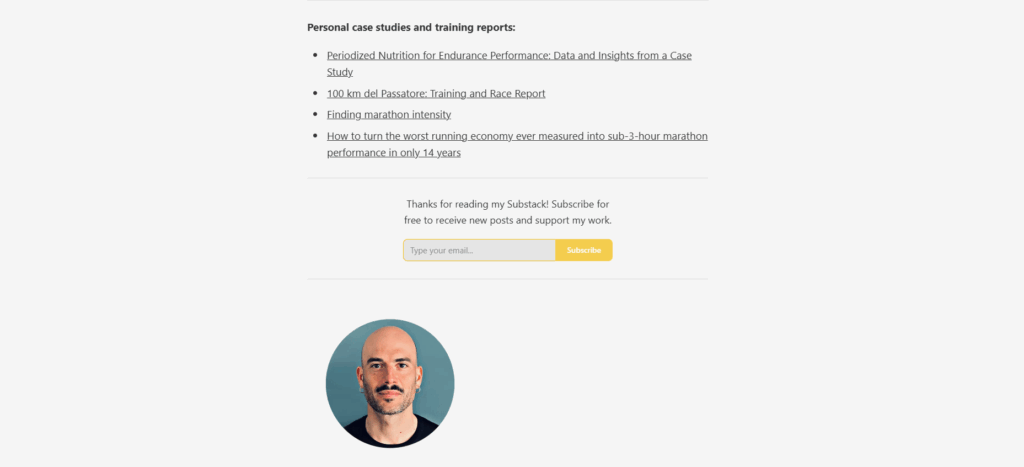
He uses case studies of his actual client work to build trust with potential clients, showing his process in action rather than just talking about it. Readers come away with a clear sense of whether his approach is the right fit for them.
Adrienne J. Clarke
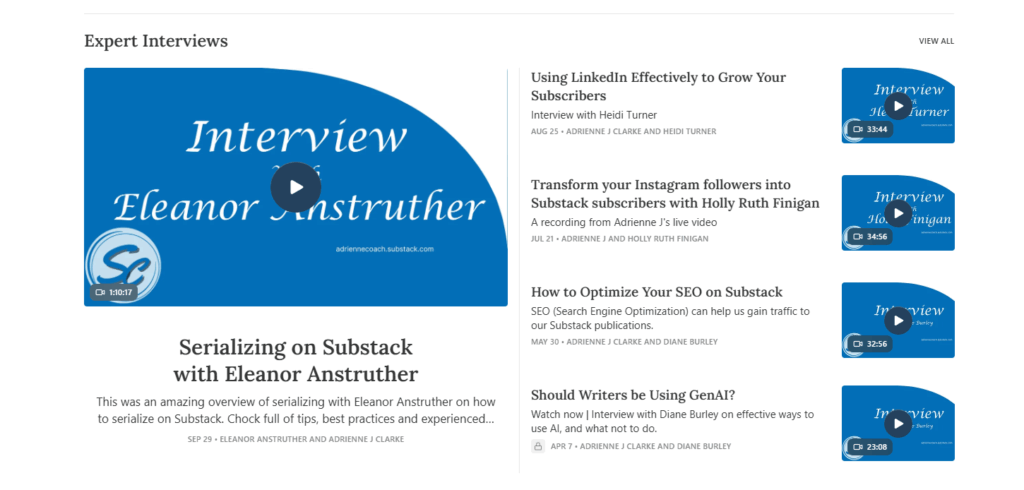
Adrienne J. Clarke coaches other creators on growing on Substack, so her newsletter is itself a demonstration of the methodology she teaches. She combines expert interviews, detailed tutorials, and a podcast called Cool People on Substack to build authority and demonstrate her approach in practice.
Sarah Novaro
Sarah Novaro is a singer-songwriter and coach who uses Substack to connect with potential clients, and Paperbell to manage the actual coaching business.
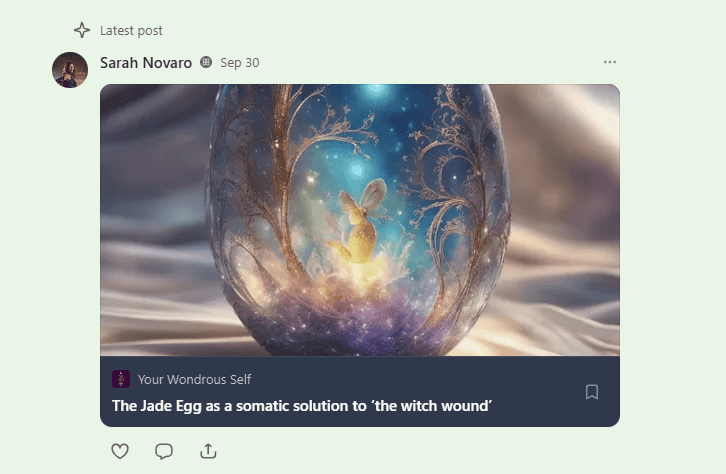
As we covered in Sarah’s case study, Substack handles her content and community. Paperbell handles everything else, including scheduling, payments, contracts, and client management. It’s a clean division of purpose that lets each tool do what it does best.
What content works well on Substack for coaches
Based on how successful coaches use the platform, these formats tend to perform best:
- Deep dives into your methodology: long-form posts that show how you think and why your approach works
- Client stories and case studies (with permission): concrete proof of your results that theoretical content can’t match
- Thought leadership essays: Substack readers expect and appreciate nuanced, well-developed ideas
- Expert interviews: variety for your readers, relationship-building for you
- Behind-the-scenes posts: the less polished, more personal content that builds the kind of trust that converts readers into clients
How Substack Works with Paperbell
Substack and your coaching platform don’t compete with each other. They serve different purposes.
Substack for content and authority
Think of Substack as your content home. It’s where you share your ideas, explore your methodology, and build a relationship with your audience over time. Your newsletter keeps you top of mind with potential clients and gives them a chance to get to know your voice before they ever book a session.
Paperbell for client management and bookings
When someone reads your Substack and decides they want to work with you, that’s when Paperbell takes over. It handles:
- Your coaching packages hosted on a branded website
- Scheduling and calendar management
- Payments and contracts
- Intake forms and session notes
- Client portal for resources and communications
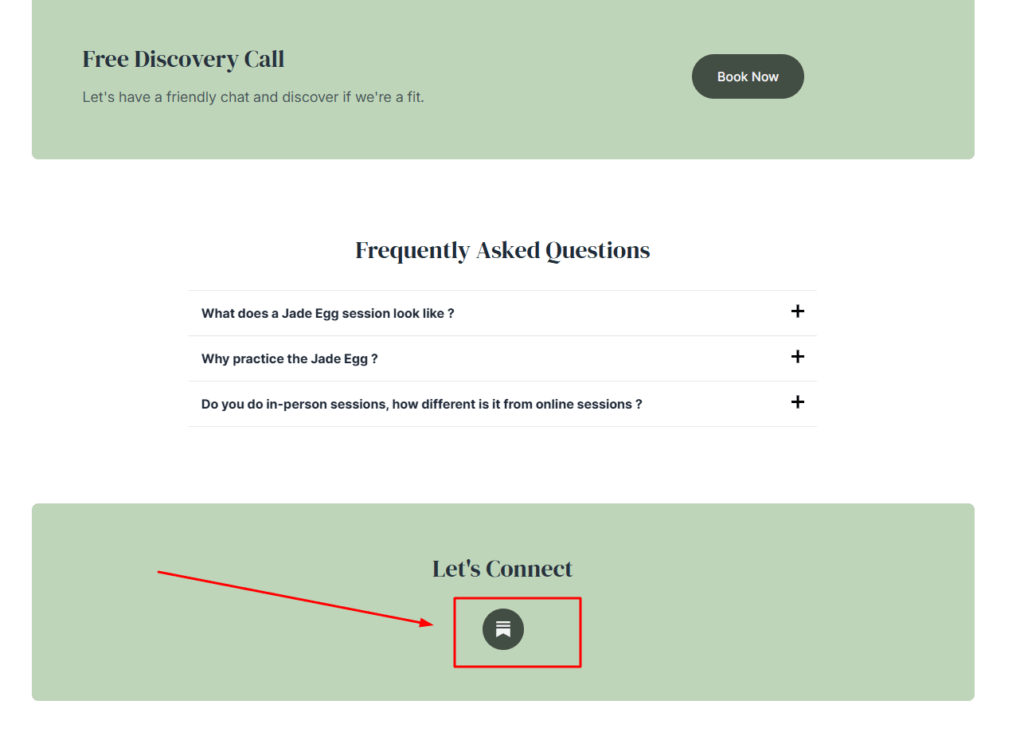
And since you can link your Substack directly from your Paperbell coaching site, anyone visiting can find your newsletter in one click. No extra setup needed.
Is Substack a Good Way to Build an Email List?
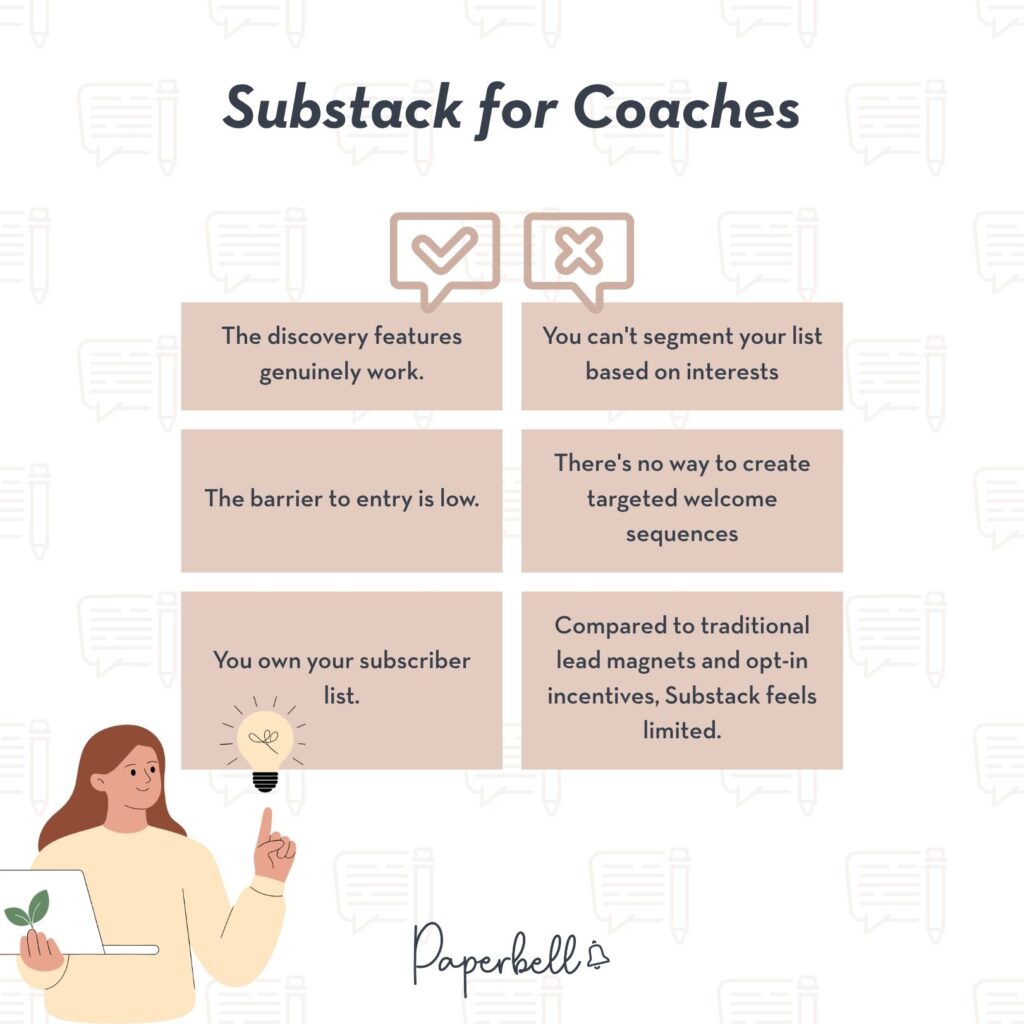
Not a simple yes or no. Let’s lay it out clearly.
Pros of using Substack for list building
- The discovery features genuinely work. If you publish consistently and engage with the community, you can grow your list without spending a dollar on ads.
- The barrier to subscribe is lower. People are more likely to subscribe to a Substack than to fill out a form for a lead magnet, especially if they’re already on the platform.
- You own your list. Unlike social media followers, you can export your Substack subscribers and take them to another platform at any time. You’re not building on borrowed ground.
Limitations for coaching businesses
- No list segmentation. Everyone gets the same newsletter. If you serve life coaches and executive coaches and want to send different content to each, you’re out of luck.
- No targeted welcome sequences. You can write a welcome email for new subscribers, but you can’t trigger different nurture paths based on where someone came from or what they’re interested in.
- No lead magnet integration. If you run Facebook ads to a landing page with a free guide opt-in, Substack can’t be part of that funnel the way a traditional email platform can.
What to consider before choosing Substack
If you’re focused on building authority and community through consistent writing, and you’re comfortable with a simpler approach to email, Substack can work really well.
If you need segmentation, automation, and multiple funnel entry points for different coaching offerings, a traditional platform like Kit or ActiveCampaign will serve you better.
Many coaches use both: Substack for community and content, and a traditional platform for targeted marketing. That approach gives you flexibility but does require managing two systems.
Another path: start with Substack to find your voice and build an audience, then migrate to a traditional platform once you need more advanced marketing tools. You can export your list and bring your subscribers with you.
Start Using Substack the Smart Way
Substack isn’t the right answer for every coach, but it might be exactly what you need right now.
If you’re just starting out and want a simple, free way to build authority through consistent writing, the ease of use and built-in discovery make it worth trying. If you need automated funnels and proper list segmentation, pair Substack with a traditional email platform, or skip it for now.
The smartest setup? Let Substack handle your content and community. Let Paperbell handle your coaching business: scheduling, payments, contracts, client management, all from one place.
Want to keep your coaching business organised while you grow your Substack? Try Paperbell for free.
FAQs About Using Substack for Email Marketing
Can Substack be used for email marketing?
Yes, with important limits. Substack works well for regular newsletter publishing and community building. It doesn’t support automation, segmentation, or complex email funnels, so if you need those, you’ll want a traditional email platform alongside it or instead of it.
Is Substack a good way to build an email list?
It can be. Substack’s discovery features and lower subscribe barrier can help you grow a list without paid advertising. The trade-off is that you lose segmentation and targeting capabilities you’d have on a traditional email platform. The list is yours though, and you can export subscribers at any time.
Can I use Substack instead of Mailchimp or Kit?
It depends on your setup. If you just want to send regular newsletters to an engaged audience, Substack is simpler and free. If you need automation, segmentation, lead magnets, or drip campaigns, Mailchimp or Kit will serve you better. Many coaches use both: Substack for the community feel, a traditional platform for the automation.
How does Substack compare to Beehiiv?
Beehiiv and Substack are the two newsletter-first platforms that have built-in discovery networks, which sets them apart from Mailchimp and Kit. Beehiiv has more automation options and a referral system called Boosts. Substack has a more established community (especially for coaches and writers) and the Notes feed is a more active discovery channel right now. Both are solid choices if organic growth is your priority.
Can I export my subscribers from Substack?
Yes. Substack lets you export your subscriber list at any time, which means you’re never locked in. If you outgrow the platform or your needs change, you can take your subscribers with you.
How do I grow my Substack as a coach?
Start with one strong weekly post, then add Substack Notes a few times per week to stay visible between newsletters. Use the Recommendations feature to cross-promote with other writers in complementary niches. Experiment with Chat to build community around your content. Repurpose content from your other platforms to reduce the workload. And share your Substack link everywhere: social, YouTube, podcast intros, your Paperbell coaching website.
Does Substack work with Paperbell?
Yes. You can add your Substack link directly to your Paperbell coaching site, so readers can easily find your newsletter. The two tools complement each other: Substack builds your audience and authority, Paperbell converts interested readers into booked clients.