
Running a coaching business when your brain works differently isn’t just hard. It can feel impossible.
Most business systems were built by neurotypical people, for neurotypical people. They assume you can easily context-switch between client calls and admin work. They assume you won’t hit a wall after three back-to-back Zoom sessions. They assume a long onboarding checklist is motivating rather than paralyzing.
For neurodivergent coaches, the wrong tools don’t just slow you down. They deplete you.
That’s exactly what Sarah Novaro (a certified coach, singer, and neurodivergent entrepreneur) was trying to avoid when she set up her coaching business. Here’s how she built a professional practice that actually fits her brain, before she even signed her first client.

The challenge: creating a professional foundation without the overwhelm
Sarah started coaching after receiving her certification in 2023. Like many new coaches, she was balancing multiple roles, offering singing lessons to stay connected to her creative roots while slowly building her coaching practice.
But she had one non-negotiable: her systems needed to support her energy, not drain it.
“With any other job I’ve had, if it doesn’t fit the way I function, it just depletes me. I zone out and feel drained,” Sarah shares. “I needed something that worked with how I function.”
This is a reality that a lot of neurodivergent coaches know deeply. When your environment fights against your cognitive style, you spend so much energy just coping that there’s nothing left for the actual coaching. The admin tasks pile up. The onboarding process feels daunting. And instead of showing up fully for clients, you’re running on empty.
Sarah’s top concerns were:
- Creating a client experience that felt polished and professional
- Managing her energy as a neurodivergent entrepreneur
- Organizing both coaching and singing clients in one system
- Reducing decision fatigue from piecing together multiple tools
- Avoiding the stress of building a full website from scratch
What is neurodivergent coaching, and why do systems matter so much?
Before we dig into Sarah’s story, it helps to understand what neurodivergent coaching actually is, because it’s a distinct niche with distinct needs.
Neurodivergent coaching supports people whose brains process information differently. This includes coaches (and their clients) who have ADHD, autism, dyslexia, dyspraxia, or similar diagnoses, or who simply identify with the neurodivergent experience without a formal label.
Here’s the thing. Neurodivergent coaching isn’t therapy, and it isn’t about “fixing” anything. It’s about building structures, strategies, and environments that work with your brain rather than against it. That might mean helping a client identify their peak energy hours and protect them, create external scaffolding for tasks that require executive function, or develop routines that prevent the kind of sensory and social overwhelm that leads to burnout.
For the coach, though, that same logic applies to the business itself. A neurodivergent coach who’s drowning in admin or spending hours troubleshooting disconnected tools has less capacity for the deep, intentional work their clients need. Getting your systems right isn’t just a nice-to-have. It’s part of how you sustain yourself in this work long-term.
Sarah’s coaching approach: alignment over performance
What makes Sarah’s approach stand out is that she doesn’t separate her lived experience from her coaching work. Her neurodivergent identity isn’t a footnote. It’s central to how she shows up for clients.
She’s drawn to coaches and clients who understand that building a business isn’t a linear process, and that “success” looks different when you’re working within real energy limits. Sustainability matters more than hustle. Alignment matters more than performance.
That same ethos is why she was so deliberate about choosing tools that matched how she actually functions, not tools she’d have to fight against just to get through a Monday.
The search: finding a tool that “gets it”
Sarah first heard about Paperbell through another coach in her certification program’s Facebook group. She had been trying to piece together her tech stack but quickly hit a wall.
“It was missing parts. You’d need one app for scheduling, one for payments, one for contracts — it just felt like too much,” she says.
This is the classic coaching tech stack problem. Each individual tool seems reasonable on its own, but stringing them together means logging into five different dashboards, troubleshooting sync errors, and remembering which app sends which automated email. For a neurodivergent coach who needs simplicity to function well, it’s not just annoying. It’s a genuine obstacle.
When she checked out Paperbell, the decision was easy.
“I didn’t have time to research a hundred options. It looked like it could do everything I needed, and the design just felt right.“
Even though she hadn’t signed her first client yet, Sarah decided to sign up and treat Paperbell as the central hub of her business.
The implementation: systems first, clients second
While many new coaches wait until they’ve “made it” to invest in systems, Sarah did the opposite.
She used Paperbell to set up a full coaching page, even before her client roster was full. She also created a separate package for singing lessons, keeping both offers neatly organized on one platform.
What made the biggest difference? The ability to create a professional presence without needing a traditional website.
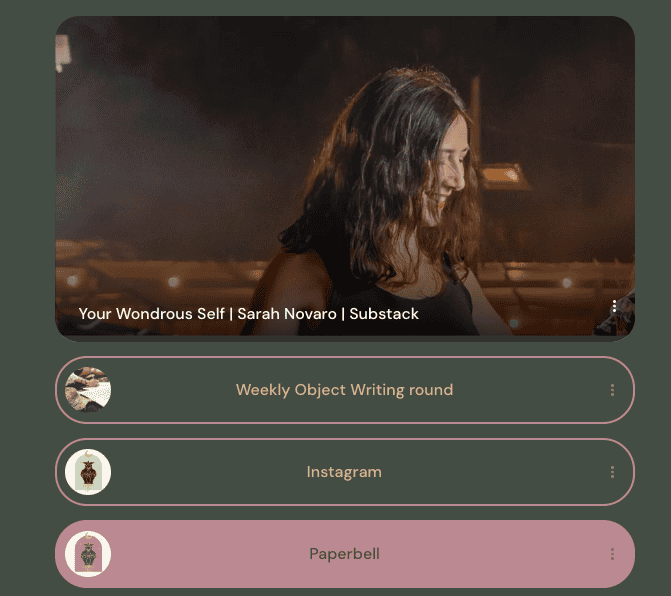
“I set up a coaching page on Substack and linked it to my Paperbell page,” she explains. “I also connected it to Instagram using Linktree. I didn’t need a full website at all.”
And Paperbell didn’t just help her look professional. It also helped her feel more confident.
“It was such a relief. I didn’t have to wait until everything was perfect. I just had to focus on my visual identity, hire a designer, and boom — done.”
That “boom, done” moment matters more than it might seem. For neurodivergent entrepreneurs, open loops are exhausting. Every unfinished system, every half-built page, every “I’ll sort that out later” creates low-level background stress that compounds over time. Getting set up properly and fully gave Sarah one less thing draining her mental energy.
The results: a business that actually fits
Even though Sarah is still in the early stages of growing her coaching clientele, setting up Paperbell has already paid off in ways that go beyond client numbers.
A space that matches her needs as a neurodivergent coach
One of Sarah’s favorite features is the ability to set buffer time between sessions. Automatically.
“I was like, oh my god, yes! Who thought of this? As someone who needs recovery time after interactions, this is huge.”
This flexibility gives her the space to manage her energy and hold deeply intentional sessions with clients. She’s not rushing from one call to the next with no time to decompress. She can set up her schedule to protect the recovery time she actually needs, and Paperbell enforces it automatically, without her having to explain herself to anyone.

Time and energy saved on admin
Instead of stressing over how to build a website or onboard clients manually, Sarah put her energy into connecting with potential clients through Instagram and her newsletter.
“Without Paperbell, building the backend of my business would’ve been a huge mental load. The kind that creates resistance, where you just don’t want to do it.”
Now, all that energy can be directed toward content creation, writing her Substack, and welcoming coaching clients when they’re ready.
A design that feels safe
This one surprised us a little. Sarah talks about Paperbell’s visual design the way some people talk about a calming workspace.
“Paperbell has a softness to it. You want to feel that warmth when you’re considering coaching. It’s the kind of design that feels safe, especially for something as personal as life coaching.”
For neurodivergent coaches and clients alike, that emotional safety isn’t trivial. The tools you use set a tone. A cluttered, chaotic interface creates friction. A warm, clean design does the opposite: it signals care, and it makes both you and your clients feel at ease before the session even starts.
Advice for new coaches: don’t wait until you “feel ready”
When asked what she’d say to a coach who’s wondering if they’re ready for Paperbell, Sarah’s answer is clear:
“It’s worth it. Once you’re using it, it’s actually fun. It helps you project yourself into the business you’re building.”
That word, project, is worth sitting with. There’s something about having your systems in place that makes the vision of your business feel real. Not theoretical. Not “someday.” Real, and happening now.
For neurodivergent coaches especially, that feeling matters. Decision fatigue, perfectionism, and the paralysis of “I’m not ready yet” are genuine barriers. Having a simple, done system removes the biggest one.
It also means you can show up to discovery calls with confidence. When a potential client asks how the logistics work (how they’ll book, how they’ll pay, what happens after they sign up), you have a real, working answer. Not “I’m still figuring that out.” You’ve already figured it out. That confidence is contagious, and it makes a difference.
Frequently asked questions
What is a neurodivergent coach?
A neurodivergent coach is a trained coach who supports clients whose brains process the world differently, including people with ADHD, autism, dyslexia, dyspraxia, and related conditions. The coaching approach is built around each client’s actual cognitive style, energy patterns, and strengths, rather than assuming a neurotypical baseline. A formal diagnosis isn’t required. If the approach resonates with how you experience the world, it’s relevant to you.
Do neurodivergent coaches only work with neurodivergent clients?
Not necessarily. Many neurodivergent coaches do specialize in working with neurodivergent clients, because the lived experience creates a deeper level of understanding. But the skills involved (energy management, executive function support, building systems that match how your brain works) are useful for a wide range of clients. It depends on how the individual coach has positioned their practice.
Why do neurodivergent entrepreneurs need different business tools?
Most business tools are built around neurotypical workflows: linear processes, lots of context-switching, scattered systems requiring you to hold a lot of information in your head at once. For neurodivergent entrepreneurs, that kind of friction isn’t just annoying. It actively depletes the energy available for the real work. Simpler, more consolidated tools that reduce decision fatigue and handle admin automatically make a meaningful difference.
Is Paperbell a good fit for neurodivergent coaches?
It can be a really good fit. Paperbell handles scheduling, payments, contracts, client intake, and your public-facing coaching page in one place, which means fewer logins, fewer tools to troubleshoot, and less mental overhead overall. Features like automatic buffer time between sessions are particularly useful for coaches who need built-in recovery time. The clean, uncluttered design is also something neurodivergent coaches tend to appreciate.
Should I set up my coaching systems before I have clients?
Yes, and Sarah’s story is a good argument for why. Having your systems set up before clients arrive means you’re not scrambling to figure out payments or onboarding mid-conversation. It also signals professionalism from the start, which builds your own confidence as much as theirs. You don’t need a full client roster to be “ready.” You just need a system that makes you ready to say yes when the right person shows up.
Ready to build a coaching business that works for your brain?
You don’t have to wait until your calendar is full to build something that works. Getting your systems right first, before the clients and before the pressure, is exactly how you set yourself up to show up fully when it matters.
The best part? You don’t have to build it from scratch or cobble together a dozen different tools. Try Paperbell for free and see how much easier running your coaching business can be.