

Your new client signs up Monday, and you need an intake form. Not eventually. Today.
So you Google “coaching form template” and land on a listicle that sends you to six different websites, each one built for a different kind of coach (or worse, a call center manager tracking employee performance, not a paying client).
Here’s the thing: most of what shows up in a search like that wasn’t built for coaches running their own practice. It’s a bare link with no idea what fields the form should even have, or it’s borrowed from an HR department.
That’s what this guide fixes. Below are 19 coaching form templates organized by what you actually need them for: intake, feedback, agreements, testimonials, and more. For the ones that matter most, we’ve broken down exactly what fields to include and when to send them, so you’re not guessing. There’s also a free downloadable Coaching Forms Pack with six templates built specifically for independent coaches.
Free Coaching Forms Pack: 6 Fill-In Templates (2026)
Six ready-to-use forms built specifically for independent coaches: intake, feedback, agreements, and more, so you’re not stitching together generic HR templates.
Get the free templates → Download as PDF
This button allows you to copy our Google Docs template
How Coaching Forms Can Grow Your Business
From impressing your clients to making you a better coach, here are three ways the right forms can grow your coaching business.
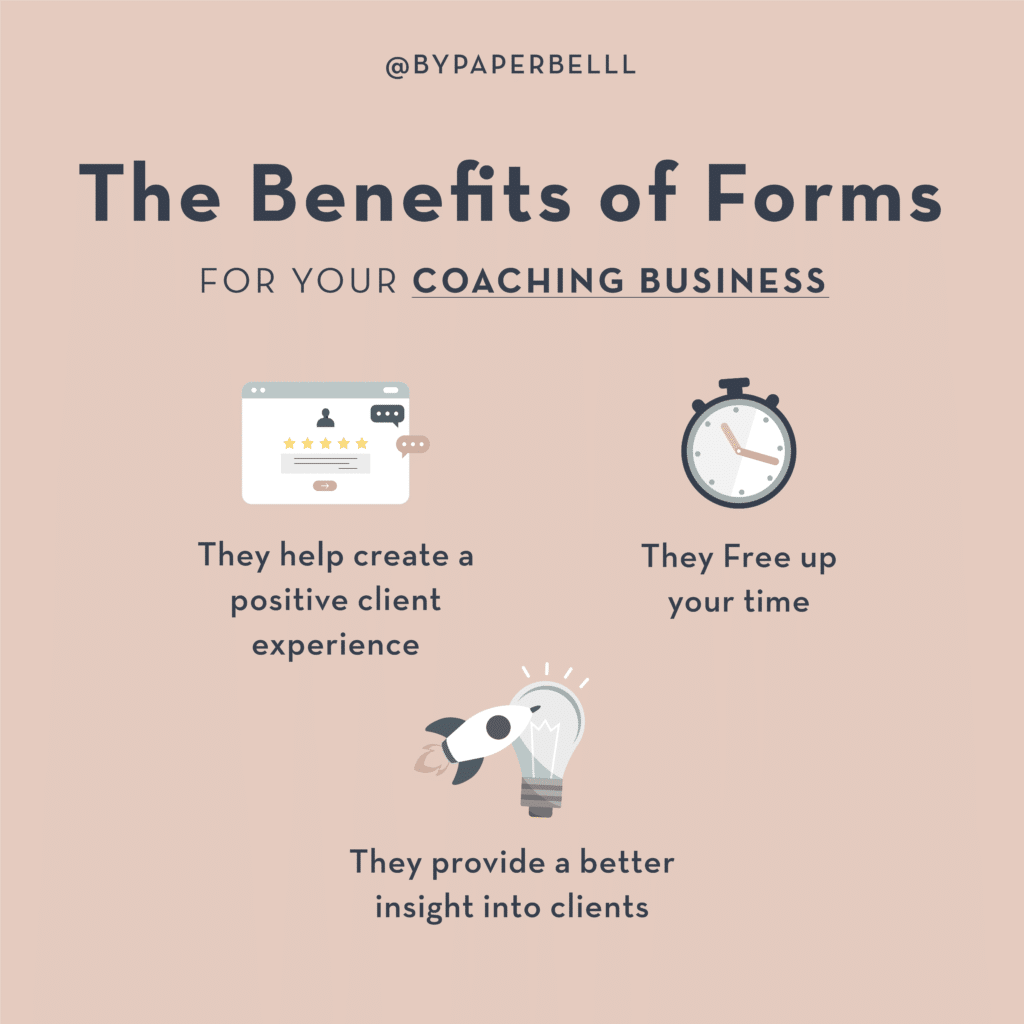
1. They Create a Positive Client Experience
Have you ever miscommunicated with a client? Maybe you didn’t understand their goals and motivations, or you made assumptions based on incomplete information, or you simply took an approach to coaching that your client wasn’t a fan of.
You can avoid most of these mishaps in your coaching program just by using the right forms. From onboarding questionnaires to feedback forms, you’ll never have to second-guess your approach again.
Forms are also a good way for you to learn and grow as a professional. Many clients are more comfortable answering personal questions or giving feedback in writing than they are saying it out loud. That means you’ll pick up on things they weren’t quite ready to share in your coaching sessions.
2. They Free up Time
Think about how much time you spend on important but time-consuming parts of your business: onboarding, client check-ins, writing emails, building out plans. Coaching forms can shave time off all of it.
With that extra capacity, you could be bringing on new clients, building new offers, or just taking more time off to recharge.
3. They Provide Better Insights
Big moments in your coaching relationship, like onboarding or feedback, tell you a lot about your client’s needs, feelings, and roadblocks.
But do you ever feel like you’re only getting half the picture?
Unlike a conversation or an email exchange, a form gives your client a less intimidating way to answer, and it’s often a more accurate snapshot of where they’re at and where they want to go.
Plus, you end up with a written record you can pull up any time you need to revisit something in their life or business.
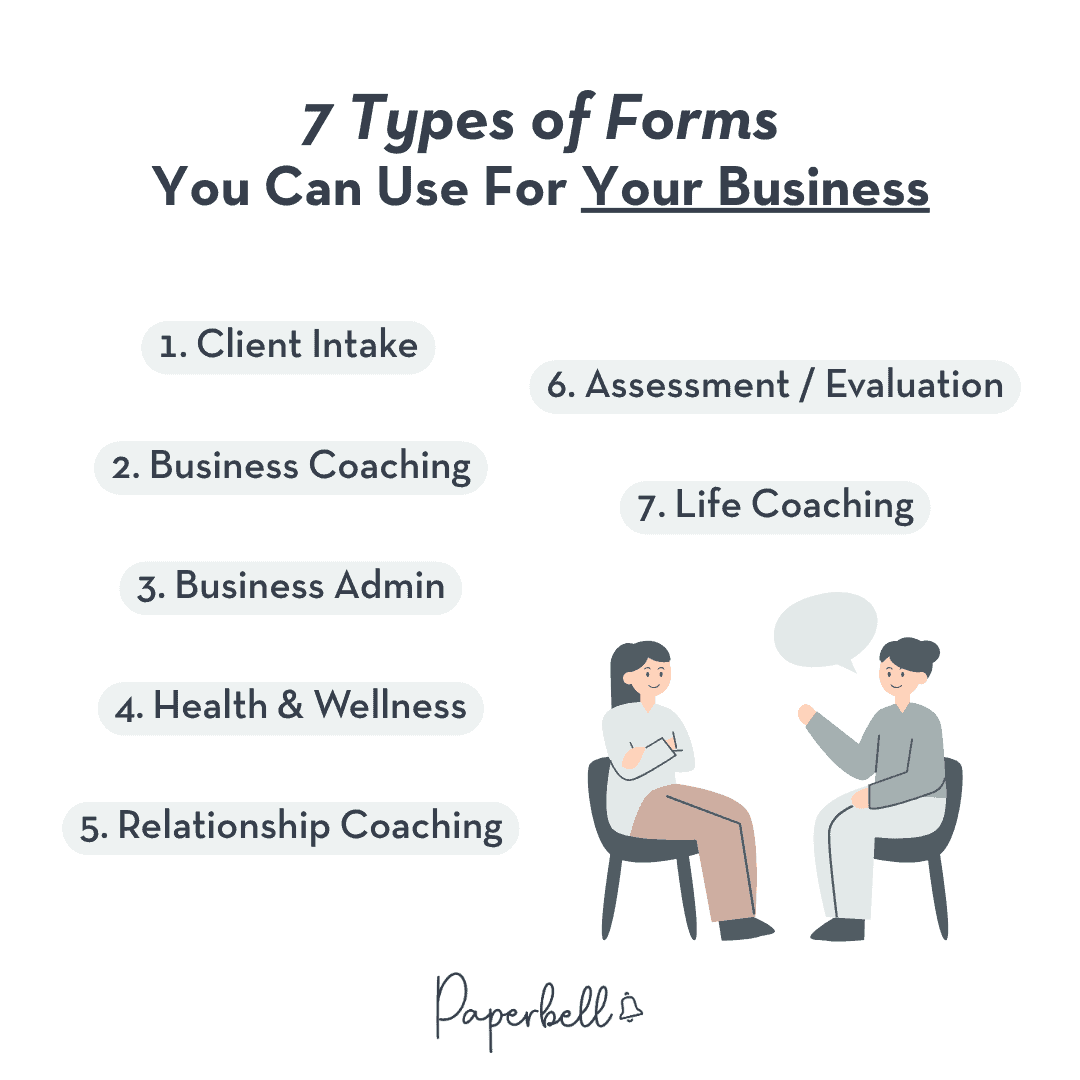
19 Coaching Form Templates for Your Coaching Business
Here are 19 templates to build out your coaching toolkit, organized by what you actually need them for.
Client Intake Forms
Want to start a client relationship on the right foot? A solid intake process is where that starts.
These three templates cover the two ends of intake: qualifying someone before they sign, and gathering what you need once they have.
1. New Client Discovery Call Form
This one is for the pre-sale stage: qualifying and prepping a potential client before you get on a call with them, so you’re not starting from zero. It typically includes:
- Name and contact info
- Current situation and main challenge
- What they’ve already tried
- Timeline and urgency (why now, not six months from now)
- A general sense of budget or investment readiness
Send it as soon as someone books a discovery call, before the call happens. It’s one of the six templates in the Coaching Forms Pack above.
2. Session Prep / Pre-Session Check-In Form
Once someone’s a client, this short check-in goes out before every session so you both arrive already knowing what to focus on. It typically includes:
- Wins since the last session
- Current obstacle or stuck point
- An energy or mood rating
- What they want to walk away from today’s session with
Send it 24 hours before each session, once the relationship is underway. It’s also part of the Coaching Forms Pack above.
3. Full Client Intake Form
For the deeper, one-time intake you run at the start of a new client relationship, we’ve already built this out in detail. Our guide to life coaching intake form questions breaks down exactly which questions to ask, organized by niche (health, business, career, executive, relationship), plus a full sample template you can copy.
Coaching Assessment and Evaluation Forms
How do you know what you’re doing is working unless you’re measuring it? That’s where coaching assessment forms come in.
They keep you and your client on the same page every step of the way.
4. Post-Session Feedback Form
This one catches how a session, or a whole program, landed for your client, before a small frustration turns into a client who quietly stops showing up. It typically includes:
- What resonated most this session
- What felt less useful or unclear
- A progress rating toward their goal
- Anything they wish they’d brought up but didn’t
- Open feedback for you as their coach
Send it right after a session, or at set checkpoints in a longer program, like every four weeks. It’s one of the six templates in the Coaching Forms Pack above.
5. Testimonial Request Form
Structured beats vague. This form gets you a specific, usable testimonial instead of a generic “loved working with you!” It typically includes:
- Permission to use their name and photo (or stay anonymous)
- What their situation looked like before coaching
- The specific result or shift they experienced
- A quote you can pull directly and use as-is
- Whether they’re open to a video testimonial
Send it right after a client hits a milestone or wraps their program, while the win is still fresh. For the full ask (not just the form), check out our guide on how to ask for a testimonial. This form is also part of the Coaching Forms Pack above.
6. The Coaching Tools Company Wrap-Up Session Questions
A quick set of verbal wrap-up questions to ask at the end of a session, separate from a written feedback form. Good for coaches who want a lighter-touch close.
Coaching Business Admin Forms
It’s not the fun part, but admin is a real part of running a coaching business. From legal forms to application screening, these are the ones worth having ready.
7. Wonder Legal’s Coaching Client Agreement
A client agreement that clearly spells out your legal obligations, drafted by actual lawyers rather than pieced together yourself. A solid coaching agreement typically covers:
- Scope of services and what’s included
- Payment schedule and terms
- Cancellation and refund policy
- Confidentiality clause
- Liability and limitation of liability language
Use it before your first paid session, every time, no exceptions. If you also need a disclaimer covering the limits of what coaching is (and isn’t), see our coaching disclaimer templates. For a deeper breakdown of what belongs in the agreement itself, read our article on coaching contracts.
8. Freelancer Templates From ClickUp
If you’re running your coaching business solo, this free pack includes checklists and templates for invoicing, meetings, and client work.
9. Coaching Program Application Form
For application-only or high-ticket programs, this screens applicants before they ever land on your calendar, so you only book calls with people who are a real fit. It typically includes:
- Current situation and goal
- Why now (their motivation or urgency)
- What they’ve already tried to solve this
- Investment readiness
- Availability for the program’s schedule
Gate this behind your program’s application page, before you offer a sales call. It’s one of the six templates in the Coaching Forms Pack above.
Life Coaching Forms
These templates cover the parts of a life coaching practice that are easy to overlook until you need them.
10. The Counselor’s Coach Life Coaching Consent Forms Packet
Client consent can be tricky to get right, especially in a niche that touches sensitive topics like grief, relationships, or health. This packet typically covers:
- An informed consent statement (what coaching is and isn’t)
- Confidentiality and its limits
- Cancellation, fee, and boundary policies
- A liability waiver
Use it alongside your main client agreement, not instead of it. It can be adapted to your own branding.
11. Growth Lab: How to Structure a Coaching Contract Clients Can’t Wait to Sign
A practical walkthrough of what to put in your contract, with real examples instead of just a blank template.
12. Goal and Progress Tracking Worksheet
A recurring worksheet you and your client fill out together to track movement toward a stated goal across a whole program, not just one session. It typically includes:
- The original goal statement
- Milestones with target dates
- A check-in rating at each milestone
- Adjustments made along the way
- A final outcome summary
Fill it out together at kickoff, then revisit it every few sessions. It’s one of the six templates in the Coaching Forms Pack above.
Health, Nutrition, and Wellness Coaching Forms
Food diaries, activity trackers, mindset prompts, there’s a real range of forms health coaches lean on to deliver a solid service.
Here are a few to get you started.
13. Precision Nutrition Client Assessment Forms
A detailed intake built specifically for health and nutrition coaching. Expect it to cover:
- Medical history and current conditions
- Current eating patterns
- Activity level
- Sleep and stress
- Goals and readiness to change
Use it before you design any nutrition or wellness program, it’s too detailed a form to skip.
14. Nutrition Coaching Waiver From Template.net
A starting point for a waiver or consent form specific to nutrition coaching clients.
15. Wellness Alliance (formerly National Wellness Institute) Resources & Tools
A set of forms that cover wellness goals more broadly than food or fitness alone.
Business Coaching Forms
It’s business time, and that means paperwork, but the useful kind.
16. Better Proposals Free Business Coaching Proposal Template
A polished, sendable proposal for prospective clients instead of a verbal pitch they have to remember later. A good business coaching proposal typically covers:
- The client’s stated problem
- Your proposed scope and deliverables
- Timeline
- Investment or pricing options
- A clear next step to sign
Send it right after a discovery call, when you’re ready to formalize the offer.
17. Free Coaching Tools From The Coaching Tools Company
A library of 30+ free tools and templates, including intake forms, goal-setting worksheets, and feedback forms. All downloadable and brandable.
Relationship Coaching Forms
A smaller category, but two solid templates if this is your niche.
18. A Better Love: Marriage, Couples, and Relationship Forms
A good starting point if you want to add a relationship vision questionnaire to your intake process.
19. The Balanced Life Couples Counseling Intake Form
An example intake form built for couples work specifically, useful if you’re adapting your general intake for two people instead of one.
5 Tips to Effectively Help Your Clients With Coaching Forms
Here’s how to use coaching forms to get the best outcome for your clients.

1. Use Forms to Eliminate Common Issues
It’s easy to get caught up in shiny new things, especially beautifully formatted coaching templates (don’t they just trigger your inner stationery addict?). But you need to make sure the forms you’re using are the right ones for you.
In other words, make sure each form you use addresses a specific need in your practice. A good form amplifies the results of your coaching program without creating extra work for you or your clients.
2. Give Your Client a Heads Up
The golden rule of forms: always give your client an idea of how much time to set aside to fill one out. That way they can plan for it instead of feeling ambushed.
Setting clear expectations is the fastest way to improve your client experience and ensure you’re easy to work with.
3. More Isn’t Always Better
Make sure each form has one clear, well-defined purpose. Don’t combine everything you need to know into one long form that takes an hour to fill out.
For instance, don’t combine payment records with onboarding questions.
You’re not trying to bury your client (or yourself) in paperwork. The goal is to automate parts of your business and give your clients space to reflect between sessions.
Think about what belongs in your sessions versus your forms, and factor in your clients’ personal preferences.
4. Don’t Forget the Branding
Now for the fun part: design. Even if you’re using someone else’s template, put your own touch on it. It can be as simple as adding an image or logo to the top of the form.
Branding your materials matters if they ever get shared with a third party. That way, word gets around about you without you having to do anything.
5. Ditch the Paper and Go Digital
Printing things out is more hassle than it’s worth. Make life easier for yourself (and the planet) by going digital.
Paperbell includes digital intake forms and questionnaires that are automatically sent as part of your onboarding process. Send your client a link, and their answers get stored safely in your all-in-one client management system.
FAQs About Coaching Form Templates
What should a coaching form template include?
At a minimum: the client’s name and contact details, questions tied directly to that form’s purpose (intake, feedback, agreement, and so on), and a field for open-ended notes. Skip anything that doesn’t serve that one form’s job. A bloated form is a form that gets abandoned halfway through.
Are coaching forms the same as a coaching contract?
No. A coaching form collects information, like intake details, feedback, or progress. A coaching contract is the legal agreement covering scope, payment, and liability. Most coaches use both: a signed agreement before the first session, then forms throughout the relationship. Our guide to coaching contracts covers what to include in yours.
Do I need different forms for different coaching niches?
Some forms are universal, like feedback forms, testimonial requests, and agreements. Intake questions, though, should be niche-specific. A health coach needs medical history questions a business coach doesn’t, and the reverse is also true. Our guide to life coaching intake form questions breaks down intake questions by niche if you want a starting point beyond the generic version.
Can I use free coaching form templates for my coaching business?
Yes, and most of the templates in this list were chosen because they’re built for independent coaches running their own practice, not corporate HR programs or call center performance reviews. If a template feels geared toward employee reviews rather than paying clients, skip it. Every form in our downloadable Coaching Forms Pack was written specifically for coach-client relationships.
Build a Thriving Coaching Practice
With the right coaching forms in place, you free up a lot more time to focus on transforming lives. And nothing saves you more time than an all-in-one client management and website tool like Paperbell.
With built-in forms, packages, scheduling, payments, and contracts, Paperbell brings everything together without the hassle of juggling multiple tools.
It builds you a fully functioning, personalized coaching website with all these features already plugged in, so you’re ready to hit the ground running.
Editor’s Note: This post was originally published in April 2021 and has been updated for 2026.