
Coaching packages help you organize your services and create clarity for clients, but structure alone doesn’t make them sell. To turn interest into purchases, you need to design your offers with the same psychological principles sales experts use to drive conversions.
In this guide, you’ll learn how to:
- Position your packages to the right audience
- Build a profitable online coaching business through six proven sales strategies
- Use subtle conversion tactics that make saying “yes” easy
How to Position Your Coaching Packages for Maximum Sales
All coaching packages include a set number of deliverables (like coaching sessions and materials) and clear coaching outcomes. However, what makes one sell out and another underperform often comes down to positioning. In other words, how your offer fits into the market and how clients perceive its value.
Here’s how you can make that clear to potential clients.
1. Choose a Lane
Decide whether your packages fall into high-ticket coaching or more accessible services.
- Sell high-ticket coaching services for clients who want deep transformation and hands-on support. They value exclusivity and are willing to pay more for personalized guidance and tailored results.
- Mid-tier packages are ideal if you offer structured programs with proven results but less personalization.
- Lower-cost packages are great for new coaches with less experience or those who want to reach a broader audience. These programs are often shorter and in a group session format.
2. Match Your Brand to Your Price
Your visuals, language, and onboarding experience should reflect your positioning. If your website feels DIY but your prices are premium, clients might hesitate to sign up. Consistency in your communication, on the other hand, builds trust with them.
3. Filter for the Right Clients
Positioning isn’t just about sales but about setting the tone for who you want to work with. Your pricing and presentation should naturally attract those who are ready to invest and discourage those who aren’t a fit.
Pro tip:Paperbell lets you create custom private and group packages with various pricing plans and sell them automatically through a ready-made website. Try it for free .!
How to Package Coaching Services for More Sales
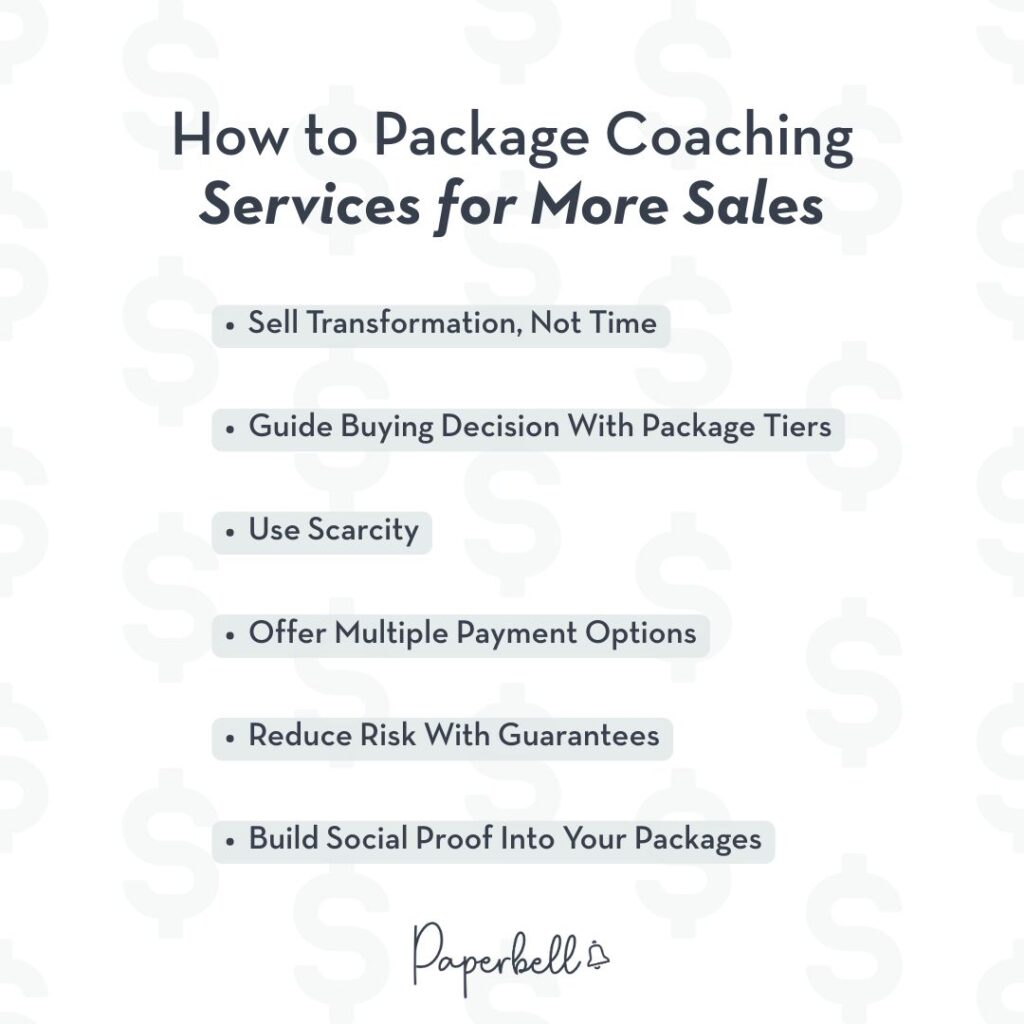
Strategy 1: Sell Transformation, Not Time
Many coaches focus too much on describing what’s included in their coaching services (six sessions, weekly calls, email support). The problem is that features don’t sell, feelings do. People buy coaching because they want to feel confident or free, not because they crave another Zoom call.
To make your offer hit home, lead with the result your clients desire the most. What’s the emotional outcome behind their practical goal? For example, landing their dream job in the arts could be about security and creative fulfillment. Learning to communicate better with their partner is about feeling loved and accepted.
To further emphasize the transformation you offer, you can also use before-and-after framing:
- Before: Stuck in cycles of overthinking and burnout.
- After: Calm, focused, and moving forward with purpose.
Pro tip: Ask for testimonials and describe your offer with the exact words your clients use.
Notice how Sarah Novaro emphasizes joy and pleasure in her art and sexuality coaching packages.
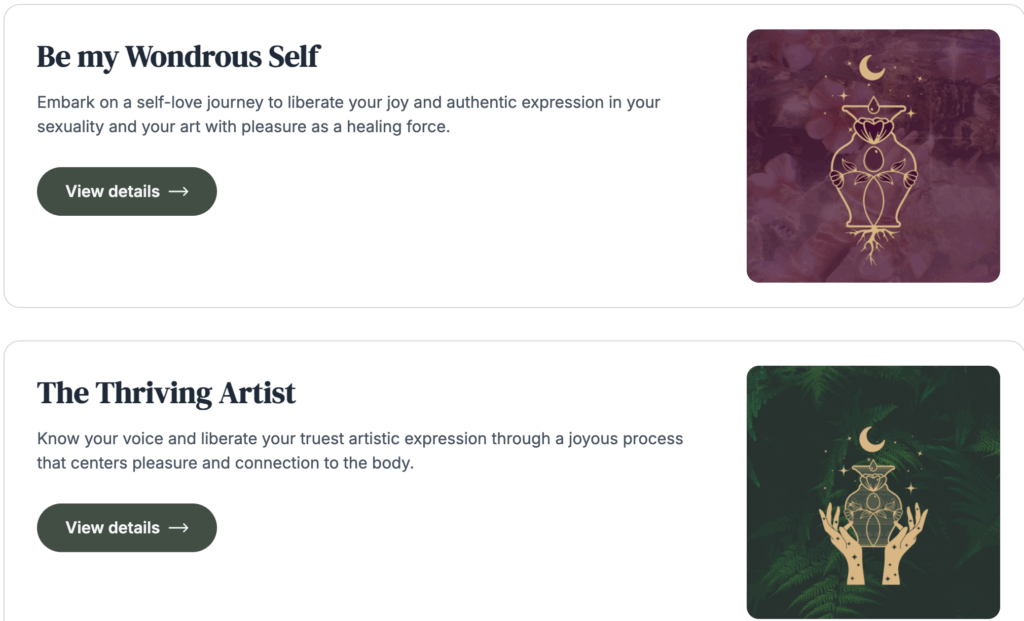
This immediately draws in clients who crave those feelings before she talks logistics.
Strategy 2: Guide Buying Decision With Package Tiers
If you only offer one coaching package, potential customers face a simple yes-or-no decision. When you offer three, psychology shifts the question to which one they want. That’s the foundation of what’s called Goldilocks pricing, a structure where your middle package feels “just right.”
Here’s how it works:
- Starter package: An accessible entry point for new clients.
- Signature package: The main offer that balances value and price.
- Premium package: A high-end option that makes the middle one look even more reasonable.
In sales psychology, this is called the decoy effect, where people compare options rather than evaluating price alone. The premium package, say, with private Voxer access or an extended timeframe, positions your signature offer as the smartest choice.
Remember to keep the focus on transformation and clear results, not just duration or add-ons. Your tiers should represent levels of support, not arbitrary price jumps.
Pro tip: In Paperbell, you can display multiple packages on one landing page so clients can easily compare their options and upgrade without friction.
Here’s how Abby Hildebrand features her breathwork package tiers, priced between $135 and $650.

Strategy 3: Use Scarcity
Whether it’s life or business coaching, scarcity and urgency drive sales because they activate the fear of missing out (FOMO). However, when they’re overused or too pushy, they do more harm than good. The goal is to use real constraints for your campaign and motivate ideal clients who are on the fence about committing.
Here are some ways to build urgency into your business and life coaching offers without sounding like a used car salesman:
- Capacity-based scarcity: You only have space for a certain number of clients each month or quarter. State that clearly, for example, “two spots left for February.”
- Enrollment windows: For group programs, open and close enrollment on specific dates. This gives people a defined decision window and builds momentum.
- Early bird pricing: Reward fast action by offering a lower price for those who sign up before a set date.
- Limited-time bonuses: Offer a valuable resource or additional session that expires after a few days.
Avoid fake scarcity, like “only one spot left” when it’s not true. This erodes trust, which is far more valuable than a quick sale.
Pro tip: In Paperbell, you can set an expiration date for your packages, or even the sessions you’ve already sold, to make sure clients use them up within a set time period.
Barbara Bates uses the extra motivation of the year-end, a universal deadline, to inspire potential clients to sign up before December 31.
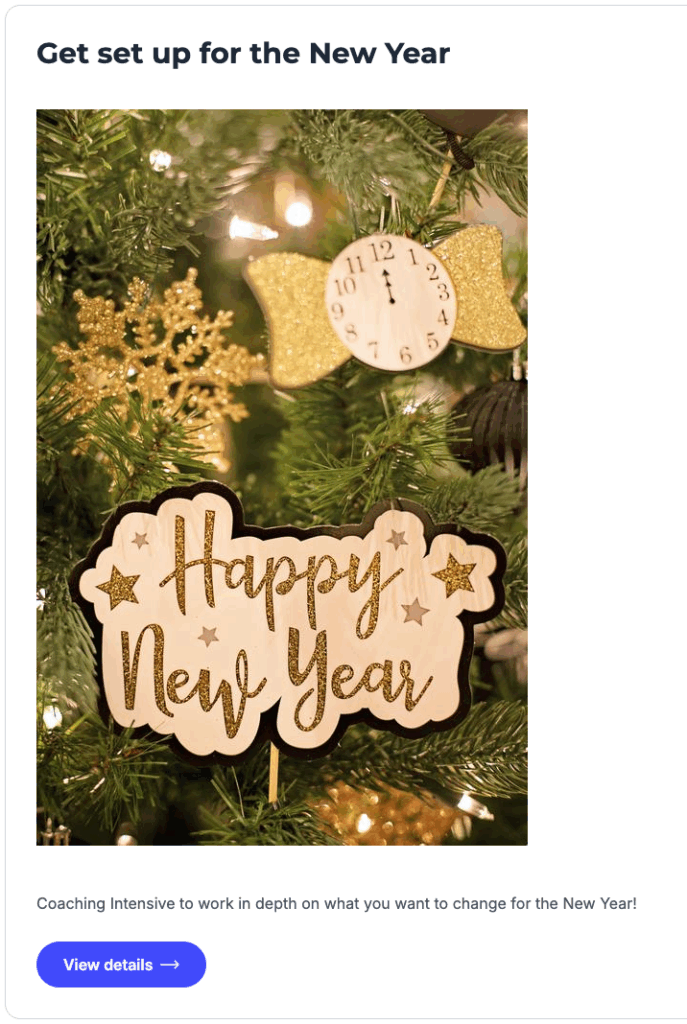
Her sessions expire after 12 weeks, preventing coaching processes from dragging on for more than a couple of months.
Strategy 4: Offer Multiple Payment Options
If your pricing feels out of reach for potential clients, you may lose leads who want to work with you but can’t commit to the full payment. Here’s how you can lower their immediate financial burden without devaluing your coaching services.
- Offer flexible payment plans: A client might hesitate at $997 upfront but feel comfortable with $297/month. Breaking down payments shifts focus from total cost to manageable monthly or bi-monthly expenses.
- Give discounts for upfront payments: A small incentive (5-10%) is a great way to reward advance payments while still giving an option to pay in installments.
- Be transparent about the total cost: Hidden fees or vague billing terms aren’t fair and, understandably, drive people away.
- Try subscriptions: For ongoing coaching, monthly retainers, and memberships can stabilize your revenue and reduce client churn.
Pro tip: Paperbell lets you set up one-time advance payments, subscriptions, or installments with automatic billing.
Kate Carson offers multiple subscription options for her recurring somatic coaching clients.
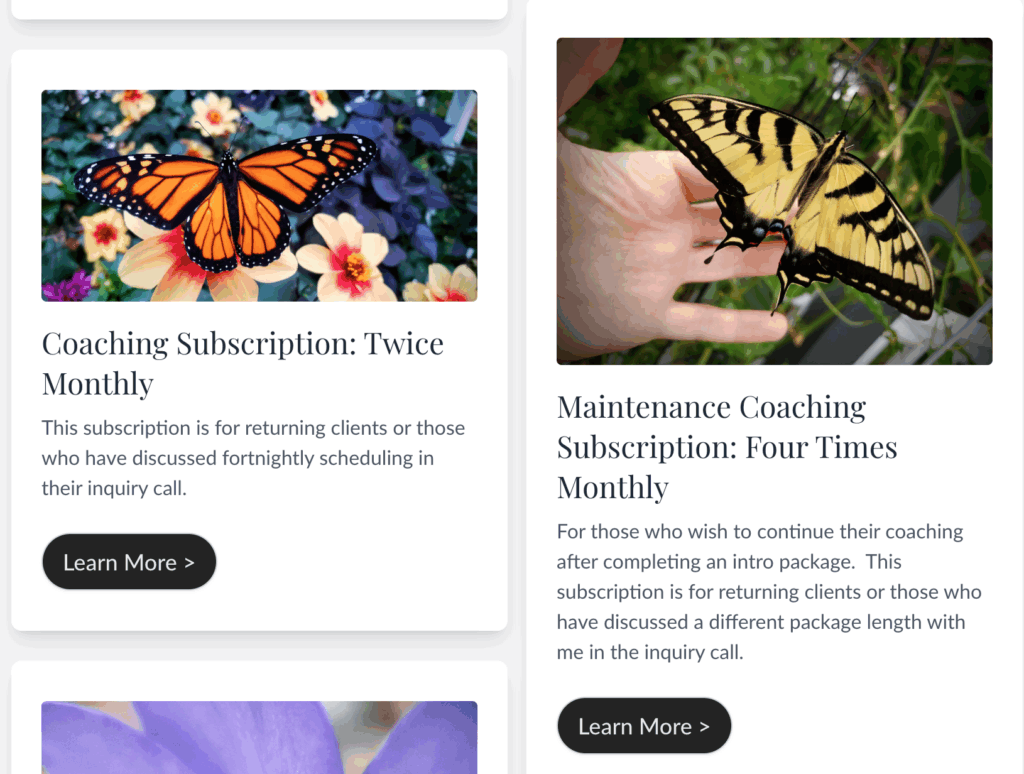
It’s a simple way to keep clients on her roster who already participated in her introductory program.
Strategy 5: Reduce Risk With Guarantees
Coaching is deeply personal. Even with great testimonials, clients may wonder, “Will this work for me?” Offering a guarantee assures them that they won’t be left disappointed.
Here are two common ways you can offer a guarantee to new clients:
- Satisfaction guarantee: Let clients know they can stop paying further installments if the program doesn’t meet their expectations. Make sure terms are clearly stated in your contract.
- Conditional guarantee: Offer refunds or complimentary coaching only if clients fulfill all coaching work agreed on in your contract (sessions, assignments) and still don’t see results.
Pro tip: To avoid dealing with refunds, you can offer your clients an introductory session at an entry price. If they decide to join your longer program, they can then discount their introductory session fee from your package.
In Paperbell, this can be done with discount codes. The automatic contract signing will make sure you’re always on the same page with your clients.
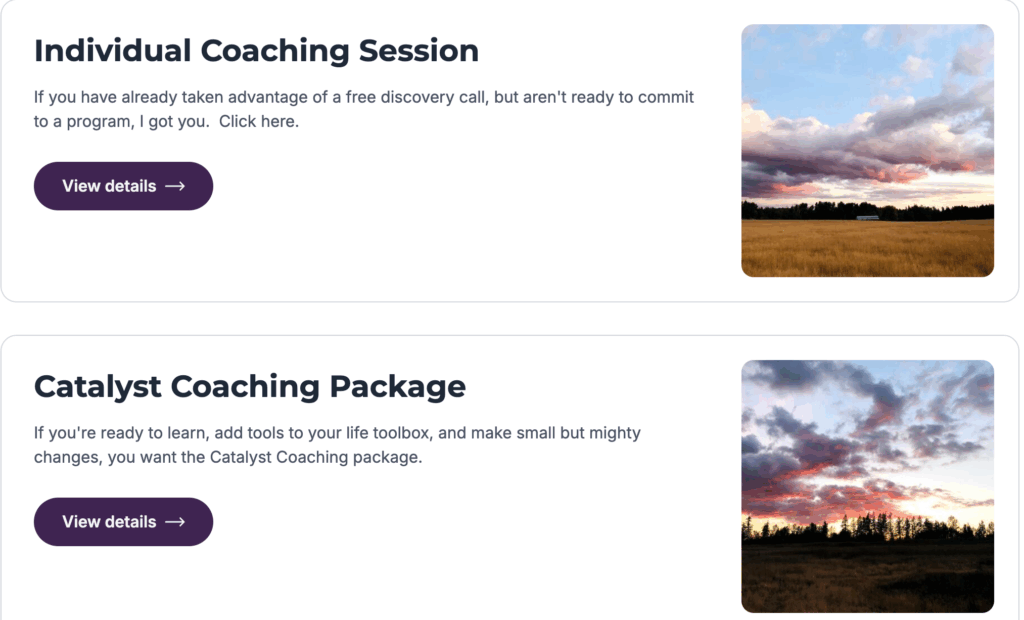
Here’s how Kelly Ford allows clients to commit gradually to her programs.
Strategy 6: Build Social Proof Into Your Packages
Social proof turns your promises into evidence, showing ideal clients that real people have achieved them with you. Here’s how to weave it naturally into your packages:
- Place testimonials strategically: Position short, high-impact quotes on top.
- Turn client results into stories: Share brief case studies (anonymously or with permission) that tell the story of your client’s transformation.
- Use video testimonials: Even 30-second clips are more impactful than written success stories because they allow prospects to see the emotions behind the results.
Pro tip: Paperbell lets you display testimonials on both your main page and package pages, so potential clients see results, structure, and pricing in one place.
Here’s how Carla Lawrence combines written and video testimonials on her package page.

FAQs About How to Package Coaching Services for More Sales
How to Sell Coaching Packages?
Focus on transformation, not coaching sessions. Highlight results, use social proof, and make buying easy with clear pricing and payment plans.
How to Structure a Coaching Package?
Define your goal, duration, and deliverables. Include coaching sessions, resources, and support that align with your client’s transformation journey.
How Do I Create a Profitable Coaching Package?
Price based on value, not hours. Offer tiered packages, include bonuses, and use client feedback to refine what sells best.
What Tool Do I Need to Create Coaching Packages Easily?
Use Paperbell to create and sell custom packages through an automated website and client management platform. It also handles your payments, scheduling, contracts, and client information.