
You’ve probably watched a client set a goal they truly wanted, promise themselves this time would be different, and then slide right back into the same old pattern within a week.
It’s frustrating for them, and it can feel just as frustrating for you.
Here’s the thing. Willpower isn’t the problem. The way the brain forms habits, handles stress, and resists change is. That’s exactly where neuroscience coaching comes in.
Neuroscience coaching blends brain science with coaching strategy to help clients make changes that actually stick. When you understand how the brain processes thoughts, emotions, and behavior, you can design coaching that works with human nature instead of fighting it.
In this guide, you’ll learn what neuroscience coaching really is, the core principles and techniques behind it, and how to become a neuroscience coach yourself in 2026.
What Is Neuroscience Coaching?
Neuroscience coaching combines coaching techniques with insights from brain science to help clients create meaningful, lasting change. It’s grounded in research on how the brain processes thoughts, emotions, and behaviors, which lets you work with human nature rather than against it.
Think about it this way. A traditional coaching conversation might help a client decide they want to stop procrastinating. A neuroscience-informed conversation goes a step further and asks why the brain reaches for the distraction in the first place, then builds a plan around that answer.
How Is Neuroscience Coaching Different from Life Coaching?
Both life and neuroscience coaching help clients set and reach goals for personal and professional growth. The difference is in the approach.
Life coaching usually reaches for foundational frameworks like the GROW model to structure a conversation. Neuroscience coaching layers evidence-based strategies on top, focusing on cognitive functions, neuroplasticity, and emotional regulation.
Put simply, a life coach helps you decide where you want to go. A neuroscience coach helps you understand why your brain keeps steering you off course, and how to rewire that. Many coaches blend both, using classic coaching techniques as the container and brain science as the extra edge.
The Benefits of Using Neuroscience Coaching With Clients
Neuroscience coaching works because it aligns your coaching with how the brain naturally operates. It uses neuroplasticity, the brain’s ability to adapt and change, to help clients form new habits and rewire unhelpful thinking patterns.
It can also help clients build resilience and regulate their emotions, which matters most for people dealing with stress or persistent negative thought patterns.
One important note before you go further. Neuroscience coaching is not therapy, and it isn’t a treatment for mental health conditions. Coaching supports growth and forward motion for clients who are generally well. If a client is dealing with a clinical issue like depression or trauma, the right move is to refer them to a licensed professional, or to point them toward a mental health coach who works alongside clinical care.
With that boundary in place, here’s what makes this approach so useful with the right clients:
- Personalized interventions: You’re working from how a specific brain works, not a generic script, so the strategy fits the client instead of the other way around.
- Sustainable change: New neural connections don’t unwind the moment a client stops paying attention, which is why the progress tends to stick.
- A whole-person approach: Emotions, habits, and thoughts aren’t separate systems in the brain, so you can address one and expect the others to move too.
Paperbell is the easiest way to run the coaching practice you build around all of this. Launch a website, sell your packages, and keep every client’s notes, forms, and progress in one place. Try Paperbell for free.
4 Core Principles of Neuroscience Coaching
You don’t have to explain complex brain terminology to your clients to help them change. Instead, you can turn a handful of scientific insights into practical coaching strategies. Here are four core principles to build on.
1. Neuroplasticity: Change Your Brain, Change Your Life
The brain isn’t fixed. It rewires itself constantly in response to what we do and think every day. That means that, through repeated practice, clients can build new habits, shift thought patterns, and grow real emotional resilience.
Say a client freezes up every time they have to pitch their services. Each time they rehearse the pitch out loud and survive it, they’re physically strengthening the neural pathway that says “I can do this.” Repetition is the whole game.
Here’s how you can put that to work in a session:
- Encourage small, consistent actions rather than massive, unsustainable changes.
- Use visualization to help clients mentally rehearse the behavior they want.
- Help clients catch a negative thought pattern and swap in a more constructive one, over and over, until the new one sticks.
2. Emotional Regulation: Managing the Brain’s Stress Response
When people feel threatened or stressed, the brain’s limbic system (the part that handles emotion) takes the wheel, and rational thinking gets a lot harder. Help a client calm that response, and they can make better decisions and take cleaner action.
One well-known model here is Dr. David Rock’s SCARF model (developed at the NeuroLeadership Institute), which maps five social triggers the brain treats like survival stakes: Status, Certainty, Autonomy, Relatedness, and Fairness. When you know which of these a client feels under threat, you know why they’re reacting so strongly, and where to steady them.
A few ways to bring this into a session:
- Teach simple breathing techniques to settle the nervous system before a hard conversation.
- Guide clients to name their emotional triggers and plan a response in advance.
- Use mindfulness to help clients move from reactive to proactive thinking.
3. The Habit Loop: Creating Lasting Change
Habits run on a loop of cue, routine, and reward, a pattern popularized by journalist Charles Duhigg in his book The Power of Habit. Neuroscience coaching uses that same loop to help clients swap unhelpful behaviors for productive ones.
For example, a client who reaches for their phone (routine) every time they feel a wave of overwhelm (cue) to get a quick hit of relief (reward) can keep the cue and the reward, but replace the routine with a two-minute walk. Same loop, better habit.
In practice, that means:
- Identify the existing habit loops that are holding a client back.
- Work with them to design a small, rewarding shift in the routine.
- Use accountability to reinforce the new habit until it runs on autopilot.
4. Cognitive Biases: Overcoming Mental Shortcuts
The brain uses shortcuts to process information fast, but those shortcuts can lead to some pretty irrational decisions. When clients understand their own biases, they can make more objective, intentional choices.
Confirmation bias is a classic one. A client convinced they’re “bad at sales” will notice every lost deal and quietly filter out the wins that don’t fit the story. Part of your job is to hold up the evidence they’re skipping over.
Some ways to work with this in coaching:
- Challenge black-and-white thinking with alternative perspectives.
- Help clients spot confirmation bias and go looking for evidence that doesn’t fit their story.
- Use reflection exercises to slow down impulsive, in-the-moment decisions.

Neuroscience Coaching Techniques
Principles are the theory. Techniques are how you put them to work in a session. Here are some evidence-based techniques neuroscience coaching uses to help clients change their mindset and behavior.
1. The 3:1 Positivity Ratio
Research suggests that a ratio of roughly three positive experiences to one negative one helps people stay resilient. It keeps the brain from getting stuck in negativity while still leaving room for real challenges.
In practice, you might ask a client to track their small daily wins so the positives don’t slip by unnoticed. Reflective prompts do the same job: “What went well this week?” or, after a setback, “What did I learn from that?” The point isn’t forced positivity. It’s helping the brain give the good stuff the weight it deserves.
2. Incremental Behavior Changes
Dopamine, the brain’s reward chemical, is a big driver of motivation. Small wins trigger dopamine releases, which reinforce the behavior that earned them.

Neuroscience coaches use this to keep motivation alive by structuring goals so clients stay engaged. Instead of one overwhelming objective, they break it into bite-sized, achievable steps.
This overlaps heavily with the work of a behavior coach: design milestone-based action plans, then encourage clients to actually celebrate the small wins, like sticking to a habit for a full week.
3. Accountability Systems
Studies show that people are more likely to follow through on commitments when they write their goals down, track their actions, and have an accountability partner.
As a coach, one of the most valuable things you offer is a place for clients to record goals they can commit to and check in on their progress regularly. To boost follow-through even more, encourage them to share their goals with a friend or mentor who genuinely wants to see them succeed.
A lot of this comes down to trust. The stronger your relationship, the more a client will show up honestly, which is why building rapport with clients is quietly one of the most important neuroscience-friendly skills you can develop.
4. Neuro-Linguistic Programming (NLP)
Neuro-Linguistic Programming (NLP) focuses on the connection between language, thought patterns, and behavior. Its scientific footing is frequently debated, but plenty of coaches still use it to tune into how their clients talk and think.
In coaching, NLP can be used to reframe limiting beliefs, anchor positive emotions, and challenge negative self-talk. It can also help you mirror a client’s language patterns to build stronger rapport with them.
How to Become a Neuroscience Coach
Good news first: there’s no single license or legal requirement to call yourself a neuroscience coach. You don’t need a neuroscience degree, and you don’t have to be a psychologist.
That said, a solid certification does two things for you. It gives you the actual skills and frameworks to coach this way with confidence, and it signals credibility to clients who want to know you’re the real deal. Many of the best-known programs are also accredited by the International Coaching Federation (ICF), the largest professional body in the coaching world.
If you’re not tied to a neuroscience-specific credential, a broader option like a Board Certified Coach (BCC) certification is worth a look too. But if you want to specialize, here are three well-established neuroscience coaching programs to consider. (Prices and program details below were verified in 2026 and can change, so always confirm the current figures on each provider’s own page before you enroll.)
Brain-Based Coaching Certificate® by the NeuroLeadership Institute

The NeuroLeadership Institute offers an ICF-accredited program built on Dr. David Rock’s methodology. The full certificate is made up of two courses that together add up to 68 ICF-accredited training hours:
- Brain-Based Conversation Skills®: $3,000
- Brain-Based Coaching Toolkit™: $4,000
Classes run through live virtual workshops backed up by online resources and progress tracking, and the curriculum covers brain-based coaching skills for improving client performance, goal-setting, and behavior. There are no prerequisites for the first course, though you need to complete it before starting the second (and prior coaching experience helps). Complete both parts and you earn an ICF Level 1 certificate in Brain-Based Coaching.
Neuroscience Certified Coach Program by BrainFirst® Institute
The BrainFirst® Institute runs an ICF-accredited program priced at $4,000, or five monthly payments of $850. It focuses on solution-focused, client-centered techniques for behavior change.
It’s a 12-week program with 12 weekly live online sessions, guided peer coaching, and one-on-one mentor coaching, plus session recordings if you can’t make a class live. Complete it and you earn an ICF Level 1 credential, which meets the education requirement for the ICF Associate Certified Coach (ACC) credential. You’ll also get access to self-coaching exercises, prompts, cheat sheets, and coaching questions to use with clients.
Neuroscience Coaching Network by Dr. Sarah McKay
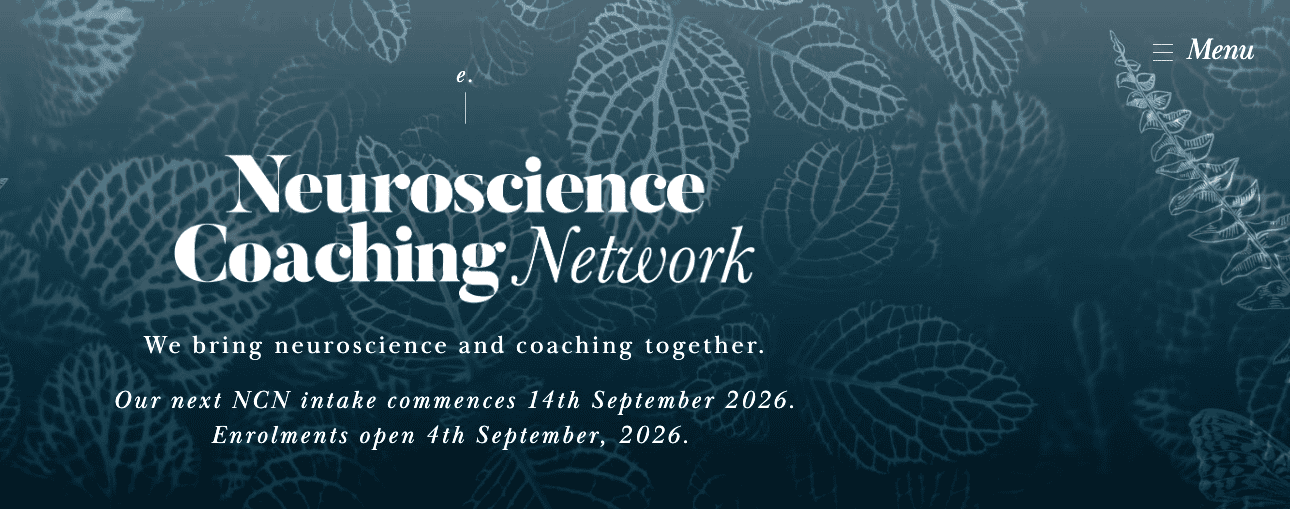
The Neuroscience Coaching Network is a 16-week program led by Dr. Sarah McKay, an Oxford University-educated neuroscientist, alongside Dr. Mary Collins, a chartered psychologist and executive coach.
It costs $1,399 as a one-time payment, or $249 per month, and covers neuroscience-based coaching techniques. Expect to spend about 2-3 hours a week on the self-study materials and the weekly live Zoom sessions. The next intake opens for enrollment on September 4, 2026, and starts on September 14, 2026.
The one-time fee also gives you lifetime access to future speaker sessions and a long list of resources, including step-by-step guides on how to find and read neuroscience research for yourself.
FAQ
Do I Need a Science Background to Become a Neuroscience Coach?
No, but understanding basic brain functions helps. Most neuroscience coaching certification programs teach these concepts in a beginner-friendly way, so you don’t need a science degree to keep up.
What Certifications Do I Need to Become a Neuroscience Coach?
None are legally required to practice. That said, a certification from a program like BrainFirst® or the NeuroLeadership Institute builds real expertise and boosts your credibility. Many are accredited by the International Coaching Federation (ICF), which clients recognize.
How Much Does It Cost to Become a Neuroscience Coach?
It varies by program. Among the options above, the Neuroscience Coaching Network runs $1,399, the BrainFirst® program is $4,000, and the full NeuroLeadership Institute certificate combines a $3,000 course and a $4,000 course. Always check the provider’s current pricing, since these figures change over time.
How Long Does Neuroscience Coaching Certification Take?
Most programs run somewhere between 12 and 16 weeks of part-time study. The BrainFirst® program is 12 weeks, the Neuroscience Coaching Network is 16 weeks, and the full NeuroLeadership Institute certificate spans two courses over roughly six months.
Do I Need to Be ICF-Certified to Practice as a Neuroscience Coach?
No. ICF certification isn’t a legal requirement, but plenty of prospective clients specifically look for it when vetting a coach. Several neuroscience programs are ICF-accredited, so you can earn a neuroscience specialty and an ICF credential at the same time if you want both.
How Is Neuroscience Coaching Different From Life Coaching?
Life coaching is a broad field. Life coaches generally use foundational models and frameworks, like GROW and the Wheel of Life, to guide the coaching process.
Neuroscience coaching adds evidence-based techniques for behavior change, focusing on neuroplasticity, emotional regulation, and habit formation.
Rewire Your Coaching Practice
Neuroscience coaching lets you turn evidence-based ideas into reflective assessments and practical exercises your clients can actually use. To get the most out of it, you need your client information neatly organized in one place.
Paperbell keeps all your surveys, notes, and coaching materials for every client in one spot, and it does a lot more than that. It builds you a beautiful coaching website and handles everything from bookings and payments to contracts and automated email reminders.
Remember, rewiring a habit doesn’t happen overnight, for your clients or for your business. Start with the basics and build from there.
Editor’s note: This post was originally published in 2025 and has been updated for 2026.
Ready to spend less time on admin and more time coaching? Try Paperbell for free.