
You became a coach to coach. Not to spend your Sunday afternoon stitching together a scheduler, a payment link, an invoice template, and four half-written emails.
So you go looking for one tool that does the whole job, and 17hats keeps showing up. It’s a capable platform, and plenty of solo business owners love it. It just isn’t built around the way coaches sell and deliver their work, which is why so many coaches start hunting for 17hats alternatives a few months in.
Here’s what 17hats does well, where it gets awkward for a coaching practice, and six alternatives with pricing we checked this month rather than copying from an old review.
Heads up: some links in this article are affiliate links, which means Paperbell may earn a commission if you buy through them, at no extra cost to you.
What Is 17hats?
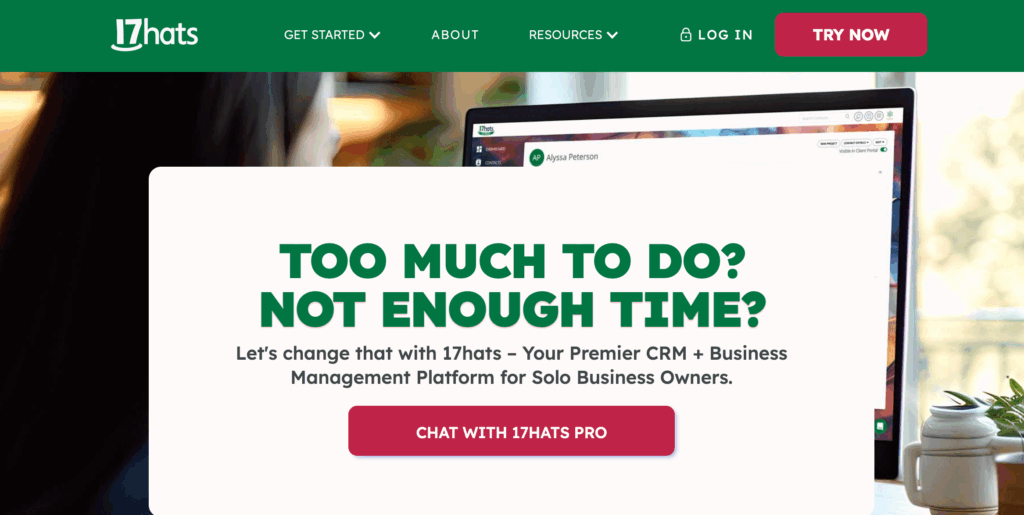
17hats is an all-in-one business management platform created for solo business owners and small teams. It aims to simplify admin by bringing multiple tasks under one roof, including:
- Sending invoices and collecting payments
- Creating quotes, contracts, or combined 3-in-1 documents
- Scheduling appointments online (basic features included; advanced scheduling available as an add-on)
- Automating lead capture and responses
- Managing projects, contacts, and workflows
- Saving email templates for client communication
The “multiple hats” name reflects its goal of replacing dozens of separate apps with one platform. It’s quick to get set up, and the integrations with Google Calendar, Stripe, Zoom, QuickBooks Online, and Zapier mean it slots into tools you’re probably using already.
That said, 17hats isn’t built with coaching in mind. For example:
- Scheduling is somewhat limited: While 17hats supports calendar availability, booking limits, and availability rules, in our testing we couldn’t find a way to block time by session type, which many coaches prefer.
- Some users find the experience clunky: The platform is a tad complex with a learning curve and occasional glitches in user experience, especially in the mobile app.
- The 3-in-1 document system isn’t built for coaches: It combines quote, contract, and invoice into one workflow, which is great for variable pricing, but for coaches with fixed packages, the quote step can feel unnecessary.
17hats’ all-inclusive plan comes with three ways to pay: $60 a month, $600 a year, or $800 for two years. They run sales that cut the longer commitments significantly, so check their page before you commit. That plan has no ongoing free tier, just a one-week free trial, so you’re paying from month one on it. Separately, 17hats also offers a $0 “Free CRM” plan with unlimited contacts and projects, four invoices per quarter, a sales tax report, and email templates, though it’s a limited, separate product rather than the all-inclusive platform described here.
Prices verified September 2026. Check each vendor’s site for current rates.
Why Is Paperbell the Best 17hats Alternative for Coaches?
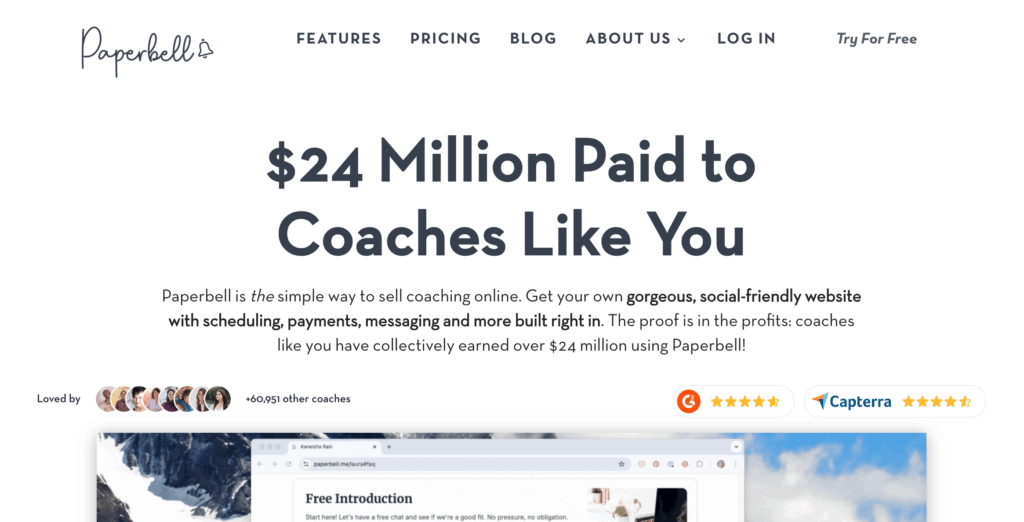
If you’re looking for a simpler, more coach-focused alternative to 17hats, Paperbell is a strong contender. It’s an all-in-one platform built specifically for coaches, with features that simplify the admin side of your business so you can stay focused on your clients.
Easy to Use (Even If You Hate Tech)
Paperbell’s interface is clean and intuitive, so you don’t need to be “tech-savvy” to set up your business on it. You’ll find exactly what you need as a coach without the clutter of unnecessary features designed for photographers, designers, or general freelancers.

Sell Coaching Packages, Not Sessions
Instead of building custom proposals for each client, Paperbell lets you create ready-made coaching packages with your pricing and terms. You share one link, and your client buys the package they want with their card.
This means you’re selling results, not just hours, and your clients get a clearer picture of the value you deliver.
Your Coaching Website, Built for You
Paperbell doesn’t just give you landing pages; it gives you an entire done-for-you coaching website. Add your bio, photos, brand colors, and logo, and you’ll instantly have a polished homepage built around your business.
Your site includes:
- A professional homepage with your brand assets
- A list of all your packages, each linking to its own purchase-ready landing page
- Space for testimonials and FAQs to build trust
- An email opt-in to grow your list
Instead of piecing together multiple tools or paying for a web designer, you get a coach-friendly website and sales platform all in one place.

Intake Forms Built In
You can attach customizable intake forms to each package, so you gather the right details from clients upfront. Forms and surveys can also be automated to send at key points, such as:
- Immediately after purchase
- A set number of days after a session
- After the final session in a package
- After a group session
This makes onboarding consistent while still keeping it personal.

Simple Scheduling
Unlike generic schedulers, Paperbell tracks how many sessions each client has left in their package. Clients can only book within what they’ve purchased, preventing confusion or over-booking.
You can also set different availability rules for different packages. For example, reserving certain days for group programs and others for 1:1 sessions.
Easy Email Automation
Paperbell’s email automation is built around how coaches work. For each package, you can set up as many automated emails as you’d like, with no complicated funnels involved. All you need to do is click “Add automated email” when you’re in the Emails section of a coaching package:

Choose when the message should be sent (e.g., right after purchase, a day before a session), write (or generate) your email, and you’re done.

You can even add reminders to book, ensuring clients stay engaged without you chasing them.

Effortless Payments
Platforms like 17hats, Dubsado, or HoneyBook are built around invoices, which makes sense for service providers who quote custom projects. For coaches, that system is unnecessarily complex.
You don’t need to draft a new invoice for each client. You just need a simple, automated way to get paid on time for your services.
With Paperbell, every package you create comes with its own payment link and checkout page, so your client can pay in a couple of clicks.

You can:
- Accept payments via Stripe or PayPal
- Offer one-time payments, recurring subscriptions, or custom payment plans
- Take payment up front, so nothing is reserved until checkout is complete
- Automatically tie payment to session tracking, so clients can’t book more than what they’ve purchased

Instead of chasing invoices or manually tracking who has paid, Paperbell handles it all in the background. You get paid in your sleep, and your clients enjoy a frictionless booking and checkout process.
Worth saying plainly: you connect your own Stripe or PayPal account, so card processing fees sit between you and your processor. That’s true of every tool here, so those fees cancel out of any comparison.
Dedicated Client Portals
Paperbell also improves the client experience through self-service portals where they can:
- Book, reschedule, or cancel sessions
- View contracts and payment history
- Download resources you shared with them
- Purchase additional packages
This makes clients more self-sufficient while keeping everything organized in one place.
Paperbell costs $97 a month or $970 a year, and you can start for free with no credit card required.
Where Paperbell Falls Short
Every tool here has a weak spot, and Paperbell is no exception. There’s no free tier for running your business long-term at $0, so once you’re set up it’s a paid tool like the rest.
It also isn’t a full marketing website builder. If you want a content-heavy site with a blog and a resource library, keep that site where it is and let Paperbell handle the selling and delivery.
And video calling isn’t built in. You connect Zoom, Google Meet or the meeting link you already use, and Paperbell adds it to your client’s booking confirmation.
Which Other Tools Should Coaches Compare to 17hats?
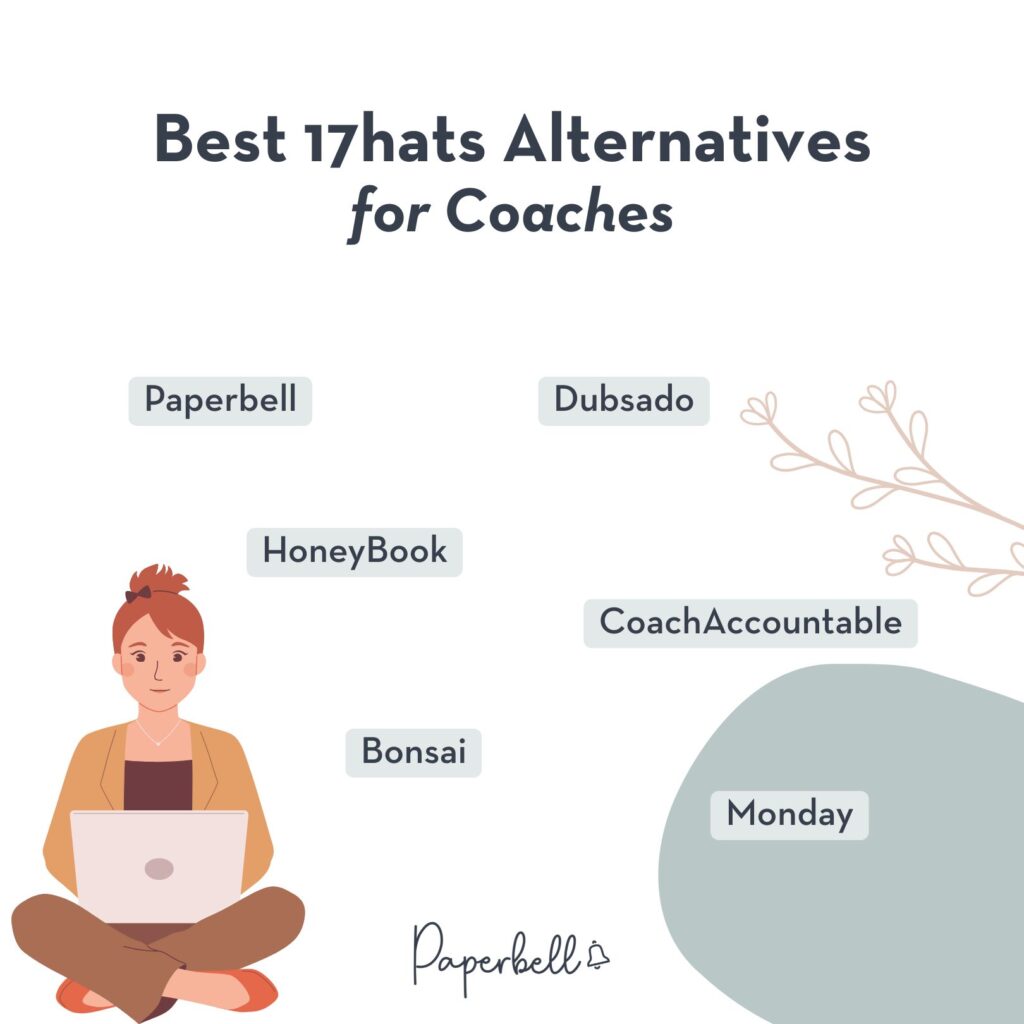
While Paperbell is designed specifically for coaches, other platforms may fit if you want broader functionality or a different workflow. Here’s how they all stack up against 17hats on price and fit, using each vendor’s own list pricing in US dollars:
| Tool | Starting price (list) | Best for | Honest drawback |
|---|---|---|---|
| Paperbell | $97/month or $970/year | Coaches selling packages, 1:1 or group | No free tier for the long run, and no built-in video calling |
| 17hats | $60/month or $600/year | Solo businesses that quote custom work | Not built for coaching, and scheduling depth is limited |
| Dubsado | $335/year (Starter) | Creative service providers who want deep customization | Annual billing only, and a real learning curve |
| HoneyBook | $29/month billed yearly (Starter) | Project-based client work with invoices | A new project per client, and no group coaching |
| CoachAccountable | $20/month for up to 2 clients | Coaches who want goal and progress tracking | Dated interface, and the price climbs with client count |
| Bonsai | $9/user/month billed annually (Basic) | Freelancers who need proposals and time tracking | Packed with features coaches will never open |
| monday.com | Free up to 2 seats, then $9/seat/month billed annually | Teams running several coaches | Paid plans start at 3 seats, and setup takes real work |
Prices verified September 2026. Vendors change their plans often, so check their site before you buy.
1. Dubsado
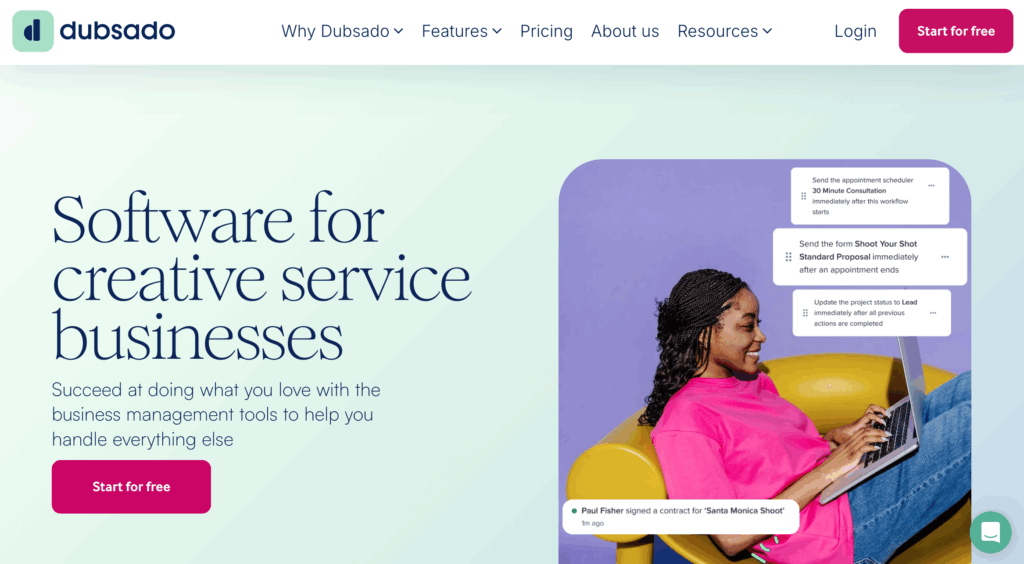
Known for its customization options, Dubsado offers a wide range of features for creative teams, such as:
- Custom forms and contracts
- Workflow automation
- Integrations with other tools like QuickBooks and Google Calendar
- Client portals where your customers can access documents, communicate with you, and make payments
Dubsado is more versatile than 17hats, but also more complex. This is because it’s designed for creative teams, not for coaches and service providers.
For example, you can set up workflow automations, but you can’t tie specific coaching sessions and downloadables to a project.
Dubsado’s pricing has changed since we first published this post, and it’s a big change: it’s annual-only now. Starter is $335 a year, Premier is $525, and there’s a 21-day free trial but no month-to-month option, so paying for a single month to test it isn’t possible.
2. HoneyBook
HoneyBook is built to simplify running your business: managing leads, sending contracts, and invoicing clients.
With HoneyBook, you can easily track your projects, communicate with clients, and automate your payment reminders.
Unlike Dubsado and 17hats, HoneyBook’s interface is clean and user-friendly for both the business owner and their clients. Still, it has several drawbacks:
- In our testing, it looked like you need a new project for every coaching client
- The scheduler is limited for a coaching practice
- Like the other alternatives, you can’t tie coaching sessions to a project
- In our testing, we couldn’t find a way to offer discount codes to clients
- In our testing, we couldn’t find a way to run group coaching
Billed yearly, HoneyBook charges $29 a month for Starter, $49 for Essentials, and $109 for Premium. Month to month costs more: $59 for Essentials and $129 for Premium.
Every plan starts with a free trial: HoneyBook’s pricing page FAQ says you can try virtually every feature free for 30 days, no credit card required. With Paperbell you can start for free with no credit card required.
3. CoachAccountable
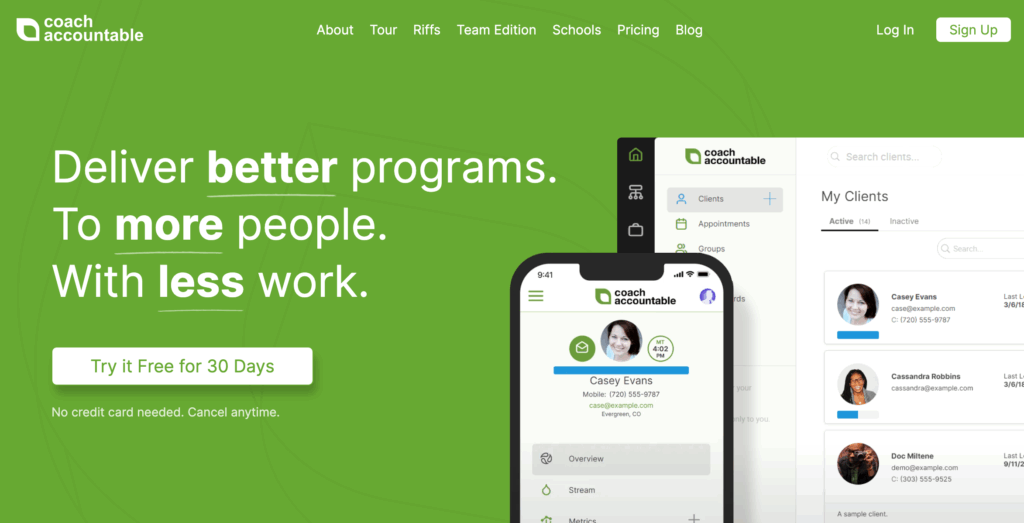
CoachAccountable offers features like goal tracking with set milestones, progress reports, and a customizable client portal.
It allows you to create personalized coaching programs and automate your client onboarding process. You can set up automated reminders, send out assignments, and even track your clients’ engagement with your coaching materials.
The look and feel of this platform is quite outdated, though, and its interface isn’t the most user-friendly. It also gets more expensive as you scale your business, from $20 per month for up to two clients to $200 with 35, and so on. With group programs, the price goes up quickly.
4. Bonsai
Bonsai helps business owners across several industries manage their operations, including:
- Consulting
- Recruiting
- Marketing
- Photography
- Software development
- Architecture
- Event planning
- Legal
- Coaching
While versatile, this platform is bloated with several features that coaches don’t need, which can make using it overwhelming.
You can use Bonsai for:
- Proposals
- Time tracking
- Task management
- Invoices
- Collaboration with other contractors
While these features are helpful, they add complexity for coaches, especially when they’re just starting out.
Bonsai charges per user. Paid annually, plans run from $9 a user per month on Basic up to $49 on Elite. Month to month, the same plans run $15 to $59, so the “$9 a month” headline only applies if you pay for a year upfront on the cheapest tier.
5. monday.com
Monday describes itself as a “work OS” and includes products for work management and sales CRM.

With it, you can:
- Build dashboards and automate workflows
- Use integrations with tools like Zoom and Google Calendar
- Add new functionality through its large app marketplace

It’s extremely customizable and works well for large teams or organizations running multiple coaches. For solo coaches or small practices, though, the time and cost to set it up can outweigh the benefits. Many hire consultants just to design their monday.com environment.
Pricing is per seat, not per account, which changes the math a lot. There’s a free plan for up to 2 seats, and paid work management plans start at $9 a seat per month billed annually, rising to $12 a seat on Standard and $19 on Pro. Standard and Pro are running a discount off their $14 and $22 seat rates, so check the page for the live number.
Paid plans start at 3 seats, so the real floor is about $27 a month on Basic and $57 on Pro, even if you’re the only one using it.
Frequently Asked Questions About 17hats Alternatives
What are the best 17hats alternatives for coaches?
If you sell coaching packages, Paperbell is the closest fit, because packages, session tracking, contracts, and payments are the product rather than add-ons. CoachAccountable is the other genuinely coach-built option here, strongest if goal tracking matters to you.
Dubsado and HoneyBook fit better if your work really is project-and-invoice shaped, Bonsai suits freelancers who bill by the hour, and monday.com only makes sense for teams.
Who are 17hats’ biggest competitors?
HoneyBook and Dubsado are its two most direct competitors, all three selling the same promise to solo service businesses: leads in, proposal out, contract signed, invoice paid. In coaching specifically, the names that come up most are Paperbell and CoachAccountable, because they replace the invoice-first workflow with a package-first one.
Does 17hats have a free plan?
Yes, but it’s a separate, limited product. 17hats’ $0 “Free CRM” plan includes unlimited contacts and projects, four invoices per quarter, a sales tax report, and email templates. The all-inclusive plan covered above has no ongoing free tier of its own: it’s $60 a month, $600 a year, or $800 for two years, with only a one-week free trial. If a $0 starting point matters, monday.com has a free plan capped at 2 seats, and Paperbell lets you set up a free account with no credit card required.
Does 17hats integrate with QuickBooks?
Yes. 17hats lists a QuickBooks Online integration that pushes your 17hats payment details through to QuickBooks Online, so you’re not re-entering figures by hand. Its other listed integrations include Stripe, Zoom, two-way Google Calendar sync, and Zapier.
Is Dubsado or 17hats better for coaches?
Neither is built for coaching, so it comes down to which compromise you prefer. Dubsado gives you far more control over forms and workflows, while 17hats is quicker to set up and lets you pay monthly instead of committing to $335 a year upfront. For a coaching-focused view, we broke down Dubsado vs Paperbell feature by feature.
Is HoneyBook or 17hats better for coaches?
HoneyBook is the friendlier of the two, with a cleaner interface for you and your clients, and its Starter plan comes in at $29 a month billed yearly against 17hats at $60.
The catch: HoneyBook still wants a project per client and can’t run group coaching, so it strains as soon as your practice isn’t purely 1:1. Our HoneyBook vs Paperbell comparison covers where each holds up for coaches.
How much does 17hats cost?
17hats has a single plan billed three ways: $60 a month, $600 a year, or $800 for two years. There are no cheaper feature-limited tiers, so the entry price is the full price. They discount the yearly and bi-yearly options during promotions, sometimes steeply, so check 17hats’ pricing page for the rate on offer the day you buy.
How Do You Choose the Right 17hats Alternative?
Start with the shape of your work, not the feature list. If you quote custom projects, an invoice-first tool like 17hats, Dubsado, or HoneyBook will feel natural. If you sell packages of sessions, those tools will fight you every week, and a coaching platform won’t.
Then sanity-check the price against how you actually buy. Dubsado’s annual-only billing, monday.com’s 3-seat minimum, and CoachAccountable’s per-client tiers all move the real cost away from the headline number.
If you want software designed specifically for coaches, Paperbell brings together scheduling, payments, contracts, client portals, and a ready-made coaching website in one place. Try Paperbell for free and see how much easier running your practice can be.
Editor’s Note: This post was originally published in October 2023 and was last updated in September 2026 for accuracy.