
You’ve done the work. You’re certified (or getting there), you’ve coached real humans, and now you’re ready to get in front of more clients.
So you Google “best coaching platforms” and find a dozen marketplaces promising to connect you with paying clients. Sounds perfect, right?
Here’s the thing. Coaching marketplaces can be a great starting point — but they come with trade-offs most coaches don’t think about until it’s too late. You’re building on someone else’s turf, playing by their rules, and handing over a cut of every dollar you earn.
In this guide, we’ll walk through the top 9 coaching marketplaces, compare what you can actually earn on each one, and help you figure out whether a marketplace is the right move for your business — or whether you’d be better off doing your own thing.
What is a Coaching Marketplace?
A coaching marketplace is an online platform that connects coaches with potential clients looking for their services.
Clients visit these platforms to find the perfect coach who specializes in areas they need help with.
Most coaching marketplaces operate on a revenue-share model, where the platform takes a percentage of what clients pay for coaching services.
In exchange, they provide marketing support and infrastructure like scheduling tools, client management, and payment processing.
The key difference between coaching marketplaces and independent coaching businesses is who owns the client relationship.
With marketplaces, the platform is the intermediary between coaches and their clients. They control communication, pricing, and terms.
Whereas, in an independent practice, you own these relationships directly and can set whatever pricing you want.
Some common types of coaching marketplaces include:
- General coaching marketplaces that feature various coaching specializations.
- Niche-specific marketplaces focused on particular coaching niches (such as executive, health, and relationship).
- Enterprise-focused platforms that connect coaches with corporate clients.
Top 9 Coaching Marketplaces in 2026
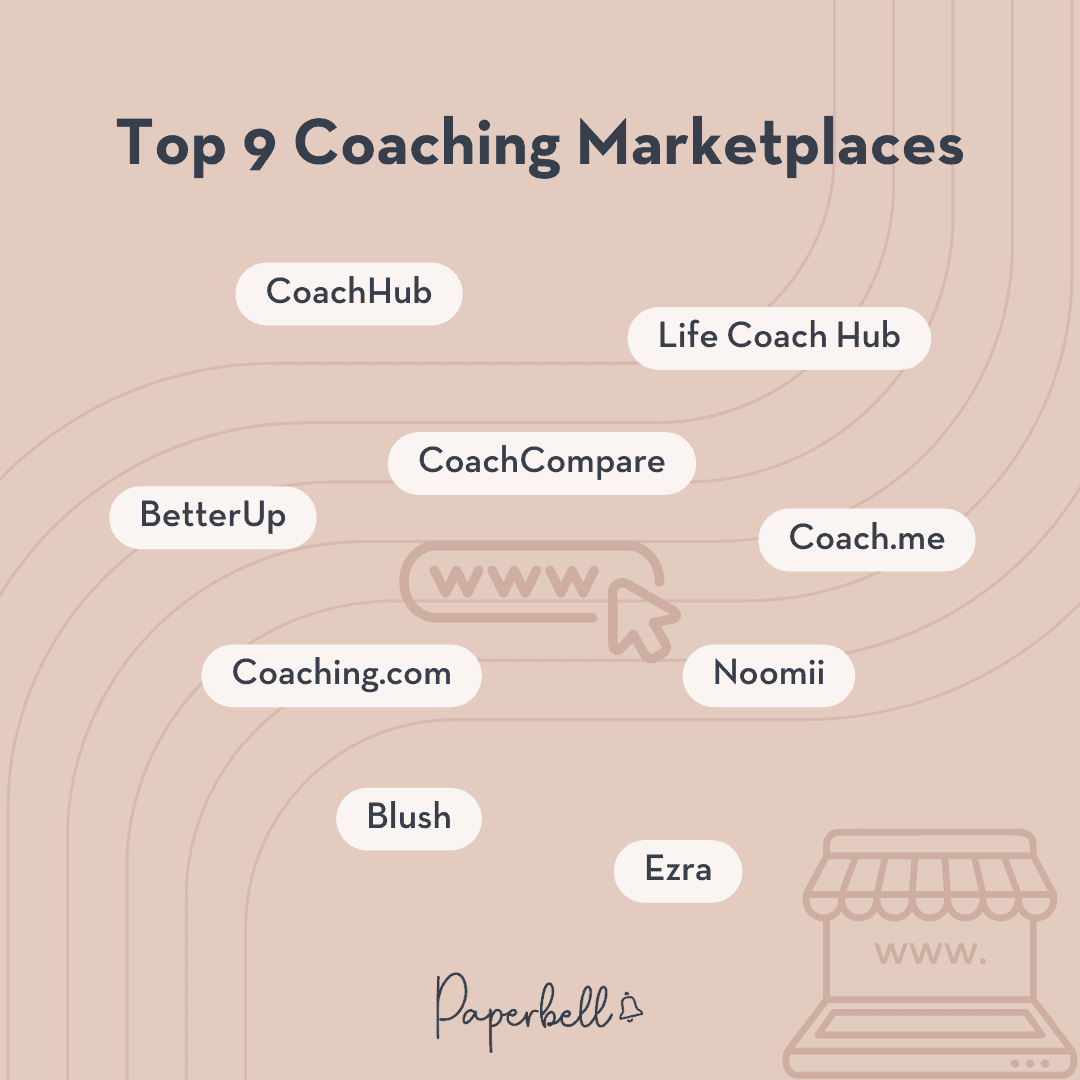
Here are nine of the top coaching marketplaces to try out:
1. CoachHub
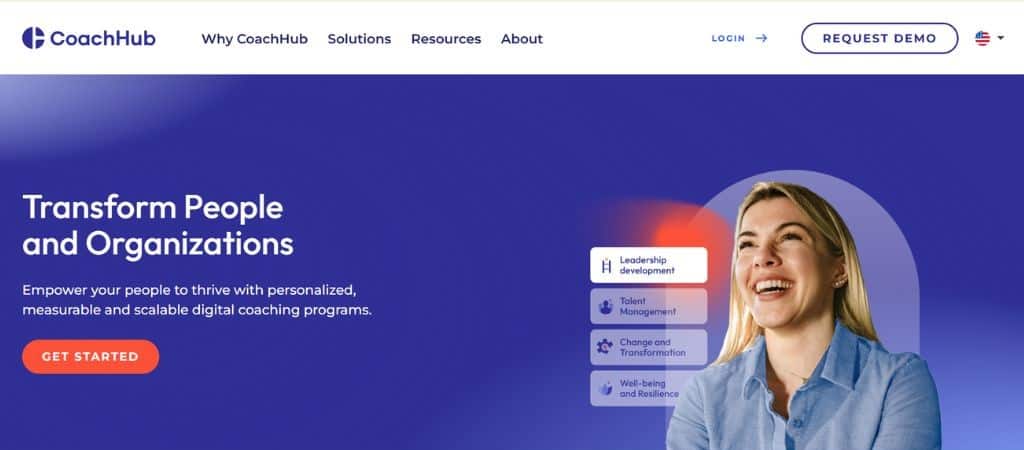
CoachHub is a leading enterprise coaching marketplace that connects corporate clients with qualified professionals.
The platform has over 3500 certified coaches and has worked with several Fortune 500 companies to deliver tangible coaching outcomes.
With its sophisticated matching algorithm and comprehensive management tools, CoachHub aims to be the premium option for experienced coaches targeting the corporate sector.
Features:
- Enterprise-focused coaching platform
- AI-matching technology for coach-client compatibility
- Coaching management tools
- AI Coach for organisations and teams
Price: Fill out their coach application form to be considered.
Salary: The average salary of a coach at CoachHub is $60,000 per year, according to Glassdoor.
Coach Requirements: Coaching certification, minimum 6+ years managerial experience, and 500 hours of coaching experience.
Best For: Experienced coaches looking to work with corporate clients.
2. BetterUp

BetterUp combines coaching with human science. It’s a data-driven coaching marketplace that focuses on measurable outcomes.
The platform is known for working with tech companies and organizations focused on leadership development. It has over 4000 certified coaches.
BetterUp stands out with its research-backed methodologies and extensive assessment capabilities to measure coaching impact.
Features:
- ROI analytics dashboard
- AI-smart matching algorithm
- Large digital learning library
- Integration with workplace systems
Price: To become a coach on the platform, they have to choose you (on a hire basis) after you apply here.
Salary: BetterUp coaches make an average of $180,000, according to Indeed.
Coach Requirements: Coaching certification or professional degree, years of experience, and 1000 coaching hours.
Best For: Well-credentialed coaches who want evidence-based coaching approaches.
3. Coaching.com
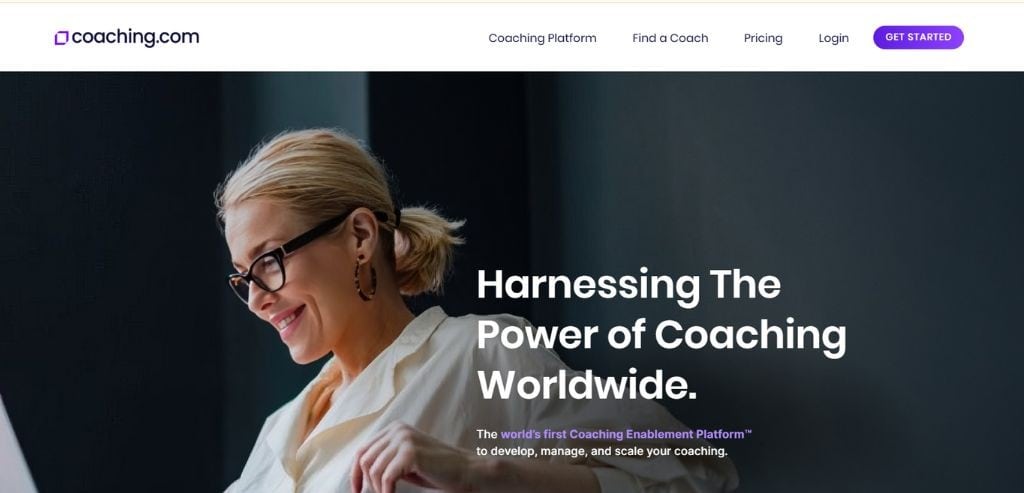
Coaching.com is the middle ground in the coaching marketplace ecosystem.
It offers individual and enterprise coaching support for client matching and management tools. This hybrid approach is great for mid-career coaches who want some structure and autonomy.
The platform serves various coaching niches but has a strong presence in professional growth niches.
Features:
- All-in-one coaching platform with practice management tools
- Client matching
- Group sessions and individual coaching
- Marketing support for coaches
Price: It costs $197/month to be a premium member as a coach. Then, you can set your own price while the platform charges a 3% transaction fee.
Salary: On average, coaches make $66,000 per year as base salaries.
Coach Requirements: Five coaching clients and 50 coaching hours.
Best For: Mid-career coaches who need help with their systems and structure.
4. Blush

Blush is a unique coaching marketplace that focuses on life coaching and counseling services for individual clients.
The platform offers coaching through video and text-based options. This is great for clients who need flexibility.
Blush emphasizes ongoing coaching relationships through its subscription model, which gives coaches more predictable income than session-by-session marketplaces.
Features:
- Life coaching and counseling by female professionals
- Video and text-based coaching
- Subscription model for clients
- Free online coaching platform trials available
Price: Blush accepts coaches on a hire basis. You need to apply to become a coach.
Salary: The average salary of a Blush coach is $83,000 per year, according to Salary.com.
Coach Requirements: Master’s degree in counseling or a related field and experience working with clients of all ages, backgrounds, and genders.
Best For: Life coaches and counselors comfortable with virtual service delivery and in need of client acquisition help.
5. CoachCompare
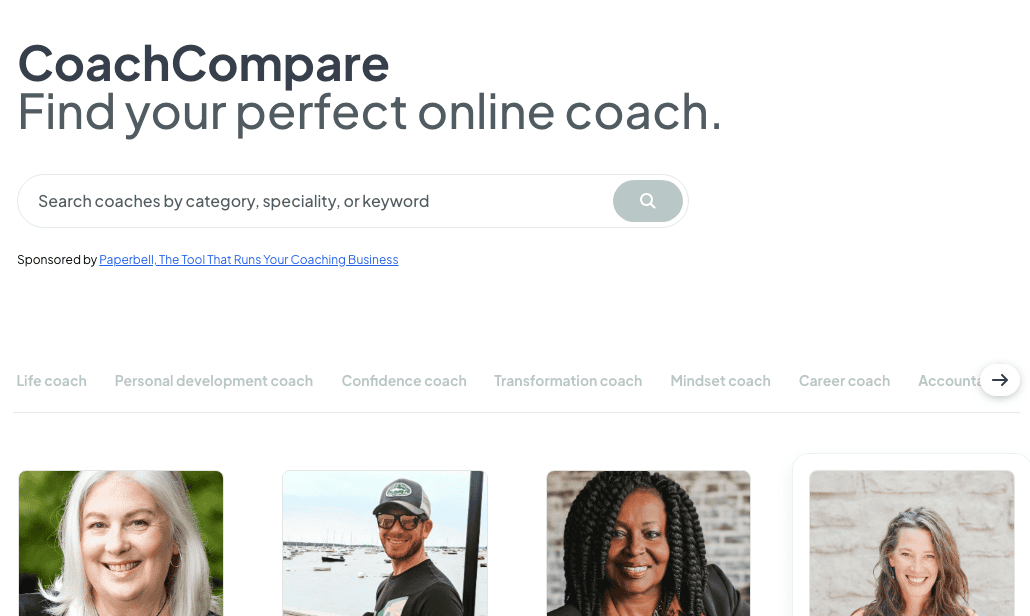
CoachCompare is a free coaching directory that helps clients find the right coach by category, specialty, or keyword.
Unlike most marketplaces on this list, CoachCompare doesn’t take a cut of your earnings or charge you to be listed. You create a profile, add your specialties, and clients reach out to you directly. There’s no middleman controlling your pricing or client relationships.
CoachCompare was created by the same team behind Paperbell, so if you’re already using Paperbell for your coaching business, you can link directly to your packages from your CoachCompare profile.
Key Features:
- 100% free for coaches — no listing fees, no commissions
- Searchable by category, specialty, and keyword
- Multiple categories per profile (not limited to just one niche)
- Clients contact you directly via your profile
- Link to your own website or Paperbell page
Price: Free. CoachCompare is sponsored by Paperbell.
Coach Requirements: None — open to all coaches.
Best For: Any coach who wants more visibility without paying marketplace fees or giving up control of client relationships.
6. Life Coach Hub
Life Coach Hub is a coaching marketplace and coaching tool in one. It connects clients with certified life coaches through a simplifyd matching process based on coaching styles, specialties, and client goals.
It is unique in offering one-time sessions and packaged coaching programs so clients can choose their level of commitment.
The platform has a transparent review system and a coach verification/recruiting process.
Features:
- An app that supports coaching sessions
- Matching system based on coaching style and client needs
- Strong coach community with peer support and resources
- Automation and document sharing feature
Price: Standard access starts at $17 per month. But once you get coaching clients, you keep your entire revenue.
Salary: It varies per coach.
Coach Requirements: None. Just sign up.
Best For: Life coaches looking for a coaching app with built-in client acquisition features.
7. Coach.me
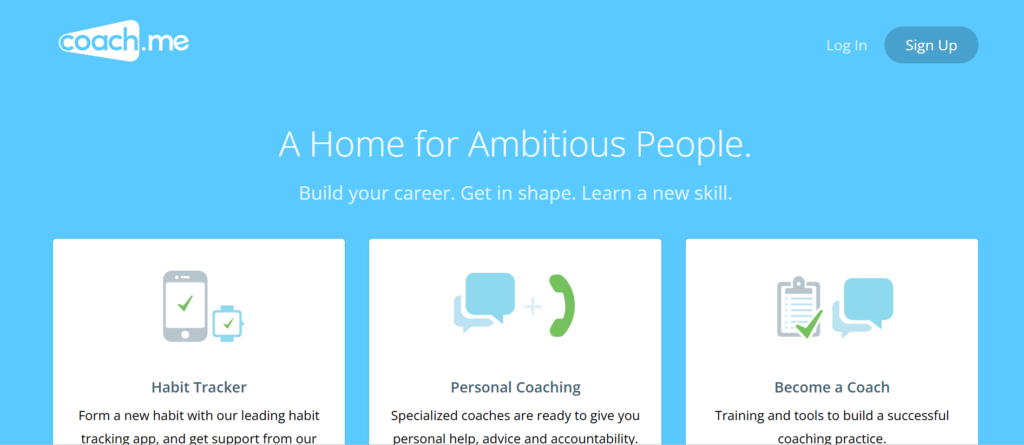
Coach.me started as a habit-tracking app and evolved into a coaching marketplace with a focus on habit formation, accountability, and behavioral change.
The platform makes coaching affordable through short, focused interventions rather than traditional hour-long sessions. This has made coaching accessible to previously underserved client segments.
Coach.me is strong in fitness, productivity, and personal development coaching, where measurable habit changes drive results.
Features:
- Habit coaching and accountability
- Coaching marketplace app with a mobile-first approach
- Lower price point coaching options
- Community features
Price: The basic coach plan starts at $9.99/month. The platform also charges 5% per payment processing. For the affiliate-referred clients, you need to share 50% of your initial billing.
Salary: It varies from coach to coach.
Coach Requirements: None.
Best For: New coaches or habit coaches who focus on personal development.
8. Noomii
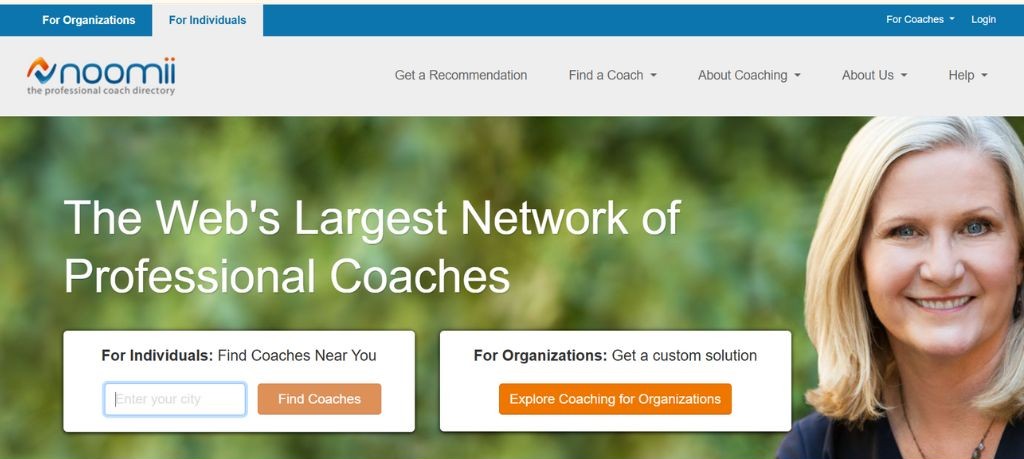
Noomii is one of the original coaching marketplaces and still functions as a directory connecting coaches with individual clients.
The platform takes a more hands-off approach than full-service marketplaces. It focuses on generating leads rather than managing the entire coaching relationship.
Noomii’s freemium model, with basic free listings and premium paid options, makes it accessible to coaches at all stages of their careers. The platform serves virtually all coaching niches but has particularly strong representation in life, career, and business coaching.
Features:
- General coaching directory/marketplace
- Lead generation focus
- Simple profile system
Pricing: It costs $447/year for coaches to be listed on the directory. Coaches can charge clients and keep their entire revenue since Noomii doesn’t get involved. But using their referral program requires 30% of client payments.
Salary: It varies per coach.
Coach Requirements: None. Create an account.
Best For: New coaches looking for their first clients or testing coaching marketplaces.
9. Ezra

Ezra is a virtual coaching platform that uses research-backed strategies to improve leadership and professional growth within companies.
With over 2000+ ICF-accredited coaches, the Ezra coaching solution has helped industry giants like Nestle. Microsoft, Netflix, and Starbucks. The platform works with multinational companies looking to coach global teams while maintaining quality standards.
Key Features:
- Advanced mobile app
- Measurement tools such as the EZRA Measure™ assessment tool
- Multi-language support for global programs
- Analytics dashboard for organizations
Price: To become an Ezra coach, you need to apply to join the platform.
Salary: Life coaches make about $59,000 on average annually, while executive coaches make up to $199,000 per year, according to Glassdoor.
Coach Requirements: ICF coaching credentials.
Best For: Experienced leadership coaches looking for corporate clients with a focus on results.
How Much Can You Actually Earn on Each Platform?
One of the biggest questions coaches have about marketplaces is pretty simple: How much money can I actually make?
The answer depends on a few things — the platform’s revenue model, your niche, your experience level, and how much control you have over your own pricing. Some marketplaces let you set your rates. Others assign them. And a few take a cut so big you’ll wonder who’s really running your business.
Here’s a quick comparison to help you see the differences at a glance:
| Platform | Revenue Model | Typical Earnings | Key Requirements |
|---|---|---|---|
| CoachHub | Salaried/contracted | $30-80/hr (varies by market) | Certification required, application process |
| BetterUp | Per-session pay | $50-100+/hr | Advanced certification, behavioral science background preferred |
| Coaching.com | Platform fee + you set rates | Varies widely | ICF or equivalent credential |
| Blush | Per-session pay | ~$30-50/session | Licensed therapist or certified life coach |
| Life Coach Hub | Membership fee, you keep 100% | You set your rates ($0-500+/hr) | Monthly listing fee (~$29/mo) |
| Coach.me | Freemium model | $25-150+/session for 1:1 | Open to all, but ratings matter |
| Noomii | Referral fee per client | You set your rates | Application + annual fee |
| Ezra | Contracted rate | Competitive but undisclosed | Senior coaching experience, corporate background |
| CoachCompare | Free directory, you keep 100% | You set your own rates | None — open to all coaches |
When you look at this side by side, the differences are pretty telling.
Platforms like CoachHub and BetterUp pay you directly, which sounds nice — until you realize you have no say over your rates. You’re basically a contractor. If they decide to lower pay, you don’t get a vote.
On the other end, platforms like Life Coach Hub and Coach.me let you set your own prices, but you’re responsible for attracting clients within the marketplace. You’re competing with every other coach on the platform, and the marketplace takes a fee regardless.
The sweet spot? It depends on where you are in your coaching career. If you’re just starting out and need experience (and testimonials), a marketplace with steady client flow — even at lower rates — might make sense for a while. But if you already have coaching chops and want to earn what you’re actually worth, you’ll hit a ceiling pretty fast.
How to Choose the Right Coaching Marketplace
When looking to choose the right platform for your coaching marketplace needs, here are some things to consider:
Questions to Ask Before Joining
- What percentage of my earnings will the marketplace take?
- How are coaches marketed to potential clients?
- Can I take marketplace clients outside the platform eventually?
- What kind of support do they provide for coaches?
- How competitive is it to stand out among other coaches?
Red Flags to Watch Out For
- Extremely high commission rates
- No transparency about how clients are matched with coaches
- Poor reviews from other coaches on the platform
- Restrictive non-compete clauses
- Unclear terms about client ownership
Marketplace Terms
Always read the fine print about:
- Commission structures and payment timelines
- Exclusivity requirements
- Client communication policies
- Cancellation policies
- Intellectual property ownership of coaching materials
Calculating Your True Earnings
To understand what you’ll actually earn, calculate:
- Your hourly rate minus the platform’s percentage
- Additional costs like transaction fees or subscription costs
- Time spent on platform-specific administrative tasks
- Marketing efforts still required on your part
What is the Best Coaching Marketplace
The “best” coaching marketplace depends entirely on your situation:
By Experience Level
- New Coaches: Coach.me, Blush, or Noomii are easier to get into
- Mid-Career: Coaching.com and Life Coach Hub offer a good balance of support and independence
- Seasoned Experts: CoachHub and BetterUp typically have higher-paying opportunities
By Coaching Niche
- Executive Coaching: CoachHub, BetterUp, Coaching.com
- Life Coaching: Blush, Noomii, Life Coach Hub
- Health/Wellness: Coach.me
- Career Coaching: BetterUp, Coaching.com
Revenue Potential
CoachHub and BetterUp typically have the highest session rates ($150-300+), but also the most requirements. Coach.me may have lower rates but higher volume for some coaches.
Client Acquisition
Enterprise-focused platforms like CoachHub have fewer but higher-value clients. Consumer platforms like Noomii have more leads, but conversion rates per coach might be lower.
Building Your Own Coaching Website vs. Using a Marketplace
While marketplaces are convenient, they come with big hidden costs:
The Hidden Costs of Marketplace Platforms
- Most platforms take a percentage of your earnings
- Limited control over your brand
- Dependent on the platform’s algorithms and policies
- Restricted access to client info
- Hard to transition clients off-platform
Benefits of Owning Your Client Relationships
- Keep 100% of your earnings
- Build direct relationships with clients
- Full control over your coaching process
- Evolve your offerings without platform restrictions
- Build an asset you own according to your business plan
Creating a Professional Coaching Business Without Technical Skills
You don’t need to be tech-savvy to build a professional independent coaching practice.
With Paperbell, a no-code website builder and all-in-one coaching platform, coaching business tech becomes easy to handle.
Here’s what you can do with Paperbell:
- Create a professional coaching site without coding
- Manage scheduling, payments, and contracts in one place
- Offer multiple coaching programs and group coaching options
- Give clients a seamless booking experience
- Manage clients and admin tasks
When a Coaching Marketplace Might Still Make Sense
Marketplaces can still be useful in certain situations when you:
- Are just starting out with no existing client base
- Want to test a new coaching niche before fully committing
- Prefer a steady stream of pre-qualified clients, even at a lower rate
- Are looking to supplement your independent practice during slow periods
- Lack time or interest in handling marketing and client acquisition
How Luisa Zhou Built a Successful Independent Practice

Luisa Zhou is a seven-figure business coach who went from 9-5 to coaching and used her corporate experience to help professionals start their online businesses.
She built her own website, created signature coaching programs, and used content marketing to attract clients directly. She was able to scale from one-on-one coaching into group programs and digital courses.
Her success shows you can make more money and have more business opportunities when you own your coaching practice.
FAQs About Coaching Marketplaces
Is there a marketplace for coaches?
Yes, there are many coaching marketplaces in 2026, from general platforms like Noomii to enterprise platforms like CoachHub. Each serves different coaching niches and business models.
How much do coaching marketplaces take from coaches?
Some coaching marketplaces take up to 15-40% of coaching fees. Enterprise platforms like CoachHub take a higher percentage but may provide higher-paying clients.
Can I use both a coaching marketplace and my own website?
In most cases, yes. But review each marketplace’s terms. Some platforms have exclusivity clauses or restrictions on soliciting marketplace clients to your independent practice.
How long does it take to get clients from a coaching marketplace?
This depends on the platform and niche. On consumer-focused platforms, you might get inquiries within weeks. Enterprise platforms like CoachHub might take months before you’re matched.
How much does CoachHub pay coaches?
CoachHub pays coaches between $150-300 per session, depending on experience and specialization, but they take around 30-40% of what clients pay.
Are free coaching marketplaces worth joining?
Free coaching marketplaces are worth joining for visibility, backlinks to your website, and potential lead generation. But they provide less value than paid or commission-based platforms in terms of connecting you with paying clients. They’re best viewed as one piece of a broader marketing strategy rather than a primary client source.
What’s the difference between a coaching marketplace and a coaching platform?
A coaching marketplace connects coaches with clients — think of it like a directory where potential clients browse and pick a coach. The marketplace handles the matching, and usually takes a cut. A coaching platform, on the other hand, is a tool you use to run your existing business — scheduling, payments, packages, client management. With a platform like Paperbell, you bring your own clients and keep 100% of what you earn. Most coaches who are serious about growing end up needing both: a way to find clients, and a way to serve them professionally.
Build Something That’s Actually Yours
Let’s be real for a second.
Coaching marketplaces aren’t bad. They can get you in front of clients and help you build experience. But they’re someone else’s platform, with someone else’s rules.
You can’t control your pricing, and you can’t build a relationship with clients outside the platform. Every session you deliver makes their brand stronger — not yours.
The coaches who earn the most? They own their client experience from start to finish. They set their own rates and don’t hand over a percentage of every payment to a middleman.
That’s exactly what Paperbell is built for. You get your own website with packages, scheduling, and payments — all in one place. No marketplace fees. No competing with hundreds of other coaches for the same client.
Try Paperbell for free and see what it’s like to run your coaching business on your own terms.