

You know exactly what your coaching does for people. Getting a website to say that, without spending three months and $5,000 on a designer, is a different story.
The good news? Health coach website templates have gotten genuinely good. Start from a wellness-specific design that already has the right pages, drop in your own words and photos, and your site can be live in a weekend.
The catch is that most “best template” lists are a shelf of everything tagged “health.” They won’t tell you which one suits a nutrition practice versus a group weight-loss program.
Heads up: some links in this article are affiliate links, which means Paperbell may earn a commission if you buy through them, at no extra cost to you.
Get a Ready-Made Health Coaching Website With Paperbell
Website themes and low-code platforms are fantastic if you need heavy customization. Most health coaches don’t. What you need is a simple, professional site that converts visitors into clients and makes managing them painless.
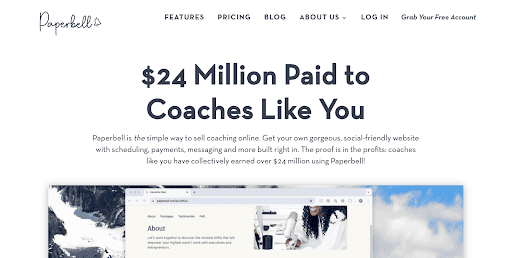
That’s exactly what Paperbell does. It’s an all-in-one tool built for coaches, so you skip choosing themes, builders, and plugins. Plus…
- Setup is simply filling in the blanks with your own text and images. Zero tech skills required.
- Unlike many themes, your Paperbell site never expires.
- Hosting is covered in your monthly fee, along with booking, payments, contracts, and surveys.
Try Paperbell for free and see how quickly you can have a working health coaching site.
The Best DIY Website Templates and Themes for Health Coaches
The four most popular platforms for wellness website templates are WordPress, Squarespace, Showit, and Wix. Each has its own strengths, from the WordPress send email feature to Squarespace’s automation and Showit’s design tools. Not sure which builder is which? This guide by Ember & Co. is a great resource.
We rechecked every link below in August 2026, dropped the templates that had disappeared, and added a verdict on who each design suits.
[ Read: Best Website Builder for Coaches: 9 Real Sites We Scored + Templates ]
5 Easy Website Themes on WordPress
WordPress asks more of you than the other builders, but its friendlier themes and helpful WordPress Chrome extensions flatten the learning curve.
1. Fitness Coach by Divi
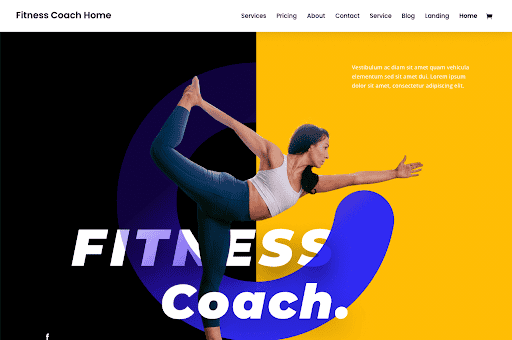
This fitness coach template by Divi turns WordPress into a drag-and-drop builder, and you can mix it with any layout in the Divi library. Membership is currently listed at $89 a year, covering over 40 Health & Fitness layouts.
Why we picked it: Splitting the cost with other coaches, running more than one site, or expecting to redesign again next year? This one’s the cheapest way in.
2. Tribe Coaching and Online Course by The Design Space
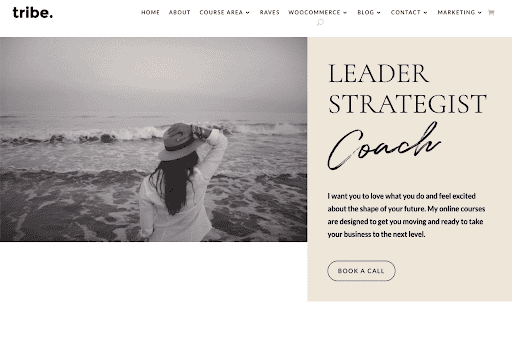
This template is a child theme of Divi, so you’ll need to buy Divi first. The Design Space built this one around selling a program rather than listing services.
Why we picked it: Selling a signature course or a group program instead of one-on-one work? It’s built around that, not around solo sessions.
3. Nutrie by RockThemes at Template Monster
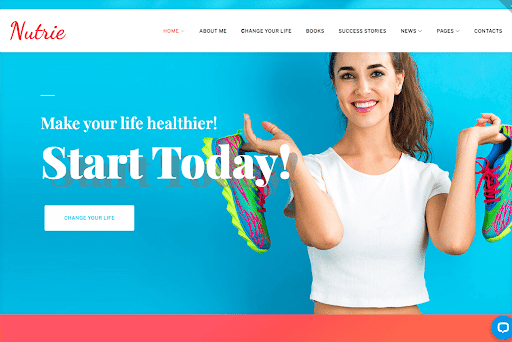
Like Divi, Nutrie gives you drag-and-drop building. Fitness, nutrition, one-on-one coaching, group programs, retreats: it lays all of them out without the page turning into a wall of text.
Why we picked it: A wide services menu is where this earns its keep. If you only sell one thing, it’ll feel like a suit two sizes too big.
4. Rosaleen by ThemeRex
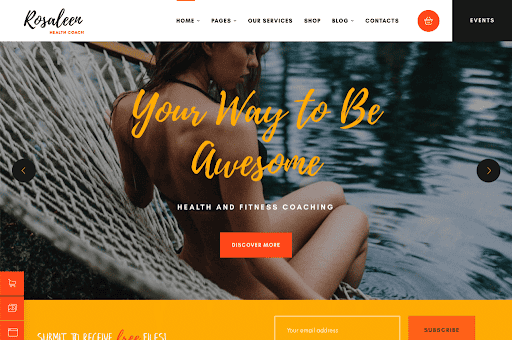
Rosaleen is built for Elementor, another drag-and-drop WordPress builder. We love the tropical palette, and it ships with three homepage designs and several blog layouts.
Why we picked it: It really comes down to the blog layouts. If content marketing is how you plan to get found, your articles finally have somewhere decent to live.
5. Health Coach by VW Themes
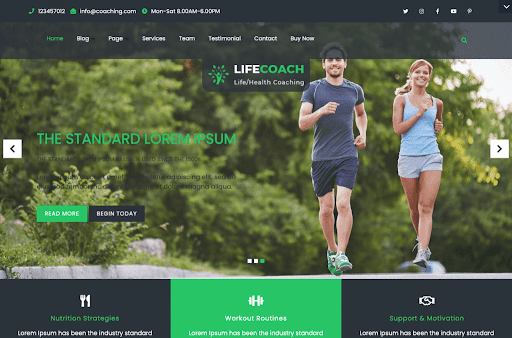
This free health coach theme has five-star reviews and a bold design that holds up across devices. Services sit below the hero image, where a first-time visitor looks.
Why we picked it: This is the strongest free option on WordPress. Start with it if you’re pre-revenue, then upgrade once clients start paying.
4 Top Health Coach Website Templates for Squarespace
Squarespace is a drag-and-drop builder that makes setup easy. Start with one of Squarespace’s own templates or buy a design from one of the studios below. And if you’re weighing Squarespace against coaching-specific software, see our Squarespace vs Paperbell comparison.
1. Influence Course by GoLiveHQ
If you’re a health coach selling online programs or memberships, this Squarespace template is built for that. It’s listed at $299, and the layout is organized around getting someone from “what is this” to enrolled.
Why we picked it: If a program pays your bills more than sessions do, this is the strongest pick. (GoLiveHQ has retired The Club Collective, which we previously featured here.)
2. Rose by GoLiveHQ
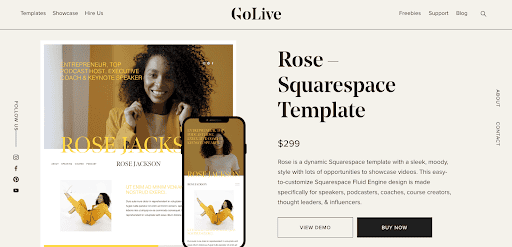
This is a fresh, lively modern website design that screams energy. It covers services, products, and courses, and everything is customizable without code.
Why we picked it: This one runs hot. Fitness and weight-loss coaching suit it far better than a calm, restorative practice would.
3. Awaken by Wellsites
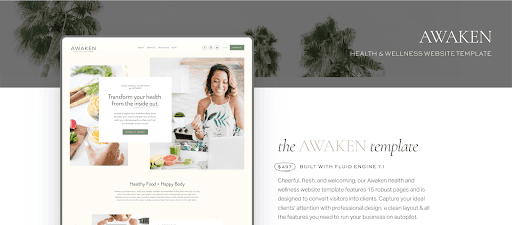
Wellsites makes templates only for health and wellness, and that focus shows. Awaken is aimed at nutritionists, dietitians, coaches, and therapists. It was listed at $497, the priciest pick here.
Why we picked it: You’re paying for polish here, and it’s worth it if you’re a credentialed nutrition or wellness professional who wants the site looking the part on day one.
4. Renew by Wellsites
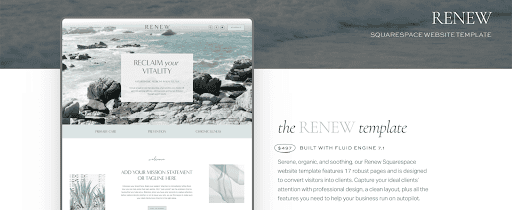
Another Wellsites design for health coaches, this one built out to 19 pages. We love how calm the whole thing feels. See the product page for current pricing.
Why we picked it: The design itself is the gentlest of the bunch, a good fit for functional medicine or chronic illness work, where the client shows up stressed and the site’s job is to lower their shoulders.
4 Best Showit Website Templates for Health Coaches
Showit first caught on with photographers, and it’s easy to see why it spread. It pairs with WordPress for blogging and handles image-heavy pages without crawling. Browse the free catalog here.
1. Sylvie by Lovely Impact
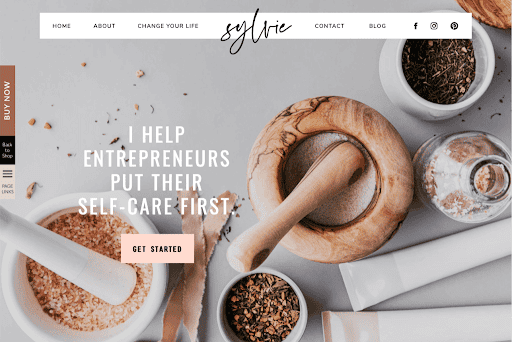
Lovely Impact designs templates only for coaches, and splits its catalog by coaching niche. Sylvie is made with health coaches in mind, and it’s a beauty. You get 16 web page designs plus a launch checklist, a copywriting guide, and video tutorials.
Why we picked it: Honestly, the copywriting guide is the real value. Most coaches stall on what to write, not on how to drag a text box around.
2. Alicia by Lovely Impact
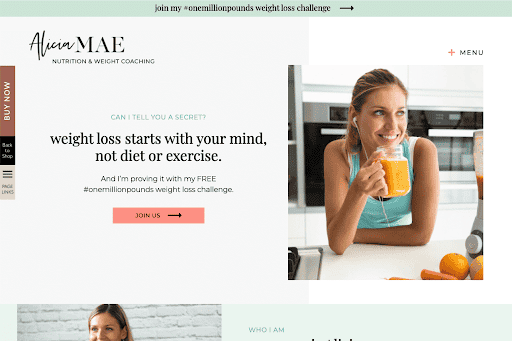
If you’re a health coach focused on weight loss, this is a great template. Alicia has 16 webpage designs and the same extras as Sylvie.
Why we picked it: Progress-story proof and program pages are what this layout does best, exactly what weight-loss coaching needs to sell.
3. Jena by Elizabeth McCravy

This template has 14 page designs covering everything a health coaching business needs, and every one is fun and bold. It includes training videos and lifetime support. See the product page for pricing.
Why we picked it: Out of the whole list, this one has the most personality. Good fit if clients are hiring you, specifically, not a faceless wellness brand.
4. Olivia Hudson by Jessica Gingrich
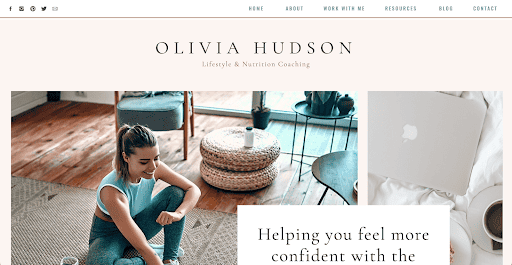
This template has simple navigation and an uncluttered design, and was originally built with counselors in mind. Jessica also shares client sites so you can see how a few changes can make the page feel like yours. Pricing is on the product page.
Why we picked it: This one feels the quietest and most clinical of the bunch. Mental health and behavior-change coaching suit it well, where restraint reads as credibility.
3 Wix Health Coach Website Templates
Wix is one of the easiest builders around and often the first choice for coaches just starting out. Three sticking points before you commit:
- You’re stuck with the theme you choose once you hit publish.
- You have to use Wix for hosting.
- Moving blog posts later, if you leave, is a manual job.
That said, Wix has a treasure trove of health and wellness templates, and the native ones are free.
1. Tori Gainz by Wix Pro Themes
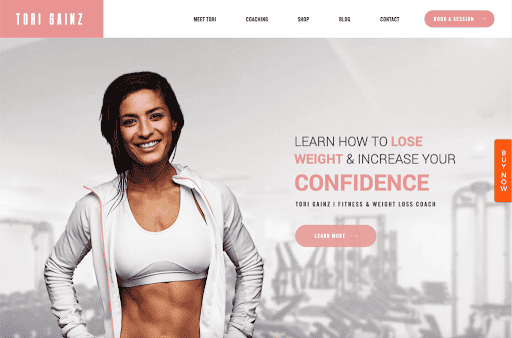
This Wix template lays out services for a holistic health coach working across weight loss, nutrition, and meditation. It was listed at $249.
Why we picked it: Want three or four distinct offers visible without making visitors dig? This is the clearest multi-service layout Wix has.
2. Health and Wellness Consultant by Wix
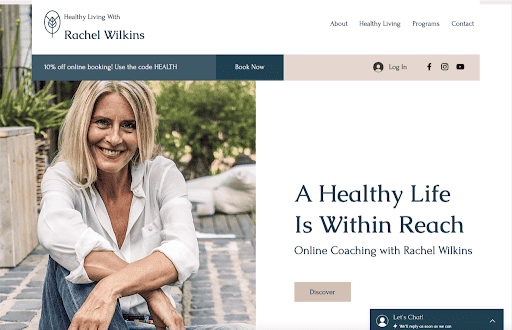
This is one of Wix’s own templates, and it’s free. We love the fresh design and large fixed menu, and the special offer bar that scrolls with you is a smart touch.
Why we picked it: If you just want to test whether Wix suits you before spending on a premium design, this free option does the job.
3. Lianna Rose by Wix Pro Themes
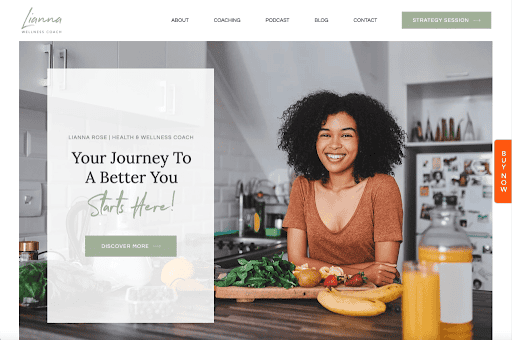
Looking to start a podcast? This is the theme for a holistic health coach building a personal brand. Who you are and why you do this work are the first things a visitor sees.
Why we picked it: This is the only one on the list that treats a podcast or show like a real part of the site, not an afterthought.
7 Things to Look for in a Health Coach Website Template or Theme
Even with a template, building your website is a real time commitment. Here’s what we’d check before handing over any money.
1. Adaptability
Moving a site between builders is a pain. Switching templates within the same builder is easy. So choose your platform carefully and your template second, using this comparison by Ember & Co.
2. Customization
You need real flexibility on layouts, fonts, and colors, because all of it feeds your brand and how clients perceive you.
3. Updates
Plenty of paid templates come with support that expires after a year. That means no new functionality and no protection against security threats, so read the product terms before you buy.
4. Visual Appeal
A template can look gorgeous in the demo and go clumsy the moment you change a few details. Ask the honest question: would it still look this good with your own photos in it?
5. Page Speed
More than half of your visitors leave if a page takes three seconds to load, and the demo is the fastest that template will ever be. Compress images with TinyJPG, add WP Rocket on WordPress, and check yourself with PageSpeed Insights.
6. Mobile Responsiveness
Most of your visitors will find you on a phone. Open the demo on yours and check the booking button specifically. That’s the one that has to work.
7. Navigation
If you struggle to find your way around the demo, so will your visitors. Your website is often someone’s first real experience of working with you.
[ Read: 19 Ways to Get Coaching Clients (Organic and Paid) ]
4 Trust Details Health Coach Websites Need (That Most Templates Ignore)
Here’s where health coaching parts ways with every other kind of coaching website. You’re talking about people’s bodies, and that raises the bar on what your site has to handle carefully.
None of this is legal advice, and rules differ by country and credential. But these four details come up for almost every health coach, and almost no template plans for them.
1. Somewhere to put your disclaimer
Most health coaches aren’t doctors and can’t diagnose, treat, or prescribe. That distinction usually belongs in two places: a short line near your services, and a fuller disclaimer page linked in the footer (or in your terms).
Check that the template has a footer you can add links to. Some lock it to social icons only, which is annoying to work around later.
2. Careful handling of results and testimonials
Client results are your best marketing and your biggest risk of overpromising. Specific claims about pounds lost or conditions improved read very differently from a client describing how they felt.
Look for a testimonial block with room for a few sentences, not one that squeezes every quote into six words. Tiny pull-quotes push you toward numbers, and numbers are exactly what you need to be careful with.
3. Written consent for before-and-after photos
Progress photos are common in fitness and weight-loss coaching, and they need explicit written permission. Keep the record, and be clear with the client about where the photos appear and for how long.
On the template side, check if the gallery blocks support paired images at a consistent size. Mismatched crops make honest results look staged.
4. Intake forms that don’t leave health details lying around
Health intake forms collect sensitive information: medications, conditions, injuries, eating history. A basic template contact form emails all of that to your inbox in plain text, which is not where it should live.
Either use a form tool built for confidential data, or collect intake inside your client management system instead. In Paperbell, intake surveys sit behind each client’s own portal, so answers stay private and attached to their file.
6 Inspiring Examples of Real-Life Health Coach Websites
Templates show you what’s possible. Real practices show you what works. Here are six health coaches with websites worth studying. (If you’d rather see what coaches have built without a designer at all, our roundup of real Paperbell coaching websites is a good companion to this list.)
1. Elizabeth Rider
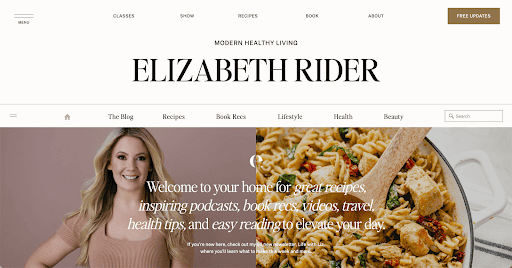
Elizabeth Rider is a health coach, author, and mentor. Her hero copy is a call to action for healthy recipes. Everyone who cooks wonders what’s for dinner, so it’s a smart way to start a relationship before anyone is ready to buy coaching.
2. Simply Defined Fitness
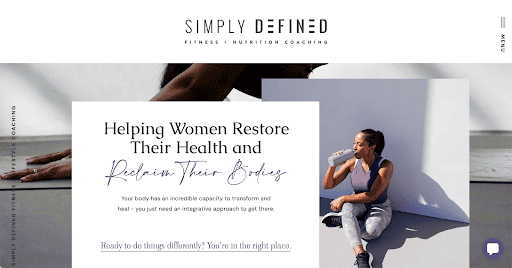
Angel is the coach behind Simply Defined. She’s a holistic nutritionist, yoga teacher, and wellness coach, and she carries all three credentials without the site feeling like a resume.
3. Kristin Webster
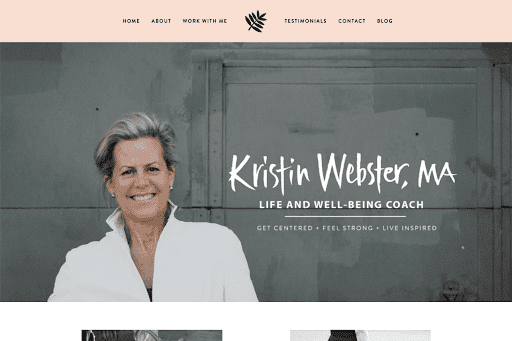
Kristin Webster has a background in mental health, mindfulness, and health coaching. Her site puts that expertise front and center, while making it just as clear she tailors the work to each client. The soft details and brand colors speak directly to women, her core audience.
4. Julie Ledbetter
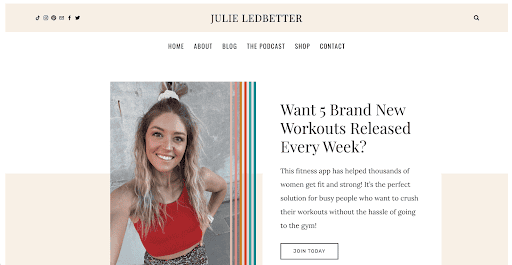
Julie Ledbetter’s website is simple but makes an impact, with layered graphics and colors that scream joy. If you need inspiration for an About page, hers is a great example of being relatable and understanding her clients’ body image struggles. More on building that page next.
5. Lauren Bongiorno

Lauren Bongiorno has a hero section that makes her exact niche unmistakable within a second of landing. That qualifies her audience before they scroll. If you work in a specific health niche, like type 1 diabetes coaching, this is the one to study.
6. Julia Balto
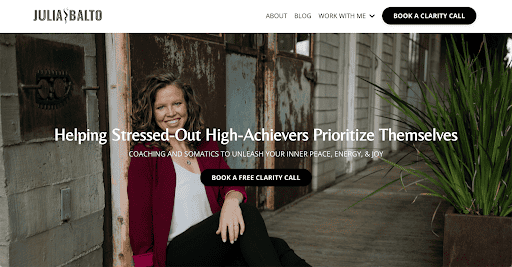
Julia Balto names a common client challenge right in her header and invites people to a clarity call. She’s unapologetically herself, which is exactly why the right people stick around.
What to Put on a Health Coach About Page
Your About page is usually the second page a visitor opens, right after they’ve decided your homepage looks promising. It’s where they work out whether they’d trust you with their health. Which makes it strange that most coaches treat it as a formality.
Here’s what belongs on a health coach About page:
- Your own health story, told briefly. What you struggled with, what changed, why you do this work now, in two or three paragraphs, not a memoir. It’s the part clients actually remember.
- Who you help, named specifically. “Women in perimenopause who are exhausted by conflicting advice” does more work than “people who want to feel better,” and it filters out the wrong-fit clients before they ever book a call.
- Your credentials, in plain language. Most clients have never heard of your certifying body, so spell out what the letters after your name actually mean. If you hold a clinical license, say so plainly.
- The line you don’t cross. One sentence saying you coach rather than diagnose or treat. Oddly enough, that boundary is what makes you sound more professional, not less.
- A photo that looks like you, now. Not a stock image, not a headshot from six years ago. People want to see who they’d actually be talking to.
- One or two client quotes. Just enough to prove you’ve done this before. Put them where someone scrolling will actually hit them.
- A clear next step. Close with a booking link, and don’t make an interested reader go hunting for your services page.
One thing to skip: a full list of every modality you’ve ever trained in. It reads as insecure, and clients hire you for the outcome, not the syllabus.
Then read the page out loud. If it sounds like a conference bio, rewrite it as if you were telling a friend why you do this.
Frequently Asked Questions
What should a health coach put on their About page?
Cover your health story in two or three short paragraphs, then say specifically who you help and lay out your credentials in plain language. Add a clear statement that you coach rather than diagnose or treat, a current photo, one or two client quotes, and a booking link at the end.
Does a health coach website need a medical disclaimer?
Most health coaches include one, usually a short line near their services plus a fuller page linked from the footer. It clarifies that coaching isn’t medical care and that you don’t diagnose, treat, or prescribe. Requirements vary by country and credential, so check your own situation with a professional rather than copying someone else’s wording.
Is Squarespace or WordPress better for a health coaching website?
Squarespace is faster to launch and needs no maintenance, which suits most health coaches. WordPress gives you more control and better long-term blogging, but you own the updates, security, and hosting. If you’re not publishing heavily, Squarespace gets you live sooner.
Can I use a general life coach template for a health coaching business?
You can, and plenty of coaches do. You’ll usually have to add a disclaimer page, a testimonial section with room for real sentences, and somewhere to handle health intake privately. A health or wellness specific template tends to have those built in.
How much do health coach website templates cost?
The templates here ranged from free to around $500 when we checked in August 2026. Native Wix templates and some WordPress themes cost nothing, designer Showit and Squarespace templates sit in the low-to-mid hundreds, and specialist wellness studios sit at the top. Check the product page before you budget.
Go Create Some Magic
You’ve got the templates, the checklist, and six real sites to borrow from. Pick the one that matches how you actually sell, not the prettiest demo. For help structuring your site and packages, grab our free template pack for coaches.
And to keep the rest of the business running quietly in the background, Try Paperbell for free. It handles bookings, payments, contracts, and client intake in one place, so your website only has to do the job it’s good at.
Editor’s Note: This post was originally published in January 2021 and has since been updated for accuracy and completeness.