

10+ Life Coach Bio Examples (+ Copy-Paste Template for 2026)
You’ve done the work. You’re certified, you’ve coached real people, and you know you can help your clients get results. But then someone asks you to write a bio and suddenly you’re staring at a blank page wondering what to say about yourself.
Here’s the thing: your bio isn’t just a summary of your career. It’s the first thing a potential client reads when they’re deciding whether to trust you with something personal. Get it right and it does a lot of heavy lifting for your practice. Get it wrong and people click away.
The good news? You don’t have to figure this out alone. In this guide, you’ll find 10+ real life coach bio examples organized by specialty, a 5-part formula you can use to build yours from scratch, and a copy-paste template you can fill in today.
Ready to get more clients from your website? Try Paperbell for free and give every new client a clean, professional first impression the moment they find you.
Why Your Life Coach Bio Actually Matters
Your bio shows up everywhere: your website’s About page, your LinkedIn profile, your Instagram bio, the speaker notes when you guest on a podcast. It’s doing constant work on your behalf whether you’re paying attention or not.
And unlike a sales page, a good bio doesn’t feel salesy. It feels like meeting someone. It gives a potential client enough information to think “yes, this person gets me.”
A few things a strong bio does for you:
- Builds trust before the first conversation. Clients feel like they already know you a little, which lowers the barrier to booking a call.
- Filters in the right clients. A bio that’s specific about who you help will attract those people and gently redirect the wrong fit.
- Positions you as a credible expert. Credentials, results, and a clear methodology signal that you know what you’re doing.
- Shows your personality. Especially for life coaching, people are choosing a relationship, not just a service. Your voice matters.
The coaches below have all nailed at least a few of these. Let’s look at what they’re doing right.
10+ Real Life Coach Bio Examples (By Specialty)
These are real coaches with publicly available bios. Each example includes a breakdown of what’s working and why.
1. Nora DeKeyser — Relationship Coach
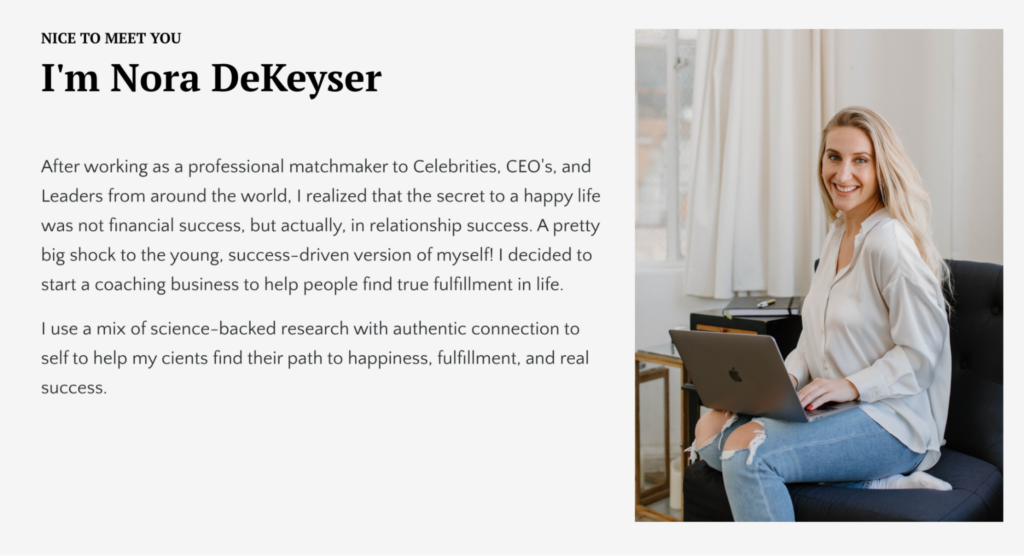
Nora DeKeyser is a New York-based relationship coach whose bio is a clinic in social proof. She leads with her origin story and drops credibility along the way: 20,000+ singles counseled, featured in CBS and Elite Daily, and a client list that spans from celebrities to entrepreneurs to college students.
Her bio includes a clear mission statement: to “help people see the self-destructive patterns they are creating in their love life so that they can attract the ideal partner for their future…and keep them.”
What works: Nora doesn’t list her services as a menu. She weaves them into her story. By the time you’ve read her bio, you already know she works on past relationships, family patterns, and deep personal pain points. That’s a sale without selling.
Key moves to borrow: Specific numbers (“20,000 singles”), named media outlets, a range of clients that signals both credibility and accessibility.
2. Vivian Kaye — Business and E-Commerce Coach
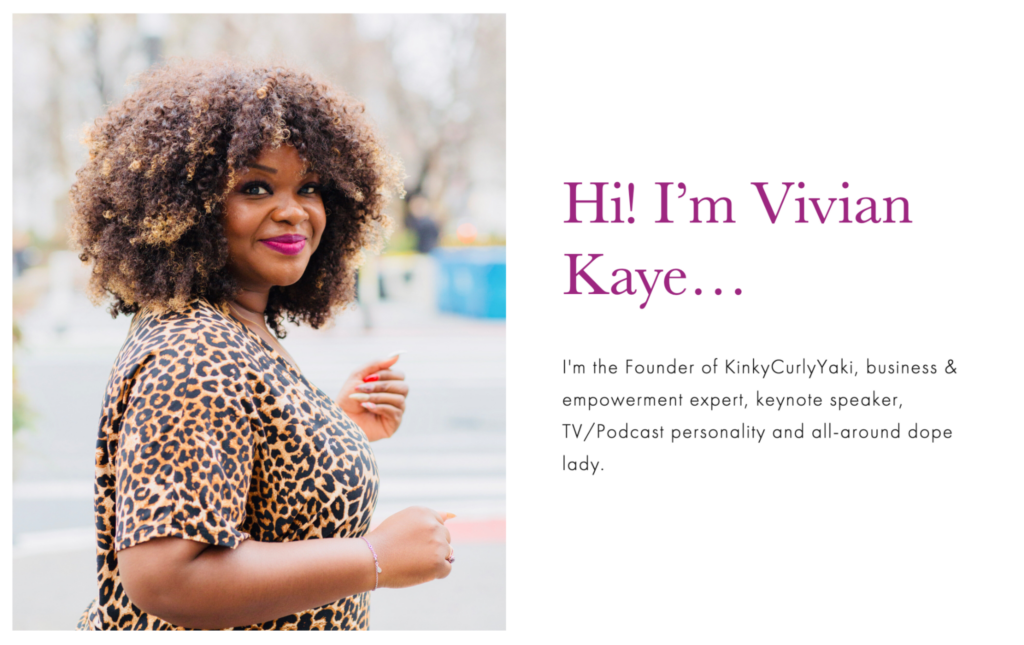
Vivian Kaye is a business and empowerment coach, keynote speaker, TV personality, and founder of KinkyCurlyYaki. Yes, she leads with all of it. Her bio demonstrates the “been there, done that” approach that works especially well in business coaching.
She tells the story of knowing all about the highs of scaling to 6-figure months and hundreds of 5-star reviews to the lows of late inventory, irate customers, and all the chaos in between. She even says she has “receipts to prove it.”
What works: The humor (“receipts to prove it”) creates a real connection. And leading with her multiple titles up front signals authority without making it feel like bragging. It feels like confidence, not a resume dump.
Key moves to borrow: The “I’ve lived it” frame, specific business milestones, and a clear picture of exactly who she serves (product-based, e-commerce business owners).
3. Nicole Nour — General Life Coach
Nicole Nour is a life coach based in Los Angeles who proves you don’t need a flashy bio to connect with clients. Her approach is simple, direct, and centered on the reader rather than herself.
Her bio asks the reader a series of questions that prompt self-reflection: Are you where you want to be? Are you making the choices that align with your values? These questions create a mirror effect that makes potential clients feel seen before they’ve even booked a call.
What works: Nicole makes the bio about the reader’s pain points instead of her credentials. She explains how coaching fills the gap between where someone is and where they want to be in plain, accessible language.
Key moves to borrow: Reflective questions that activate the reader’s self-awareness, simple explanation of how coaching works for clients who are new to it.

4. Todd Gorisheck — Men’s Empowerment Coach
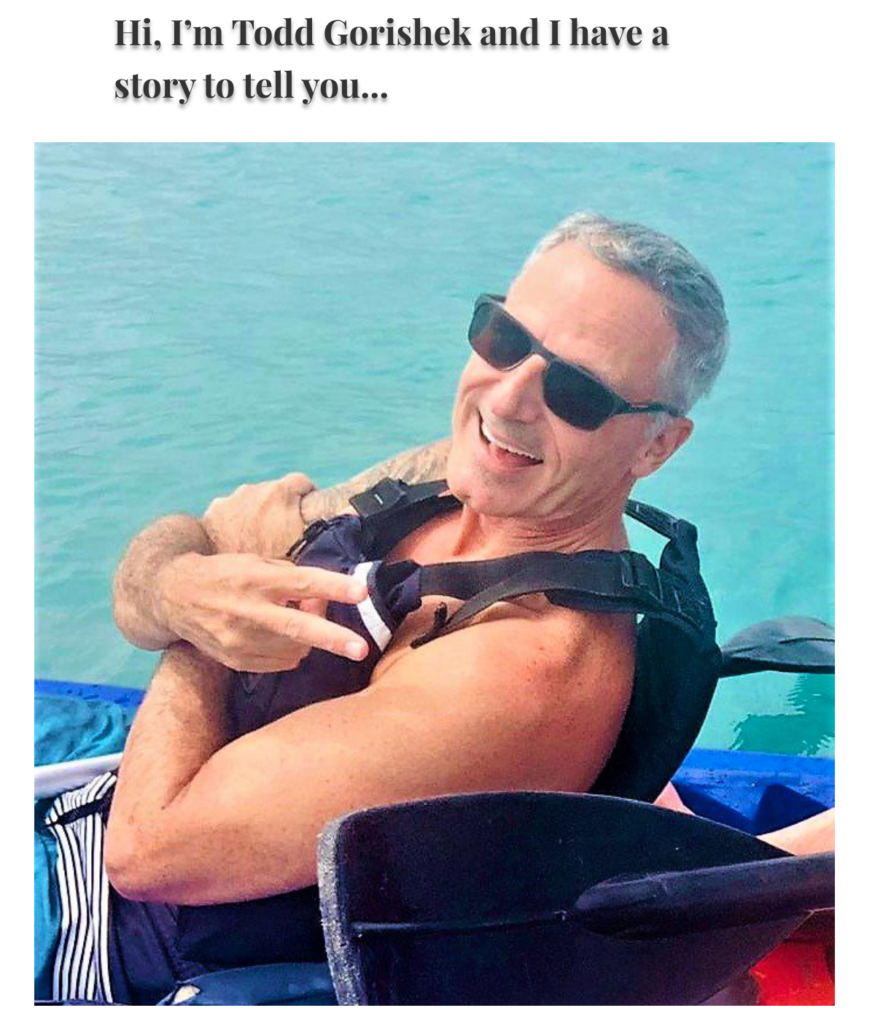
Todd Gorisheck runs a short, punchy bio alongside a longer personal story on his About page. His short bio is worth studying because it gets the job done in under 40 words.
“Hi, I’m Todd. I am a Men’s Empowered Action Coach specializing in accountability, focused action, and goal achievement. I am passionate about men becoming better men in all areas of our lives.”
What works: Todd knows his audience and speaks directly to them (“men becoming better men”). The word “accountability” appears immediately, which is exactly what his ideal client is searching for.
Key moves to borrow: A short-form and long-form version for different contexts. The short bio gets straight to the who and why; the longer About page story provides emotional depth.
5. Brené Brown — Vulnerability and Courage Researcher-Coach
Brené Brown’s bio opens with research credentials (University of Houston, five #1 New York Times bestsellers, the most-watched TED Talk of all time) and immediately grounds them in her core message: that vulnerability is a strength, not a weakness.
She describes herself as a “researcher-storyteller” who has spent the last two decades studying courage, vulnerability, shame, and empathy. The word “storyteller” is deliberate — it signals approachability in a field where “researcher” can feel intimidating.
What works: Heavy credentials, but she doesn’t just list degrees — she ties the research to something you can actually feel. It’s warm without being soft.
Key moves to borrow: Using a hyphenated identity (“researcher-storyteller”) to hold tension between two modes. Leading with your body of work before listing titles.
6. Martha Beck — Life Design Coach
Martha Beck is one of the most recognized names in life coaching. Her bio mentions her Harvard sociology Ph.D. but doesn’t dwell there. Instead, she focuses on what she does: helping people design lives that feel genuinely good, not just successful on paper.
Her bio includes a personal turning point — her own experience leaving a life that looked perfect from the outside — which resonates deeply with clients who feel trapped by the life they’ve built.
What works: Sharing a personal turning point makes clients feel seen before they’ve even read the whole bio. Anyone who feels trapped in a “successful” life will recognize themselves immediately.
Key moves to borrow: The “I’ve been where you are” framing, connecting your credentials to your philosophy (not just your resume), and writing toward a specific emotional state your client recognizes.
7. Mel Robbins — Confidence and Mindset Coach
Mel Robbins is the creator of the 5 Second Rule and one of the most booked motivational speakers in the world. Her bio is direct, metric-heavy, and unapologetically big.
She opens with impact numbers: millions of books sold, hundreds of millions of video views, the #1 self-help podcast globally. Then she pivots to her core message: the science-backed tools anyone can use to get unstuck and move forward.
What works: The metrics establish authority fast. But the shift to “anyone can use these tools” immediately makes the bio about the reader. You don’t need to be an expert to benefit; you just need to be willing.
Key moves to borrow: Leading with your most compelling social proof metric if you have one, then pivoting quickly from “about me” to “here’s what this means for you.”
8. Tony Robbins — Peak Performance Coach
Tony Robbins’ bio spans decades of transformation work and is a good study in how to handle a very long career without losing the reader. He uses bold transformation language anchored in specific outcomes: financial mastery, relationship breakthroughs, peak business performance.
Rather than a chronological career summary, his bio is organized around the outcomes he delivers. The structure signals: “I don’t care about my credentials as much as I care about your results.”
What works: Outcomes-first structure. Every claim is grounded in a specific transformation, not a vague promise.
Key moves to borrow: Organizing your bio by what clients gain, not what you’ve done. Specific outcome language (“financial mastery,” “relationship breakthroughs”) over generic claims (“help you reach your potential”).
9. A Wellness Coach: Sample Real-Style Bio
Not every wellness coach has a celebrity platform, but this type of bio from an independent wellness coach shows how to own a specific niche with confidence.
“I’m a certified wellness coach and registered nutritionist working with women over 40 who are tired of fighting their bodies. After 12 years in clinical dietetics and my own experience with burnout and autoimmune recovery, I created a method that combines nutrition, sleep science, and nervous system regulation — because real wellness isn’t just about what you eat. My clients go from exhausted and overwhelmed to energized and in control, usually within 90 days. If you’re ready to stop treating symptoms and start addressing root causes, let’s talk.”
What works: The niche is crystal clear (women over 40), the credibility is double-layered (professional training + personal experience), the method is named, and the outcome is specific and time-bound. The closing CTA feels like an invitation, not a pitch.
Key moves to borrow: The “I know because I’ve lived it” credibility frame, a named method or system, a specific client outcome with a rough timeline.
10. A Career Coach: Sample Real-Style Bio
“I help mid-career professionals land roles that actually excite them, without starting over from scratch. I spent 15 years in talent acquisition and hiring at Fortune 500 companies before becoming a coach — which means I know exactly how decisions get made on the other side of the interview table. Whether you’re burned out, overlooked, or just know there’s something better out there, I can help you get there. My clients typically land a new role or get promoted within 6 months.”
What works: The “other side of the table” framing is unique and credible. It positions this coach as someone with insider knowledge, not just coaching theory. The outcome promise is specific and time-bound.
Key moves to borrow: Insider knowledge as a credibility frame, addressing the “but I don’t want to start over” objection directly in the bio, specific results timeline.
11. An Executive Coach: Sample Real-Style Bio
“I work with senior leaders who are great at their jobs but struggling in the room. After two decades as a C-suite executive myself — including two company turnarounds — I now coach CEOs, VPs, and founders on the communication, presence, and decision-making skills that actually move organizations. My approach is direct. My clients don’t need more theory; they need someone who’s sat in the same seat and can tell them what actually works.”
What works: “Great at their jobs but struggling in the room” is a precision-targeted pain point. The bio doesn’t try to appeal to everyone. It speaks to a very specific person who will recognize themselves immediately.
Key moves to borrow: A pain-point opener that’s specific enough to create instant recognition, leading with experience-as-credibility before formal credentials, a clear voice that matches the audience (direct, no fluff for a C-suite audience).
The 5-Part Life Coach Bio Formula
You’ve seen 10+ examples. Now let’s break down the formula behind the best ones.
Every strong coaching bio hits these five parts, though not always in this exact order:
Part 1: Who You Help (Be Specific)
Don’t write “I help people reach their potential.” That’s everyone. Write “I help women in their 40s who feel stuck in careers that used to excite them.” Specific beats broad every time.
The more specific your “who,” the more your ideal client thinks “this is exactly me” when they read it.
Part 2: The Transformation You Deliver
What does life look like after working with you? Get concrete. “Feel more confident” is vague. “Land a promotion, set real boundaries at work, and stop lying awake at 2 a.m. worrying about your next performance review” is specific.
Great bios paint a before-and-after picture. Where is the client now? Where do they end up?
Part 3: Credentials and Method
This is where you answer “why should I trust you?” Include your certifications, relevant professional background, years of experience, and anything that gives you specific credibility in your niche.
If you have a named method or framework, mention it here. A named approach (“The Energy Reset Method,” “The 5-Step Confidence Blueprint”) signals that you have a repeatable system, not just intuition.
Part 4: Personality and Voice
Clients are choosing to spend significant time with you. They want to know what that feels like. A sentence or two of personality goes a long way: your communication style, a personal detail that connects to your work, or just the way you show up.
This is what separates a bio from a resume. Resumes don’t have personality. Bios do.
Part 5: Call to Action (CTA)
End with a next step. What do you want the reader to do? Book a discovery call, sign up for your list, fill out an intake form? Make it easy and specific.
Even something as simple as “If this sounds like the right fit, let’s talk” gives readers permission to take action.
Your Copy-Paste Life Coach Bio Template
Use the short version for Instagram, LinkedIn, speaker intros, and directory profiles. Use the long version for your website’s About page or anywhere you have room to breathe.
Short Bio Template (under 100 words)
I'm [NAME], a [COACHING SPECIALTY] coach for [SPECIFIC CLIENT TYPE].

I help [IDEAL CLIENT] go from [PROBLEM/CURRENT STATE] to [DESIRED OUTCOME], using [METHOD/APPROACH — optional].

Before coaching, I [RELEVANT BACKGROUND/EXPERIENCE] — which means I know firsthand [RELEVANT INSIGHT OR CREDIBILITY].

[PERSONAL DETAIL: One sentence about your personality or what makes you uniquely you.]

Ready to [OUTCOME]? [CALL TO ACTION — e.g., "Let's set up a free call."]
Example filled in:
I'm Sarah, a career transition coach for mid-career professionals who feel stuck.

I help ambitious people in their 30s and 40s go from exhausted and overlooked to energized and advancing, using a values-first career audit process.

Before coaching, I spent 10 years in corporate recruiting — which means I know exactly how hiring decisions get made.

I'm direct, practical, and I'll tell you what I actually think.

Ready to find work that fits? Book a free 30-minute call.
Long Bio Template (200-350 words)
[OPENING HOOK: Start with your client's situation or a question they're asking themselves.
Example: "If you've spent years doing everything right and still feel like something's missing..."]

I'm [NAME], a [CERTIFICATION, if applicable] [COACHING SPECIALTY] coach based in [LOCATION/REMOTE].

I work with [SPECIFIC CLIENT TYPE] who [DESCRIBE THE PROBLEM THEY'RE LIVING WITH]. Most of my clients come to me when [TRIGGERING MOMENT OR SITUATION that drives them to seek coaching].

[DESCRIBE YOUR METHOD IN 2-3 SENTENCES. What do you actually do together? Is there a named framework?]

Before I became a coach, I [PROFESSIONAL BACKGROUND]. This means [HOW THAT EXPERIENCE HELPS YOUR CLIENTS SPECIFICALLY].

[OPTIONAL: 1-2 sentences about your personal connection to the work — your own transformation, why this matters to you.]

My clients often tell me [CLIENT RESULT OR TRANSFORMATION IN THEIR WORDS — can be paraphrased].

[CREDENTIALS: Certifications, training, media features, speaking, or other trust signals.]

[PERSONAL TOUCH: 1 sentence — hobbies, values, family, location, or personality. Make it real.]

[CALL TO ACTION: What should they do next? Be specific and warm.]
Example filled in:
If you've built a career that looks great on paper but leaves you feeling hollow on Sunday nights, I get it.

I'm Marcus, an ICF-certified executive coach based in Chicago (and working remotely with leaders worldwide).

I work with senior leaders who are high-performers at work but quietly struggling with burnout, decision fatigue, and a nagging sense that something needs to change. Most of my clients come to me after their second promotion in three years — the one that should have felt like a win but mostly just felt like more pressure.

Using a combination of somatic awareness practices and evidence-based leadership frameworks, we work together to build the kind of sustainable performance that doesn't require constantly running on fumes.

I spent 18 years as a VP at two Fortune 500 companies before becoming a coach. I know the difference between "I'm fine" and actually being fine, and I'll help you get to the latter.

My clients describe our work as the first time they've had a space to be honest about what's actually going on.

I hold an ICF Professional Certified Coach (PCC) credential, a master's degree in organizational psychology, and have been featured in Harvard Business Review and Forbes.

Outside coaching, I'm a distance runner and father of two. I believe rest is a competitive advantage.

If this sounds like what you need, let's find 30 minutes to talk. [LINK TO BOOKING PAGE]
How to Use Your Bio on Different Platforms
Your bio isn’t one-size-fits-all. Here’s how to adapt the same core content for different contexts.
Website About Page
This is where your full long bio lives. You have room for your story, your method, client outcomes, and your personality. Lead with a headline that names who you help and what they get. The bio should feel like a conversation, not a company overview.
Internal link: How to build a life coaching website that attracts clients.
LinkedIn Bio
Keep it to about 200 words. LinkedIn’s default is third-person but first-person often works better for coaches because you’re selling a personal relationship. Lead with your “who I help and what they get” line, add 2-3 sentences of credibility, and end with a CTA.
Third-person works well for speaker bios, event programs, and podcast intro notes where you’re being introduced by someone else.
Instagram Bio (160 characters max)
You have almost no space here. Focus on one thing: who you help and the transformation. Example: “Career coach for mid-career professionals. From stuck to thriving without starting over.” Then your link in bio does the rest of the work.
Speaker Bio
Third person, 100-200 words. Lead with your biggest credibility signal, then your core work, then a human detail. End with your CTA or website. This bio is read aloud or skimmed quickly, so the first sentence matters most.
For more on building your full online presence, see how to write your coaching About page.
How to Write Your Own Life Coaching Bio
You’ve seen the examples. You have the formula. Here’s a practical process for writing yours without overthinking it.
Step 1: Start with your client, not yourself
Before you write a single word about yourself, write one sentence that describes exactly who your ideal client is and what problem they’re living with. That sentence becomes the invisible north star your bio is written for.
Step 2: Fill in the formula
Use the 5-part formula above as a worksheet. Answer each section in rough, incomplete sentences first. Don’t try to write the final version; just get the raw material on the page.
Step 3: Add a real credential that matches your niche
What specifically qualifies you to work in your specialty? Formal training (International Coaching Federation (ICF) certification, health coaching certification, etc.), relevant professional background, personal lived experience, or a track record of client results? Ideally it’s some combination.
For more on what credentials matter, see the skills and certifications life coaches actually need.
Step 4: Read it out loud
If it sounds stiff or formal, it’ll read that way too. Your bio should sound like you explaining what you do to a smart friend over coffee. If it doesn’t, find the corporate sentence and replace it with how you’d actually say it.
Step 5: Check the SEO
For your website bio, make sure your core niche keywords appear naturally in the first paragraph. If you’re a career coach, “career coach” should appear near the top. Don’t stuff it; just make sure Google knows what you do and who you help.
Done is better than perfect
Your bio will evolve. The coaches above have all rewritten their bios multiple times as their niches sharpened and their client work matured. Write something good, put it out there, and update it when it stops feeling accurate.
How to Use Your Bio to Grow Your Coaching Business
A good bio is an asset, not a one-time task. Here’s how to get real mileage out of it.
Consider SEO
For your website’s About page, think about what a potential client would type into Google to find someone like you. “Career coach for women over 40,” “executive coach Chicago,” “relationship coach NYC” — whatever your specific niche is. Include those phrases naturally in your bio text.
Include a clear next step
Don’t end your bio without telling people what to do. A discovery call link, a contact form, or even just “reach out at ” is enough. People won’t take action if there’s no obvious action to take.
Use testimonials alongside your bio
Your bio tells people what you do. Testimonials from real clients tell people what it’s like to work with you. A one-sentence quote from a past client placed right below your bio can convert hesitant visitors into booked calls.
Keep it updated
If you’ve published a book, earned a new credential, landed a media feature, or shifted your niche, update your bio. A stale bio can actually work against you by signaling that your practice isn’t active.
Once your bio starts bringing in clients, you’ll need a system to manage them. Paperbell handles scheduling, payments, contracts, and your client portal in one place, so you can spend your time coaching instead of chasing admin. Try it for free.

Frequently Asked Questions About Life Coach Bios
What should a life coach bio include?
A strong life coach bio includes: who you help (specific client type), the transformation or outcome you deliver, your credentials and relevant background, a sense of your personality and coaching style, and a clear call to action. You don’t need all five in every bio. A short Instagram bio might only hit two or three. But a full About page bio should cover all of them.
How long should a coaching bio be?
It depends on where it’s going. Instagram bios are limited to 160 characters. LinkedIn bios work best at 150-300 words. A website’s About page can easily support 300-600 words, sometimes more if you’re telling a detailed origin story. Speaker intro bios are usually 100-150 words. When in doubt, shorter is usually better. Write until you’ve covered the essentials, then stop.
Should a life coach bio be written in first person or third person?
First person (I, me, my) works better on your own website and social profiles. It’s warmer and feels like a direct conversation. Third person (she, he, they) works better for speaker bios, podcast guest notes, or anywhere you’re being introduced by someone else. If you write your About page in third person it can feel oddly formal, like you’re describing a stranger.
Do I need coaching credentials to have a credible bio?
Formal credentials like an ICF certification add credibility, but they’re not the only path to a convincing bio. Relevant professional experience, lived experience in your specialty area, and a clear track record of client results can all serve the same purpose. Be specific about whatever gives you your credibility in your niche. Vague claims about “years of experience” don’t land the same way as concrete details do.
How often should I update my coaching bio?
Any time something significant changes: you earn a new credential, shift your niche, publish a book, get a notable media feature, or reach a meaningful client milestone. A quick annual review is also a good habit. Bios can go stale faster than you realize, especially if your ideal client has evolved since you first wrote it.
What’s the difference between a coaching bio and a coaching About page?
Your bio is the text-based summary of who you are and what you do. Your About page is a full webpage that can include your bio, photos, client testimonials, your story in more depth, a video introduction, and a booking link. Think of your bio as one component of your About page. For tips on building the full page, check out our guide to writing a coaching About page.
Can I use AI to write my coaching bio?
AI tools can help you get a first draft on the page faster, but they work best as a starting point, not a final product. The bios that actually convert clients have a specific voice and genuine personality. Read whatever AI generates and rewrite any sentence that doesn’t sound like you. The goal is a bio that feels like a real conversation with you, not a polished-but-generic summary.
Final Thoughts
Your bio is one of the best investments you can make in your coaching business. It works for you around the clock, introduces you to potential clients you’ll never meet in person first, and filters in the right fit before anyone books a call.
Start with the 5-part formula, use the template as your scaffold, and let the examples above show you what’s possible. Then write something, put it out there, and adjust as you go.
The best part? Once your bio starts bringing people in, having a professional system behind it makes all the difference. Try Paperbell for free and give your new clients a great first impression from the moment they find you, all the way through their first session.