
You didn’t become a consultant to spend your evenings copying invoice numbers from one app into a spreadsheet, then into a proposal, then into your calendar.
But that’s where a lot of independent consultants end up. You’re a strategist, salesperson, bookkeeper, and scheduler, all in one week. And every one of those jobs seems to want its own subscription.
Here’s the thing: the right consulting software gives you those hours back. The wrong stack (five tools that barely talk to each other) quietly eats them.
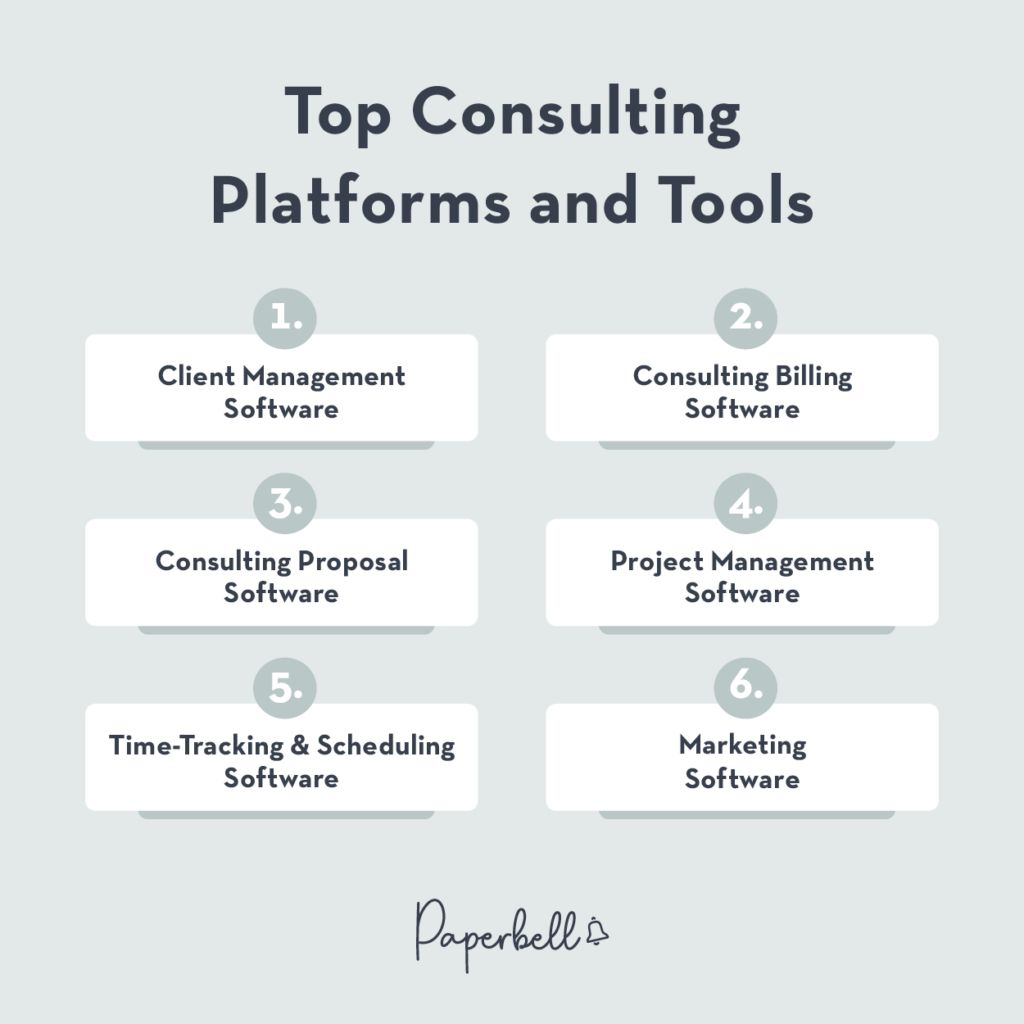
So in this guide, we’ve rounded up 21 consulting software tools organized by what you actually use them for: managing clients, getting paid, winning work, delivering projects, tracking time, and marketing. We’ve added verified pricing for each one we could confirm, a quick comparison table you can scan in ten seconds, and a simple way to figure out which category could work best for your business. At the end, we’ll introduce the all-in-one option built specifically for independent consultants who’d rather run their whole practice from a single place.
Heads up: some links in this article are affiliate links, which means Paperbell may earn a commission if you buy through them, at no extra cost to you.
What to Look for in Consulting Software
Before you sign up for anything, get clear on the size of what you’re running.
Working with big corporations means a heavier documentation process, more approvals, and more people on your side who need access. Working with small businesses (or running solo) usually means you want something simple you can set up yourself in an afternoon.
So think about two things first: how complex your client work is, and how many people on your team need to log in.
Most tools built for consultants cover only one slice of the job, like scheduling, proposals, or invoicing. Buy five of those and you’re stitching together overlapping subscriptions that don’t share data. A Customer Relationship Management (CRM) tool that doesn’t know about the invoice you sent is just another place to type the same thing twice.
That’s why plenty of solo consultants end up preferring one all-in-one platform over a pile of single solutions. Fewer logins, one source of truth, no copy-paste between apps.
Which type of consulting software do you actually need?
Not sure where to start? Match the pain to the category:
- Losing track of leads and clients? You need a CRM or client management tool.
- Chasing late payments? You need billing and invoicing software.
- Losing deals after the discovery call? You need proposal and contract software.
- Projects slipping through the cracks? You need project management software.
- Not sure where your billable hours go? You need time-tracking and scheduling.
- Too quiet on the new-business front? You need marketing software.
- All of the above, and you’re solo? Skip to the all-in-one option at the end.
For consultants working solo or in a small team, Paperbell combines the features you need to run a practice in one place, including contract signing, scheduling, payments, and client management. More on that below.
Consulting Software Comparison Table
Here’s the fast version. Every price below is the tool’s own published starting rate at the time of writing (mid-2026); where we couldn’t verify a current figure, we’ve pointed you to the tool’s pricing page instead of guessing.
| Tool | Best for | Starting price | Standout feature |
|---|---|---|---|
| Paperbell | Solo & small consulting practices | Free 7-day trial (no card required) | All-in-one: scheduling, payments, contracts, client management |
| HubSpot | Growing client pipelines | Free CRM tier (see pricing page) | Visual sales pipeline |
| Salesforce | Larger firms, complex sales | $25/user/mo (Starter Suite, billed annually) | Deep customization and reporting |
| Monday | Visual project and light CRM work | See pricing page | Customizable boards and dashboards |
| Xero | Accounting plus invoicing | $5/mo (Early, first 3 months, then $25/mo) | Full accounting suite |
| QuickBooks | Bookkeeping plus invoicing | See pricing page | Income and expense tracking |
| FreshBooks | Simple, stress-free invoicing | $2.30/mo (promo; regularly $23/mo) | Clean, easy invoice design |
| Proposify | Polished, interactive proposals | See pricing page | Engagement analytics |
| PandaDoc | Docs, e-signatures, and payments | Free tier; $19/seat/mo (Starter) | Collect payment inside documents |
| BidSketch | Fast, reusable proposals | See pricing page | Reusable content modules |
| Celonis for Consulting+ | Process-mining engagements | See pricing page | Process intelligence and automation |
| CMap | Firm operations and financials | See pricing page | Quote-to-cash in one system |
| Asana | Task and project management | Free; $10.99/user/mo (Starter, billed yearly) | Multiple project views |
| Avaza | All-in-one for growing teams | Free; $11.95/mo (Startup) | Projects, timesheets, and invoicing together |
| Productive | Agency and consultancy operations | $10/user/mo (Essential, billed yearly) | Project profitability tracking |
| Toggl Track | Billing by the hour | Free; $9/user/mo (Starter) | One-click time tracking |
| TimeCamp | Time tracking plus accountability | See pricing page | Optional activity monitoring |
| Calendly | Client scheduling | $10/seat/mo (Standard) | Self-serve booking pages |
| MeetEdgar | Hands-off social media | See pricing page | Auto-reposts your best content |
| Canva | Design and visuals | Free plan; see pricing page for Pro | Drag-and-drop templates |
| ConvertKit | Email marketing | See pricing page | Automation built for creators |
| GetResponse | Multichannel marketing | See pricing page | Funnels, webinars, and email in one |
Prices change often, and some tools run region-based or seasonal promos, so always check the current rate on the tool’s own site before you commit.
Top Consulting Platforms and Tools
Now for the details. Below are the 21 tools, grouped by the job they do. See what fits your company size and the parts of your work you’re looking to automate.
Client Management and CRM Software for Consultants
These tools help you track every lead, conversation, and deal in one organized place, so nobody slips through the cracks.
1. HubSpot
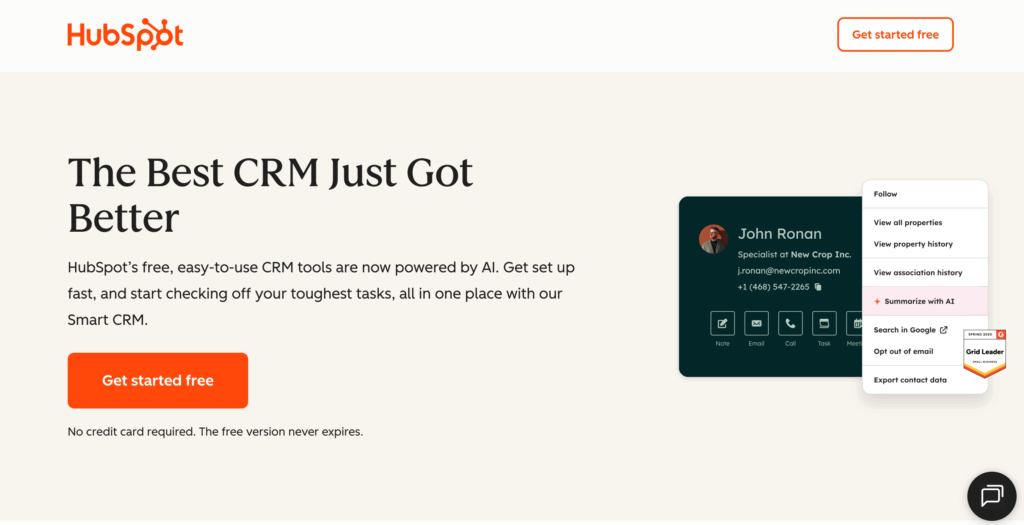
If you’ve never used a CRM before, HubSpot is a reasonable place to start. The free tier keeps contacts, deals, and client conversations in one spot, and it doesn’t fall apart as your list grows.
Best for: Teams who want a real CRM without paying for one on day one.
Pricing: The CRM itself is free, with paid Starter, Professional, and Enterprise plans layered on top. HubSpot doesn’t publish one simple rate since it depends on the hubs and contact tiers you add, so check their pricing page for a current quote.
Key features:
- Store and manage contacts and deals
- Track emails and client interactions
- Schedule meetings directly from the tool
- See your sales pipeline at a glance
- Option to upgrade for more advanced automation and reports
2. Salesforce
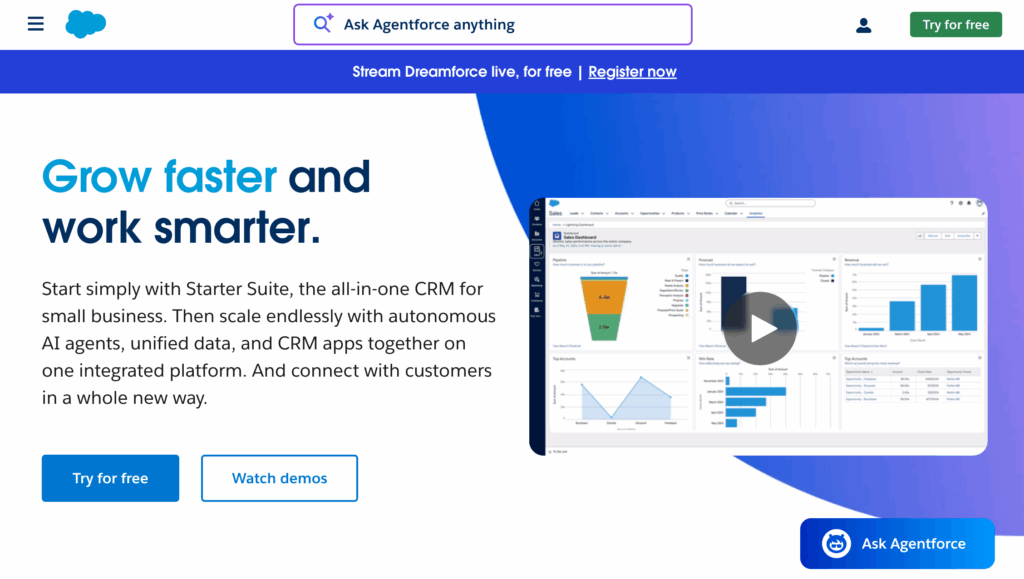
Everyone’s heard of Salesforce, and there’s a reason: it’s built for detailed tracking and endless customization, at the cost of a setup that’s rarely a one-afternoon job.
Best for: Firms running complex sales processes across bigger teams, not solo consultants dipping a toe in.
Pricing: Sales Cloud starts at $25/user/mo for the Starter Suite plan, climbing to $100 (Pro Suite), $175 (Enterprise), and $350 (Unlimited), all billed annually (salesforce.com, mid-2026).
Key features:
- Highly customizable to fit different industries
- In-depth reporting on sales and clients
- Works with many other business tools
- Separate products for sales, marketing, and customer service
- 24/7 support available on higher plans
3. Monday
Monday is built around colorful, customizable boards. Plenty of consultants bend those boards into a makeshift client tracker even though that’s not really what it was designed for.
Best for: Visual thinkers who’d rather look at a board than a spreadsheet.
Pricing: Monday runs several plans (a limited free option, plus Basic, Standard, and Pro tiers), and rates shift by region and seat count. Check their pricing page for current numbers in your currency.
Key features:
- Project templates, tracking, and client tasks in one place
- Create custom dashboards to see progress easily
- Integration with other tools like Salesforce
- Ready-made templates for light CRM use
Consulting Billing and Invoicing Software
Getting paid on time shouldn’t be the hardest part of your week. These tools handle invoices, reminders, and payments so you can stop chasing.
4. Xero
Need real accounting, not just invoices? Xero handles the books and lets you send bills from the same place, so nothing gets typed twice.
Best for: Small businesses that want accounting and invoicing under one login.
Pricing: In the US, the Early plan starts at $5/mo for the first three months (then $25/mo), Growing runs $11/mo (then $55), and Established is $18/mo (then $90), per xero.com (mid-2026).
Key features:
- Invoice templates that look professional out of the box
- Recurring invoices for regular clients
- Automatic reminders for late payments
- Online payments
- Extra security with multi-factor login
[ Read: Consulting Invoice Template: What to Include + Free Download (2026) ]
5. QuickBooks
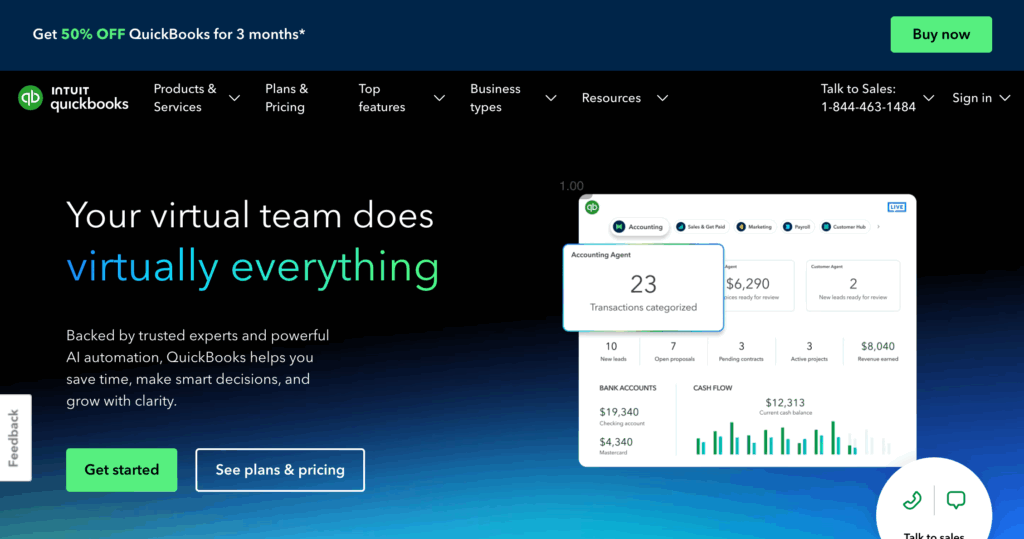
Most freelancers have at least heard of QuickBooks, and for good reason. It keeps the bookkeeping and the invoicing under the same roof, so tax time isn’t a scavenger hunt.
Best for: Freelancers and small businesses who want bookkeeping and invoicing without learning two systems.
Pricing: There are several tiered plans, and QuickBooks runs introductory discounts often enough that rates shift constantly. Check their pricing page for current plans and any free-trial offer.
Key features:
- Invoices you can send in a couple of clicks
- Income and expense tracking
- Recurring invoices and reminders
- Online payment links through QuickBooks Payments
- Reporting to keep tax time simple
6. FreshBooks
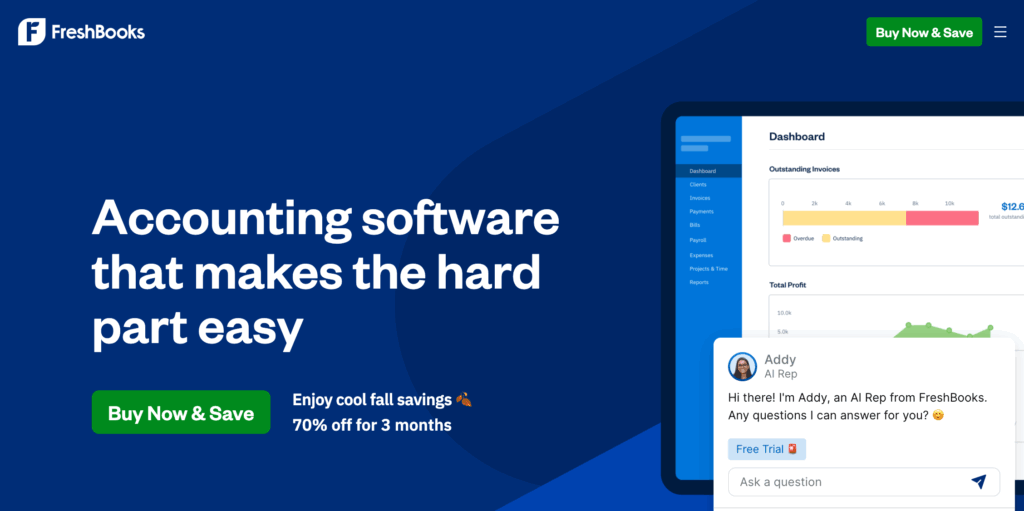
If Xero or QuickBooks feel like overkill for what you need, FreshBooks is the lighter option: invoices and payments, nothing you have to hunt through menus to find.
Best for: Freelancers and small teams who want invoicing without the accounting-software learning curve.
Pricing: FreshBooks leans heavily on promos. At the time of writing, the Lite plan showed $2.30/mo on a limited-time offer (regularly $23/mo), with Plus and Premium tiers above it, per freshbooks.com. Check the site for whatever deal is running now.
Key features:
- Quick-to-use invoice templates
- Automatic reminders for clients
- Various payment options (credit cards, bank transfers, Apple Pay, or Google Pay)
- Expense tracking alongside invoices
Consulting Proposal and Contract Software
The gap between “great discovery call” and “signed client” is usually a proposal. These tools help you send something polished and get it signed fast.
7. Proposify
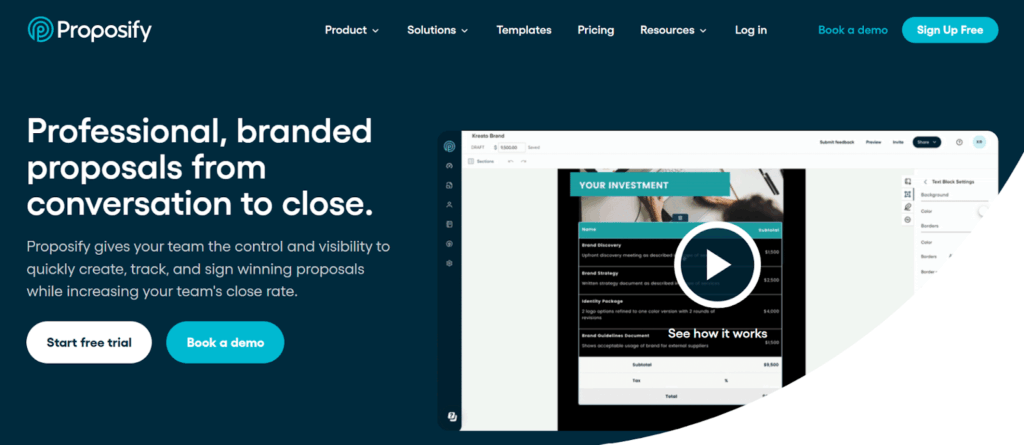
A proposal that just sits in someone’s inbox is easy to ignore. Proposify makes proposals interactive, with digital signatures built in, and it’ll tell you when the client actually opened it.
Best for: Small consulting firms who want to know whether a client even looked at the proposal, not just whether they signed it.
Pricing: Proposify prices per user with tiered plans, and it runs custom quotes for larger teams. See their pricing page for current rates.
Key features:
- Drag-and-drop templates and content library
- Interactive pricing and option selection
- Built-in e-signatures
- Engagement tracking and analytics
- Integrations with CRM and business tools
8. PandaDoc
PandaDoc folds proposals, contracts, and payment collection into one document, so a signed contract can trigger the invoice instead of you remembering to send one separately.
Best for: Consultants juggling proposals and contracts who’d rather not chase payment as a fourth step.
Pricing: There’s a free plan for basic e-signatures, then Starter at $19/seat/mo and Business at $49/seat/mo, with per-document fees on the e-signature-only plans, per pandadoc.com (mid-2026).
Key features:
- Document templates with branding and themes
- E-signatures and payment collection within documents
- Workflow automation and approvals
- CRM integrations and real-time tracking
[ Read: Land More Clients with This Step-By-Step Coaching Proposal Template ]
9. BidSketch
Writing every proposal from scratch gets old fast. BidSketch lets you build reusable proposal content and pricing options once, then reuse them, while still tracking whether the client opened it.
Best for: Solo consultants who send similar proposals often and are tired of retyping them.
Pricing: BidSketch runs tiered monthly plans based on how many users you need. Check their site for current pricing.
Key features:
- Reusable modules (content, pricing, designs)
- Optional fees that clients can accept or decline
- E-signatures and PDF exporting
- Client view analytics (who saw it, and when)
Project Management and Operations Tools
Once the work is won, you have to deliver it. These tools keep engagements, tasks, and firm operations from turning into a spreadsheet nightmare.
10. Celonis for Consulting+
This one’s niche. Celonis for Consulting+ (C4C+) is built specifically for firms doing process-mining work, letting them bake process intelligence and automation into client engagements rather than bolting it on afterward.
Best for: Consultants doing process mining or operations-improvement work, not general practice management.
Pricing: Celonis prices its consulting program by engagement and partnership level rather than a flat public rate. Contact them through their site for details.
Key features:
- Project management hub for all client engagements
- Visibility and analytics for project adoption
- Central repository for consulting assets and resources
- Scales from small engagements to enterprise-level projects
11. CMap
Once a firm outgrows spreadsheets for tracking pipeline, resourcing, and financials all at once, CMap is built to take over that whole mess.
Best for: Consulting or professional service firms that need one system for operations and financials, not for solo practices.
Pricing: CMap works on custom quotes based on firm size and modules. Request pricing through their site.
Key features:
- Pipeline, quoting, and project financials
- Resourcing and workload management
- Invoicing and billing management
- Reporting dashboards and metrics
- Integrations with CRMs, accounting, and business intelligence tools
12. Asana
Asana is one of the more familiar project management tools out there, and for consulting work, that familiarity matters. Clients have often used it before, so there’s less onboarding friction than with a niche platform.
Best for: Consultants who want a flexible way to organize tasks without forcing clients to learn something new.
Pricing: Asana has a free Personal plan for up to two users, then Starter at $10.99/user/mo and Advanced at $24.99/user/mo when billed yearly (a little more month to month), per asana.com (mid-2026).
Key features:
- Multiple views for project management: list, board, calendar, and timeline
- Task dependencies and subtasks
- Collaboration with comments, file attachments, and task assignments
- Reporting and progress tracking
- AI (artificial intelligence) suggestions and automations to lighten the workload
13. Avaza
Where Asana stops at tasks, Avaza keeps going, tying project delivery to timesheets, expenses, and invoicing so the hours you log actually turn into a bill.
Best for: Growing consulting teams who want project delivery and billing under one roof.
Pricing: Avaza has a free plan, with paid tiers starting at $11.95/mo (Startup), $23.95/mo (Basic), and $47.95/mo (Business), plus per-user add-ons for extra timesheet, scheduling, and admin seats, per avaza.com (mid-2026).
Key features:
- Project management with task boards and Gantt views
- Timesheets and expense tracking tied to projects
- Invoicing and online payments built in
- Reports on project progress and profitability
14. Productive
Productive treats each client like its own tiny business unit, tying budgets, resourcing, and profitability together instead of leaving you to guess which engagements are actually worth your time.
Best for: Consultancies that need to see project profitability, not just project status.
Pricing: The Essential plan is $10/user/mo billed yearly ($12 monthly), with Professional at $25/user/mo and Ultimate at $33/user/mo, per productive.io (mid-2026).
Key features:
- Flexible time tracking tied to budgets
- Resource planning across the team
- Budget management and profitability forecasts
- Purpose-built reports for consultancies
- Proposals, projects, and invoicing in one flow
Time-Tracking and Scheduling Software for Consultants
If you bill by the hour or juggle a full calendar of client calls, these tools keep your time honest and your bookings hands-off.
15. Toggl Track
One click to start a timer, one click to stop it. Toggl Track keeps hour-logging that simple across every device, then turns those hours into reports you can actually show a client.
Best for: Consultants who bill by the hour and want to know where the time actually goes.
Pricing: Toggl Track has a free plan for small teams, then Starter at $9/user/mo and Premium at $18/user/mo, per toggl.com (mid-2026).
Key features:
- One-click timers and offline sync across devices
- Integrations with 100+ tools
- Profitability and utilization reports
- Timesheet approvals and scheduled reporting on paid plans
16. TimeCamp
If Toggl feels too hands-off for your situation, TimeCamp goes further, with optional activity monitoring on top of the standard time logs.
Best for: Teams or firms that want tracking and some level of accountability, not just a stopwatch.
Pricing: There’s a free plan, with paid tiers that add invoicing and richer reports. Check their pricing page for current rates.
Key features:
- Free plan available, with invoicing and reports on paid versions
- Desktop tracking with screenshots and app or website logs
- Employee location monitoring
- Budget alerts, PDF exports, and member roles
17. Calendly
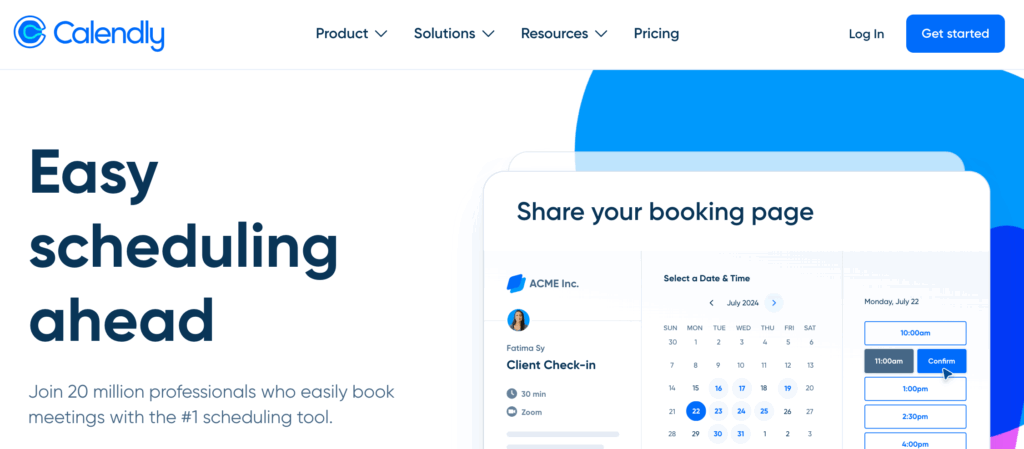
Nobody misses the “does Tuesday at 2 work for you?” email chain. Calendly lets clients pick their own scheduling time, then handles the meeting link and reminders on its own.
Best for: Service providers who are done with back-and-forth email just to book a call.
Pricing: Calendly has a free plan, with Standard at $10/seat/mo and Teams at $16/seat/mo (both cheaper billed annually), and an Enterprise plan starting around $15,000/year, per calendly.com (mid-2026).
Key features:
- Custom scheduling pages
- Integrations with Zoom, CRMs, and calendars
- Automated reminders and analytics
Marketing Software Solutions for Consultants
New business doesn’t appear on its own. These tools keep your name in front of the right people without eating your whole week.
18. MeetEdgar
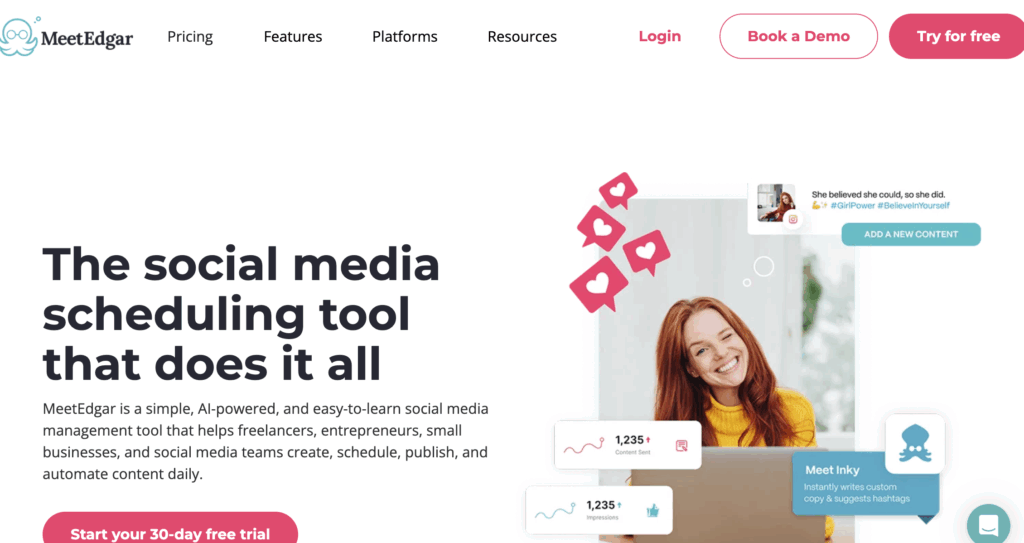
Started by Paperbell founder Laura Roeder, MeetEdgar is built on a simple idea: your best posts deserve more than one day in the spotlight, so it recycles them automatically instead of letting them disappear into the feed.
Best for: Consultants who want a social presence without logging in every day to post something.
Pricing: MeetEdgar runs tiered plans based on the number of accounts and users. Check their site for current rates and any trial offer.
Key features:
- Unlimited content library and automatic reposting
- AI assistant for captions
- Canva integration
- Analytics and multi-platform posting
19. Canva
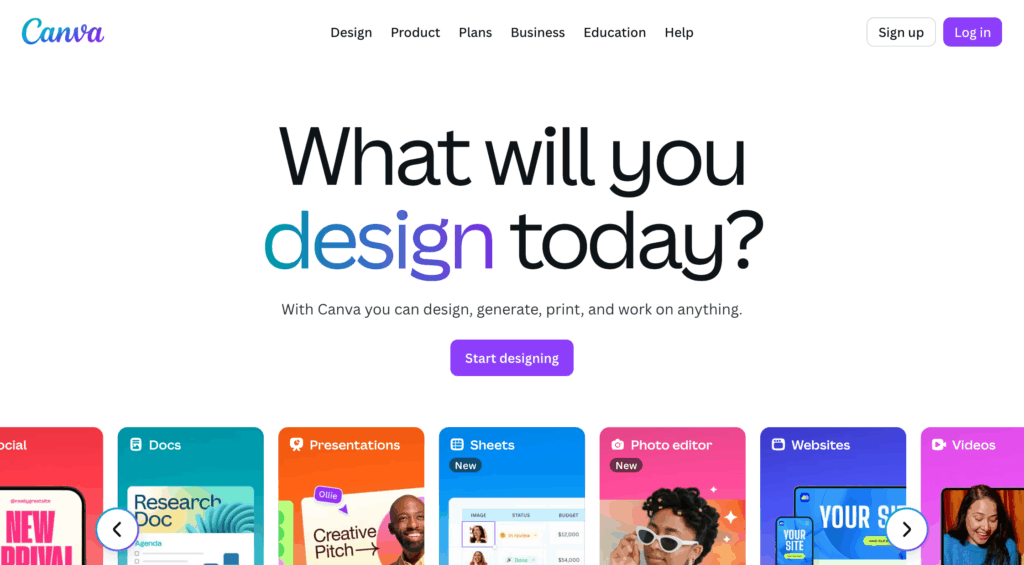
You don’t need a design background to make something look decent, and Canva is the reason why. Drag-and-drop templates cover proposals, social posts, and branded documents alike.
Best for: Anyone who needs a proposal cover or a social post to look good in ten minutes, not two hours.
Pricing: Canva has a genuinely useful free plan, with a paid Pro tier that adds premium elements and a content planner. See their pricing page for current Pro rates.
Key features:
- Extensive free templates and design elements
- Pro version with premium design elements and a content planner
- Drag-and-drop editing, brand kits, and collaboration
20. ConvertKit
ConvertKit skips most of the complexity you’d find in bigger email tools, which is exactly the point if you’re sending a newsletter, not running a marketing department.
Best for: Creators or consultants who want capable email marketing without a steep learning curve.
Pricing: ConvertKit (now Kit) has a free plan for smaller lists, with paid plans that scale by subscriber count. Check their pricing page for your list size.
Key features:
- Automation, tagging, and subscriber segmentation
- Landing pages and forms
- Designed for ease of use over complexity
21. GetResponse
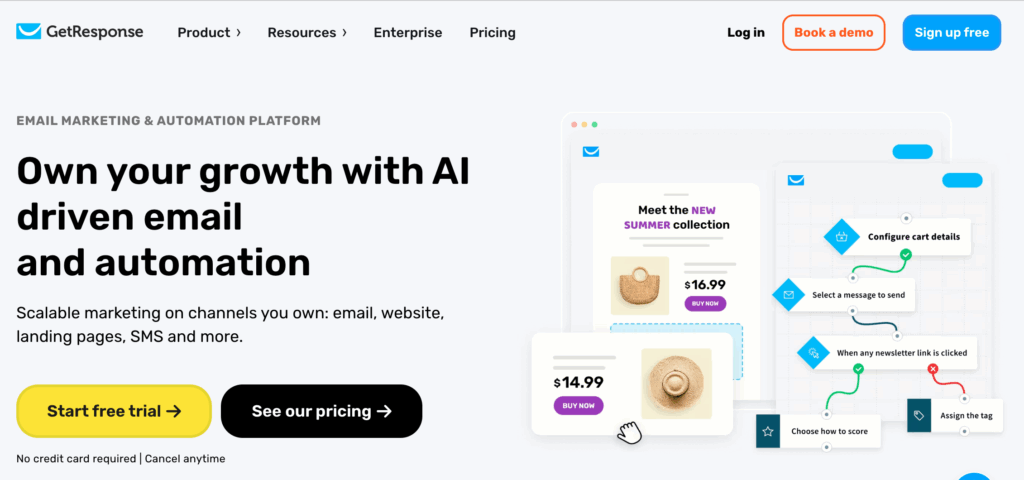
Email marketing, webinars, and landing pages usually mean three separate tools. GetResponse puts them under one login instead.
Best for: Consultants running marketing across more than just email.
Pricing: GetResponse has a free plan and tiered paid plans that scale by list size and features. See their pricing page for current rates.
Key features:
- Analytics, segmentation, and support for large campaigns
- Advanced automation across email, ads, and webinars
- Landing page and funnel builder
Paperbell: The All-In-One Consulting Software for Independent Consultants
Look back at that list for a second. Most of those tools do one job well, and a few are built for enterprise firms with whole operations teams. If you’re a solo consultant or running a small practice, you might not want to pay for five or six apps, especially when one platform could handle it all.
That’s the gap Paperbell was built to close. It’s the all-in-one option designed for independent consultants who’d rather run their whole practice from one place than stitch together a stack.
With Paperbell, you can:
- Send simple payment links and get paid right away
- Sign contracts digitally, built right into the booking flow
- Manage all your appointments in one place
- Collect responses from forms and surveys, automatically
- Store client notes and files in one spot
- Give every client a dedicated portal
- Automate reminders and other client communication
- Build a professional, fill-in-the-blank website
Instead of one tool for scheduling, another for payments, another for contracts, and a fourth for client management, it all lives together. One login, one place you and your clients go, and no copy-pasting between apps.
The best part? You can start with a free 7-day trial (no card required) and see how it fits your practice before you commit to anything.
Ready to run your consulting business from one place? Try Paperbell for free.
Consulting Software FAQ
What is the best consulting software for independent consultants?
For a solo consultant or small practice, an all-in-one platform usually beats a stack of single-purpose tools. Paperbell is built specifically for independent consultants, combining scheduling, payments, contracts, intake forms, and client management in one place, so you’re not paying for or juggling five separate subscriptions. If you work in a large firm with a dedicated operations team, a heavier tool like Salesforce or CMap may be a better fit.
How much does consulting software cost?
It ranges widely. Point solutions often start around $5 to $25 per user per month (Xero from $5/mo, Salesforce from $25/user/mo, Calendly from $10/seat/mo, all verified mid-2026), and enterprise platforms can run into custom four- and five-figure annual contracts. Several tools have genuine free tiers, including Asana and Toggl Track. Paperbell offers a free 7-day trial (no card required) rather than a permanent free plan.
What features should consulting software include?
It depends on the job, but most consultants want some mix of client management, invoicing and payments, proposals and contracts, project or task tracking, time tracking, and scheduling. Think about the ones you touch every week, then either pick a specialist tool for that one job or choose an all-in-one platform that covers several at once.
Do I need separate tools for billing, scheduling, and CRM as a consultant?
Not necessarily. Separate tools give you depth in each area, but they also mean more subscriptions, more logins, and data that doesn’t sync. If you’re running solo, an all-in-one platform like Paperbell handles billing, scheduling, and client management together, which usually saves both money and copy-paste time. Larger firms with complex needs often still prefer best-in-class specialist tools.
Is there free consulting software?
Yes. Several tools in this guide have real free plans, including Asana, Toggl Track, Canva, and HubSpot’s CRM. Paperbell offers a free 7-day trial with no card required, so you can run your whole practice from one place before paying anything. Free tiers usually cap features or seats, so check what each one includes before you rely on it.
Editor’s Note: This post was originally published in June 2022 and has been updated for 2026.