
You’ve built a solid one-on-one coaching practice. Now you’re thinking about scale: something that lets you help more people without adding more hours to your calendar.
A coaching membership is one of the best ways to do that. And with the right platform, you can have it up and running faster than you’d think.
The tricky part? There are a lot of membership platforms out there, and they’re not all built the same. Some are community-first. Some are course-first. Some are all-in-one marketing machines. The right choice depends on how you coach, what your clients need, and how much you want to spend.
This guide walks through 12 of the best membership platforms for coaches in 2026, with pricing, free trial info, and a breakdown of what each one is actually good for.
Membership Platforms at a Glance
Here’s a quick look at all 12 platforms before we dig in:
| Platform | Best For | Starting Price | Free Trial |
|---|---|---|---|
| Uscreen | Video-heavy memberships | $149/mo | No |
| Circle | Group coaching with multiple cohorts | $89/mo | 14 days |
| Mighty Networks | Branded community experiences | $49/mo | 14 days |
| Memberful | Coaches with an existing WordPress site | $49/mo | Free plan available |
| Kajabi | All-in-one marketing + membership | $179/mo | 14 days |
| Skool | Community-first coaching memberships | $9/mo (+ fees) or $99/mo | 14 days |
| GroupApp | Cohort programs that combine courses and community | Free (paid from $65/mo) | Free plan available |
| Kartra | Multiple products + client segments | $99/mo | 14 days |
| Podia | Beginners who want no transaction fees | $39/mo | No |
| Hello Audio | Audio-first coaching content delivery | $17/mo | No |
| Slack | Simple add-on community tool | Free (basic) | Free plan available |
| Voxer | Voice-based member check-ins | Free | Free plan available |
Pricing changes. Always check each platform’s website for current information.
What is a Membership Site?
A membership site is a platform where you can share exclusive content with both free and paid members.
You can use paid membership sites to build a community of coaching clients who are working toward similar goals. It’s a way to support your coaching clients at scale alongside your one-on-one sessions, while adding a recurring revenue stream.
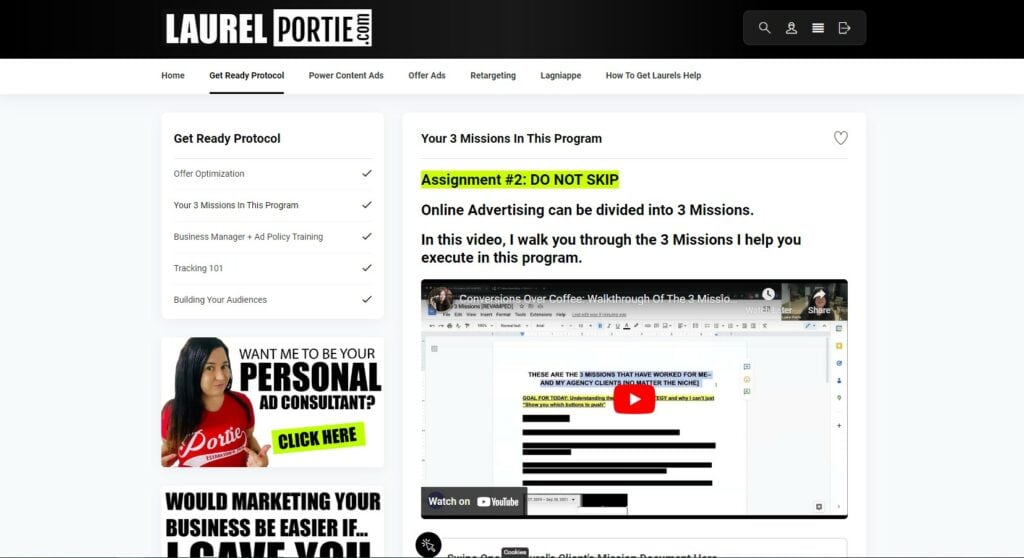
You can adapt the structure of your membership to your business model. For example, Laurel Portié runs an ad membership with two live group coaching sessions each month.
She uses her coaching membership site to share the recordings of all past sessions with her clients. She also makes all her past training replays available so her members can study them at their own pace between the live sessions.
That’s just one example, but you can share virtually any type of coaching support and resources on a membership site.
Membership Sites vs. Subscription Sites
Membership sites and subscription sites are similar, but they’re not the same thing. To put it this way: all membership sites are subscriptions, but not all subscriptions are memberships.
A subscription has a monthly fee that gives customers access to a product or service for the duration of their billing cycle. Memberships are subscription types that involve becoming a part of a group.
For example, paying for a monthly newsletter is a subscription, not a membership. Paying a monthly fee to access an online community with members-only content is a membership.
You can think of subscriptions as a billing model. For example, you can use a subscription model to charge your coaching clients on a recurring basis, typically monthly.
Memberships are an online business model. They’re a specific way to provide your coaching services, just like a one-to-one package.
💡Pro tip: You can also use Paperbell to create coaching packages easily. Try it for free.
Types of Membership Platforms for Coaches
Before you start comparing features and prices, it helps to understand the different categories of membership platforms. They’re not all trying to do the same thing.
All-in-one platforms
These tools bundle membership hosting, email marketing, course creation, and sales funnels into one package. Think Kajabi or Kartra. They do a lot, but you pay for everything whether you use it or not. Best for coaches who want one tool to run their whole business.
Community-first platforms
Circle, Mighty Networks, and Skool are built around the community experience first, with content features as a secondary layer. If the relationship between members is the core value of your membership, one of these is likely your best fit.
Course and content platforms
Platforms like Podia and Uscreen are built for creators who want to deliver structured content: courses, video libraries, audio programs. The community features are usually lighter. Best for memberships where members show up to learn, not primarily to connect with each other.
WordPress membership plugins
Memberful and tools like MemberPress let you add membership functionality directly to a WordPress site you already own. More setup work upfront, but you own your platform and aren’t tied to any third-party host.
Simple delivery and add-on tools
Slack and Voxer aren’t true membership platforms, but coaches use them as the community layer inside a simpler setup. A coach might use Paperbell for payments and scheduling, then Slack or Voxer to host the community itself. This combo works well for coaches who want to keep things lean.
Must-Have Features of Great Membership Platforms
There are dozens of membership platforms coaches can use to build their own community, but their features vary a lot.
Your must-haves will depend on how you coach and what your clients need, but here are some non-negotiables worth checking:
Ease of use for you and your clients
If it takes your clients 20 minutes to figure out how to access their content, they’ll disengage fast. Look for clean, simple member interfaces, not just a clean admin dashboard.
Setup for your technical skill level
Some platforms are designed for non-technical users. Others assume you’re comfortable with WordPress, custom domains, and integrations. Be honest about where you are on that spectrum before committing to a platform.
Integrations with your existing tools
Can it connect with your existing apps? At minimum, you’ll want payment processing and ideally an email marketing connection. If you already use Paperbell for scheduling and client management, make sure the platform plays nicely with it.
Payment processing
Look for payment processing that handles recurring subscriptions automatically. Some platforms charge transaction fees on top of their monthly price, which adds up quickly. Skool’s $9/month plan, for example, takes 10% of your revenue. Check the total cost of ownership, not just the headline price.
Mobile experience
Most of your members will access content on their phones. Check whether the platform has a native mobile app or a mobile-responsive web experience. Circle, Mighty Networks, and Skool all have apps. Platforms without one create friction for members who want to check in on the go.
Security
A great membership platform should be secure for both you and your clients. Without proper security, you risk exposing your clients’ payment information and personal data. Stick with established platforms that handle payments through Stripe or similar processors.
12 of the Best Membership Platforms for Coaches
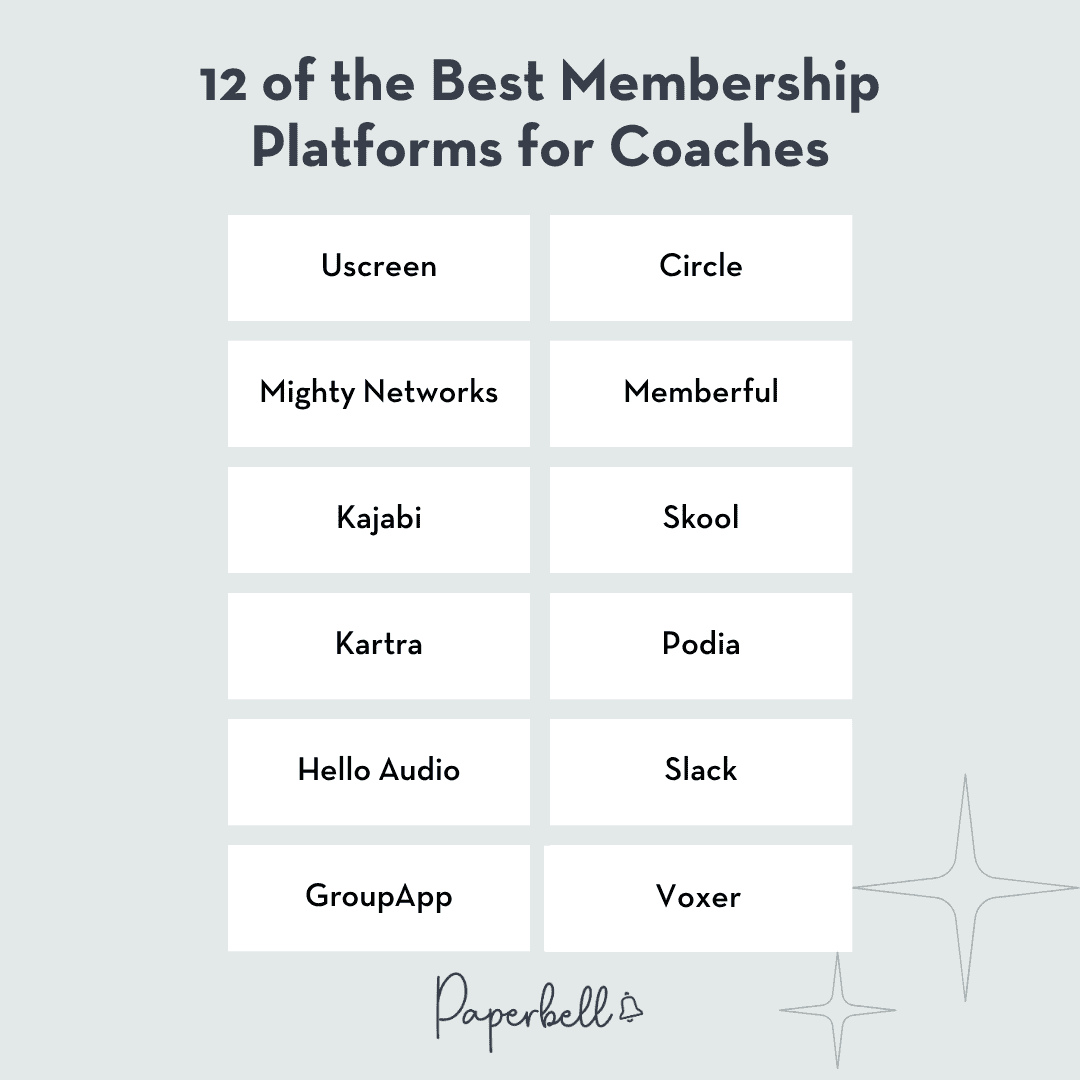
Not all of the tools below are specifically designed as membership platforms, but they have the functionality that lets you, as a coach, use them for your communities and subscriptions.
1. Uscreen
Best for: Coaches with a large video library
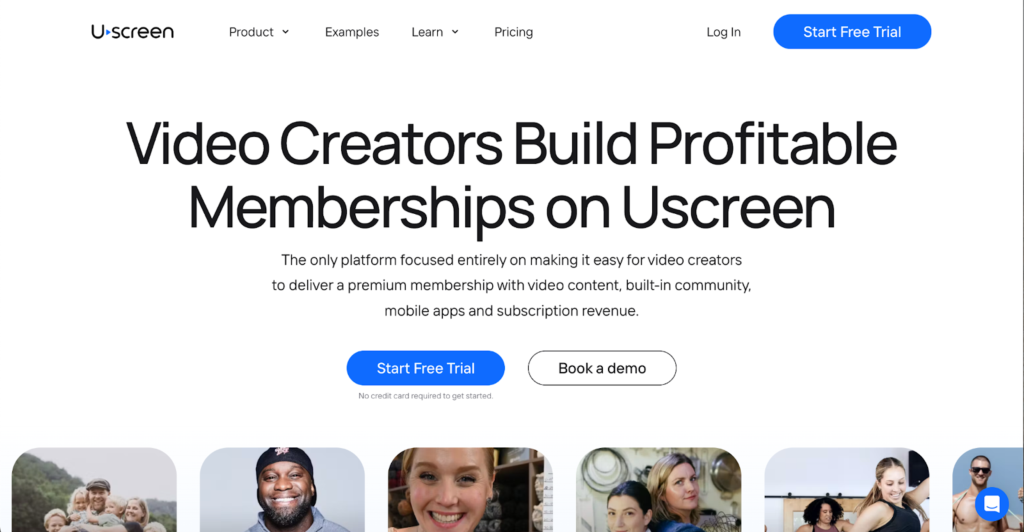
Uscreen is a favorite among video creators and coaches who love to produce video content.
It lets you create paid memberships that include an on-demand video library, live streaming, and a community space for members. It hosts your content, processes your payments, and encourages members to interact with each other. There’s also a native mobile app, so your members can access your content on the go.
Pricing: Uscreen starts at $149 per month.
Free trial: No free trial. You’ll need to request a demo.
Link: uscreen.tv
2. Circle
Best for: Group coaching with multiple cohorts
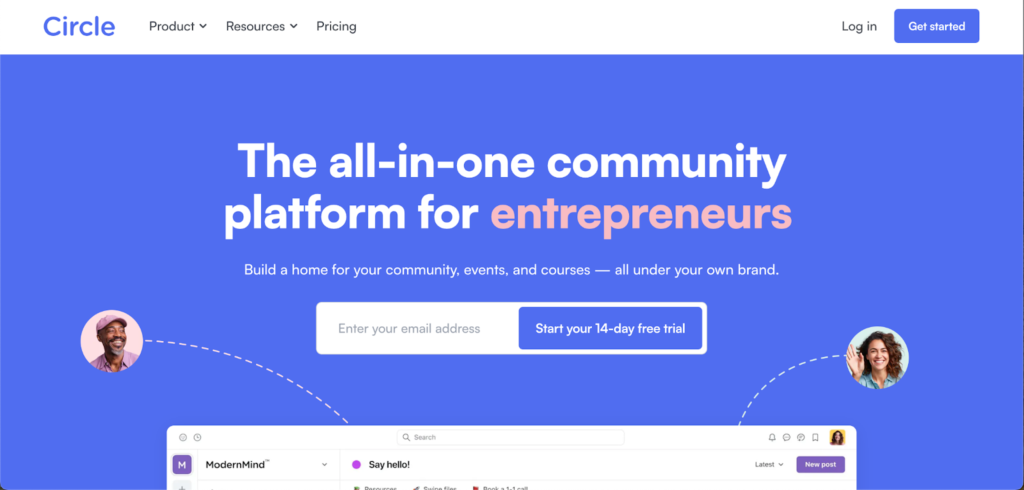
Circle is built around community. If you offer a group coaching membership, you can use it to manage multiple cohorts at the same time.
Members can share experiences through live chat and learn from each other, which keeps people engaged between sessions. If your community grows, you can bring in co-hosts to help answer questions and keep conversations moving.
Circle also has a native mobile app, so members can stay connected without being tied to a desktop.
Pricing: Circle starts at $89 a month for their Professional plan.
Free trial: 14 days.
Link: circle.so
3. Mighty Networks
Best for: Branded community experiences
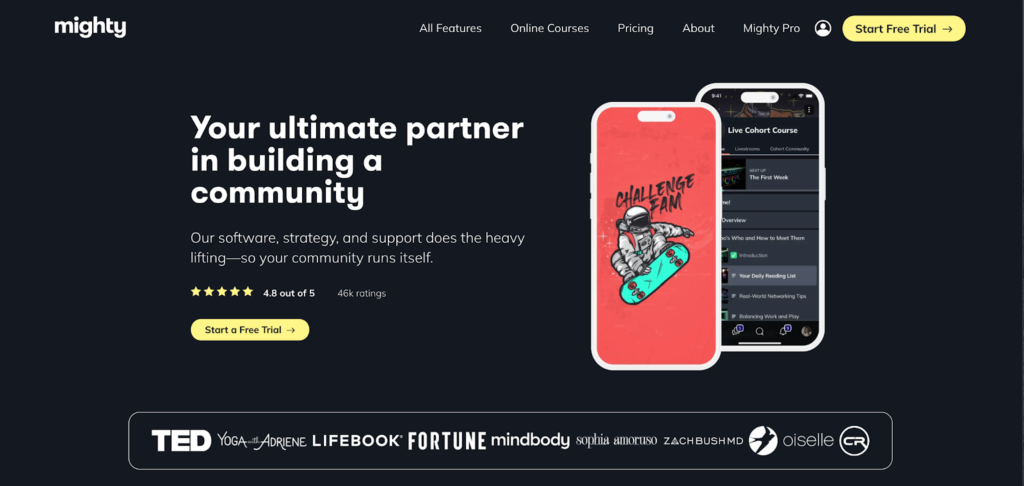
Mighty Networks is a strong alternative to Circle: easy to set up and built around community features like discussion forums, live streams, and media sharing.
It’s a white-label platform that lets you build a branded community experience. You can design different membership tiers with online courses or premium content for each. Mighty Networks has a mobile app as well, which helps keep members engaged between sessions.
Pricing: Mighty Networks starts at $49 per month. Verify current pricing on their site, as this may have changed.
Free trial: 14 days.
Link: mightynetworks.com
4. Memberful
Best for: Coaches with an existing WordPress site
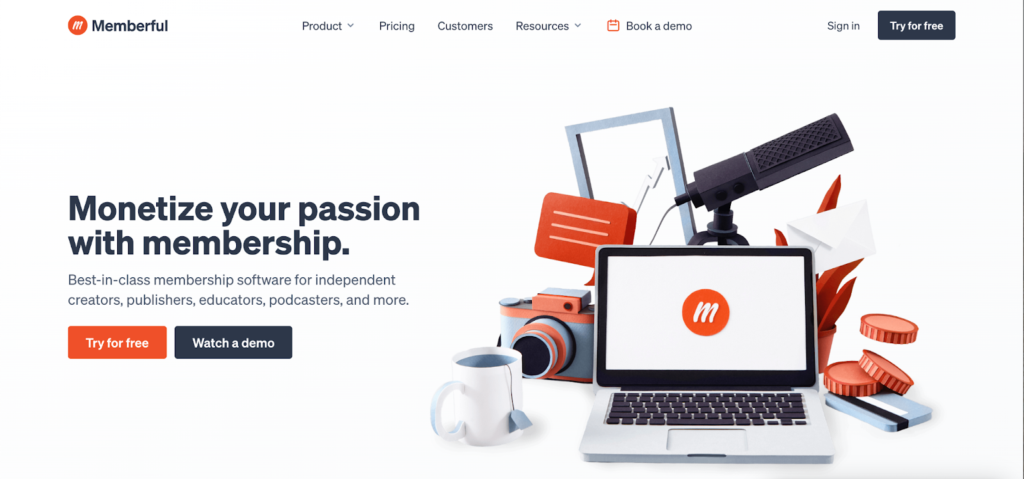
If you already have a WordPress website, you can use Memberful to host your membership directly on it, without building a separate site. It works as a WordPress plugin that integrates with your existing setup.
Setting up a membership on WordPress takes more work than using a hosted platform. But if you’re comfortable with the tech, it’s a clean way to keep everything on your own site and avoid paying hosting fees to a third party. You also get more control over your data and your members’ experience.
Pricing: Memberful has all-access pricing at $49 per month, with a free plan available for getting started.
Free trial: Free plan available with limited features.
Link: memberful.com
5. Kajabi
Best for: All-in-one marketing and membership
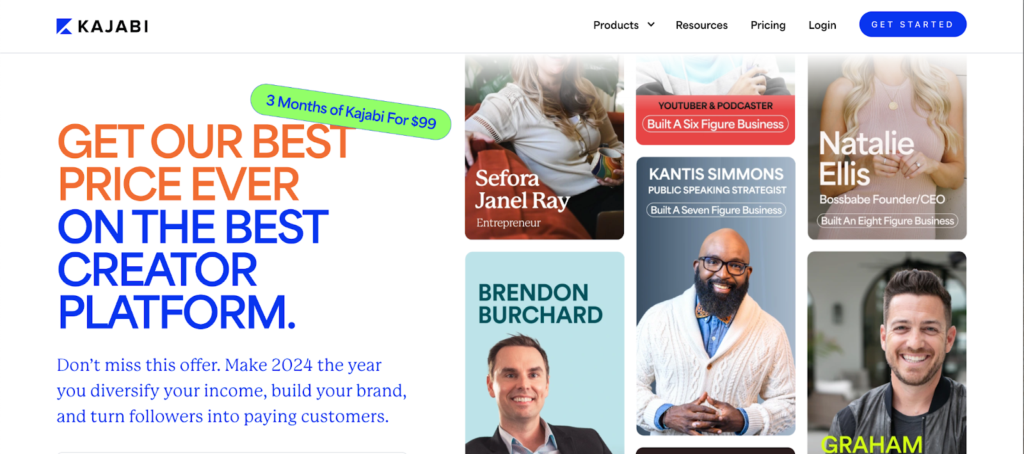
If you want to launch a membership focused on courses and content, Kajabi has everything you need to make that happen. You can host your digital products and coaching courses, email your clients and leads, and build sales funnels, all in one place.
It’s one of the more expensive options on this list, which is worth factoring in if you’re starting out or keeping your business lean. But if you want a single platform that handles everything, it’s hard to beat.
Pricing: Kajabi starts at $179 per month for the Basic plan (or lower when billed annually).
Free trial: 14 days.
Link: kajabi.com
6. Skool
Best for: Community-first coaching memberships
Skool has quickly become one of the most talked-about membership platforms among coaches and online course creators. It’s built around community first, with courses available as a secondary tab. That makes it a good fit if the relationship between your members is what you’re actually selling, not just the content.
One of Skool’s standout features is built-in gamification. Members earn points and climb a leaderboard as they engage with posts and complete courses. This drives participation without requiring extra work from you as the coach. It’s also genuinely simple to use, which means less time in settings and more time coaching.
One thing to watch: the $9/month Hobby plan takes a 10% cut of your revenue, which adds up fast if your membership has any size to it. The Pro plan at $99/month eliminates transaction fees entirely and includes analytics. Most coaches running a real membership will want the Pro plan.
Pricing: $9/month (Hobby, 10% transaction fee) or $99/month (Pro, no transaction fees).
Free trial: 14 days on the Pro plan.
Link: skool.com
7. GroupApp
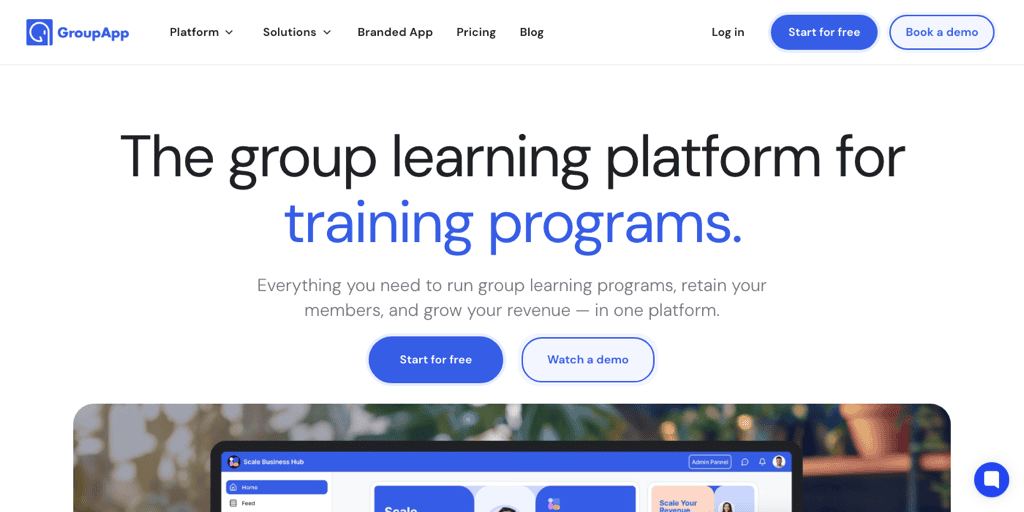
Best for: Cohort programs that combine courses and community
GroupApp keeps your course content and the conversation about it in the same place. Each lesson gets its own discussion channel, so a question about week three lands next to the week three material instead of getting lost in one big group chat. You can sell programs, memberships and digital content from the same account, and there’s an iOS and Android app on every plan so members can keep up between sessions.
It also handles group subscriptions, where one organization buys seats for a whole team on a single invoice, which is useful if you sell coaching into companies. Transaction fees are 0% on every plan including the free one, though the free plan caps you at 100 members and 1GB of storage, so you will outgrow it if the membership takes off.
Pricing: Free plan available. Paid plans start at $65/month, or $57/month billed annually.
Free trial: Free plan available, plus a 14-day trial on the paid plans.
Link: group.app
8. Kartra
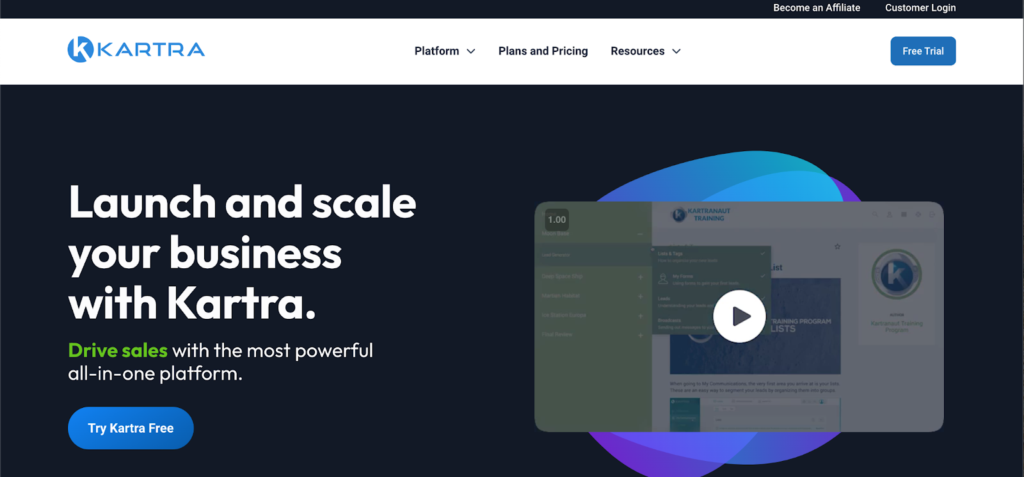
Best for: Coaches with multiple products and client segments
Like Kajabi but want to shave off some platform fees? Kartra is a solid alternative that adds membership sites on top of the same all-in-one features. It’s probably only worth it if you have a lot of digital products to share and, potentially, multiple client segments to manage.
Pricing: Kartra’s starter plan is $99 per month and lets you create up to two membership sites and 20 products.
Free trial: 14 days.
Link: kartra.com
9. Podia
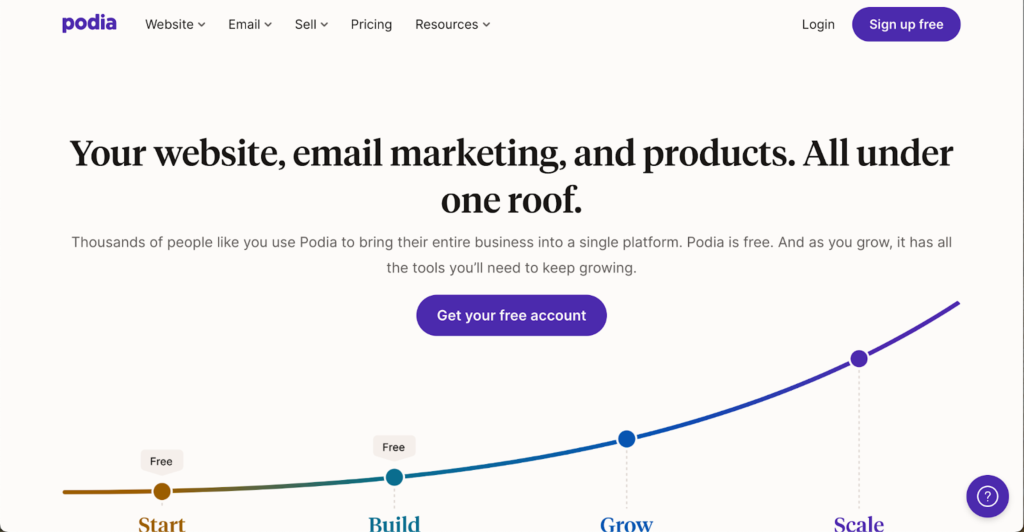
Best for: Beginners who want no transaction fees
Podia’s drag-and-drop site builder makes setting up your membership genuinely easy. It combines membership features, course hosting, and digital downloads in one place with no transaction fees on paid plans.
Podia used to offer a 30-day free trial, but check their current site to confirm trial availability, as this has changed in recent updates. The platform remains a good starting point if you want to keep monthly costs low while still having a proper content delivery setup.
Pricing: Plans start at $39 per month.
Free trial: Check Podia’s site for current trial availability.
Link: podia.com
10. Hello Audio
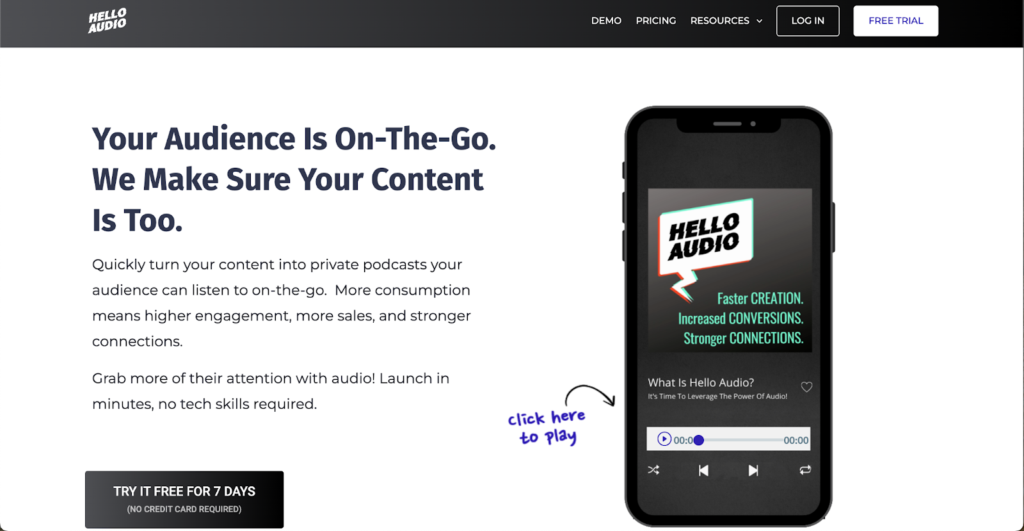
Best for: Audio-first coaching content delivery
Hello Audio turns your recordings into a private coaching podcast you can share with your clients. You can repurpose webinars, training sessions, or past talks into audio content your subscribers can access on the go.
Hello Audio has no community features. But you can pair it with a free Slack channel or a simple group chat to create a lightweight membership setup. It’s a niche option that works well if you have a lot of audio content and your clients prefer listening over reading or watching.
Pricing: Starting at $17 per month.
Free trial: No free trial.
Link: helloaudio.fm
11. Slack
Best for: Add-on community tool for a lean membership setup
Slack wasn’t built as a membership platform, but coaches use it as the community layer in simple membership setups. You can create different channels for different client groups or cohorts and share content directly in the feed.
It does take some manual work to onboard each member, and it lacks content hosting or payment processing. But as a free or low-cost add-on to a tool like Paperbell, it can work well for coaches who want an accessible, no-frills community space.
Pricing: Free for basic features. Paid plans start at $8.75 per person per month.
Free trial: Free plan available.
Link: slack.com
12. Voxer
Best for: Voice-based member check-ins
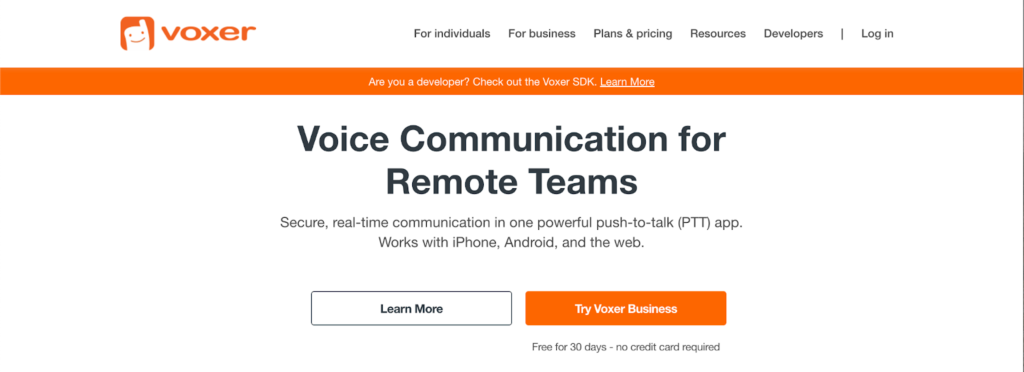
Prefer voice over text? Voxer lets you speak to your members one-on-one or in a group setting using voice messages. Think of it as a walkie-talkie for your coaching community.
Like Slack, Voxer isn’t a full membership platform. But if your coaching style is conversational and your clients respond well to audio messages, it can be a great free add-on community layer. Pair it with Paperbell for payments and scheduling and you have a simple, affordable membership setup.
Pricing: Free for groups up to 500 people.
Free trial: Free plan available.
Link: voxer.com
Paperbell
Best for: Coaches who want simple scheduling and subscription payments without the complexity
What if you want to use a simple community layer like Slack or Voxer, but you still need proper session scheduling and automated payments? That’s where Paperbell comes in.
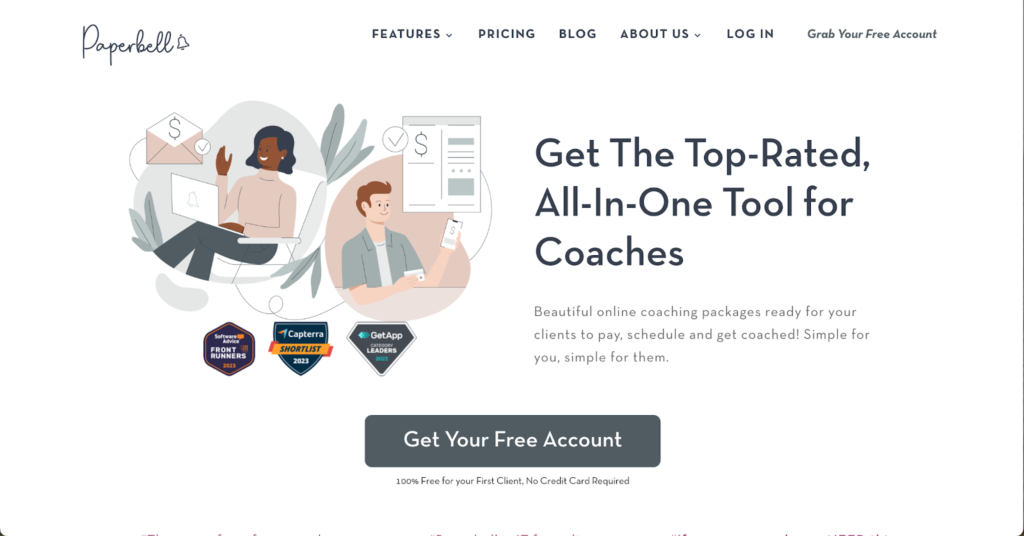
With Paperbell, you have everything you need to run a coaching membership without the bloat. If the other platforms on this list feel too expensive or more complex than your actual needs, Paperbell is worth a look. It handles automated subscription billing, session scheduling, landing pages, contracts, and intake forms, all in one place, without requiring a separate membership site.
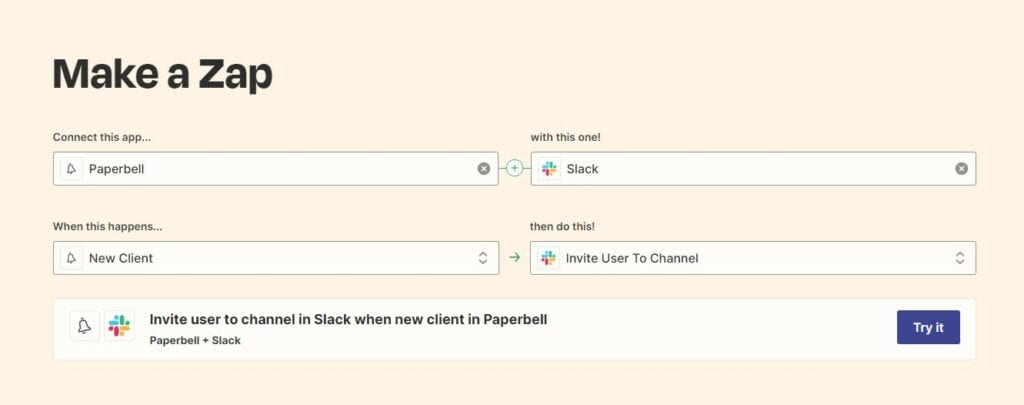
Once members are in, you can deliver one-to-one or group coaching sessions directly through Paperbell, and pair it with a free community tool like Slack or Voxer. Thanks to tools like Zapier, you can automatically add new members to those apps as soon as they sign up.
How to Choose the Best Membership Site Platform for Your Coaching Business
There’s a good fit for every coach here. The question is matching the platform to how you actually want to coach.
- Define the pillars of your coaching membership. What will your clients get out of the experience? What matters most for success? Will community be the core selling point, or is it more about content access and accountability between sessions?
- Determine what features you need. Your core priorities will determine what features to look for. Make a list of must-haves versus nice-to-haves before you start comparing platforms.
- Decide on your method of delivery. Are you a writer? A video person? A speaker? If you need visual aids to guide your clients, Hello Audio won’t work. If you want to host a discussion forum, Podia’s community features are lighter than Circle or Skool.
- Assess your tech setup. Can your chosen platform integrate with your existing tools? And can you manage it without hiring help? If tech isn’t your strength, focus on platforms marketed as no-code or designed for non-technical creators.
- Run the numbers on total cost. Look beyond the monthly subscription. Transaction fees, per-member charges, and add-on costs can significantly change the real price. Skool’s $9/month plan sounds cheap until you factor in the 10% cut on revenue. Kajabi’s $179/month feels expensive until you realize you’d otherwise pay separately for email marketing and a course platform.
- Consider how it connects with your coaching tools. Think about how your membership platform will work alongside your scheduling and payment systems. If you use Paperbell for one-on-one client work, you’ll want a setup that doesn’t create a parallel, disconnected workflow for members.
Answering these questions honestly will help you land on the right platform rather than the most popular one.
FAQs About Coaching Membership Platforms
How much should I charge for my coaching membership?
Most coaching memberships range from $27 to $197 per month, depending on the value you provide. Consider what transformation you’re offering, how much access members get to you, and the quality of your community. Start with a price point that feels right for your level of experience and adjust as you grow.
What is the cheapest membership platform for coaches?
If budget is the priority, Voxer and the basic tier of Slack are free. For a more purpose-built option, Hello Audio starts at $17/month and Podia at $39/month. Skool’s Hobby plan is $9/month, but the 10% transaction fee makes it expensive once your membership has any real revenue. The cheapest long-term setup is often Paperbell for payments and scheduling paired with a free Slack or Voxer group for community.
Can I convert my one-on-one clients to a membership model?
Yes, and it’s a common move. Many coaches offer a membership as a “next step” after clients finish a more intensive one-on-one package. It helps clients maintain momentum at a lower investment. Just be clear about how the experience and access level will differ from their previous work with you.
What’s the difference between a membership platform and a course platform?
A course platform (like Thinkific or Teachable) is primarily built for delivering structured learning content that students move through from start to finish. A membership platform is built for ongoing access: a recurring experience where members show up week after week. Many platforms blend both, but the design philosophy affects which feels more natural for your use case.
How often should I create new content for my membership?
Quality beats quantity every time. Most successful coaching memberships deliver fresh content one to four times per month. This could be a live coaching call, a new training module, or a guest expert session. Your members likely joined for your expertise and the community, not to be overwhelmed with content they don’t have time for.
Do I need technical skills to run a membership site?
Not necessarily. Many modern membership tools are built for non-technical users. If tech isn’t your strength, focus on platforms that describe themselves as no-code or designed for creators. If setup still feels daunting, a few hours with a virtual assistant to get things configured from the start is worth the investment.
Can I run a membership alongside my other coaching offers?
Yes. Most coaches find that a membership works best as part of a range of offers at different price points. It can be an entry point into working with you, or a way for past clients to stay connected after a more intensive package. The key is being intentional about how your different offers fit together rather than compete.
Simplify Your Coaching Business
A coaching membership can be a great way to attract new clients into your funnel or give your existing clients an ongoing place to stay connected and keep growing. The right platform makes all the difference.
Whatever membership platform you choose for your community, Paperbell handles the business side: scheduling, subscription payments, contracts, intake forms, and client management, all in one place.
Try Paperbell for free and see how much simpler running your coaching business can be.
Editor’s Note: This post was originally published in January 2023 and has since been updated for accuracy in 2026.